They offer 70 percent more measuring range, optimize the assembly process, significantly facilitate manual adjustment processes, have optimized electronics, and can be used for many different applications thanks to an adjustable sound lobe and small blind area. Here come our sensor highlights:
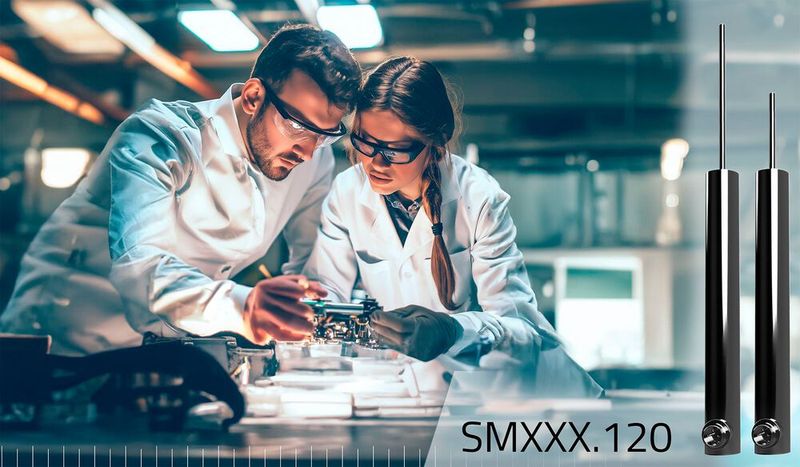
The SM401.120 series from A.B.Jödden can measure a longer distance in limited space thanks to an innovative technology.
(Image: Michael Heßhaus/Midjourney)
Everything is getting smaller, space is becoming increasingly limited: The computer, for which you needed a separate room years ago, is now in your pocket. CD and video collections have been replaced by streaming, large displacement by small, turbocharged engines. Everything becomes more efficient, everything can do more. Like some displacement transducers from A.B.Jödden, for example the SM401.120 series. The displacement transducers can now measure 70 percent more displacement at the same housing size. This is made possible by an innovative technology that allows far more information to be provided during the measurement process. Of course, the series can also measure less, even with an accuracy of 0.25%.
Multifunctional ring sensors optimize the assembly process
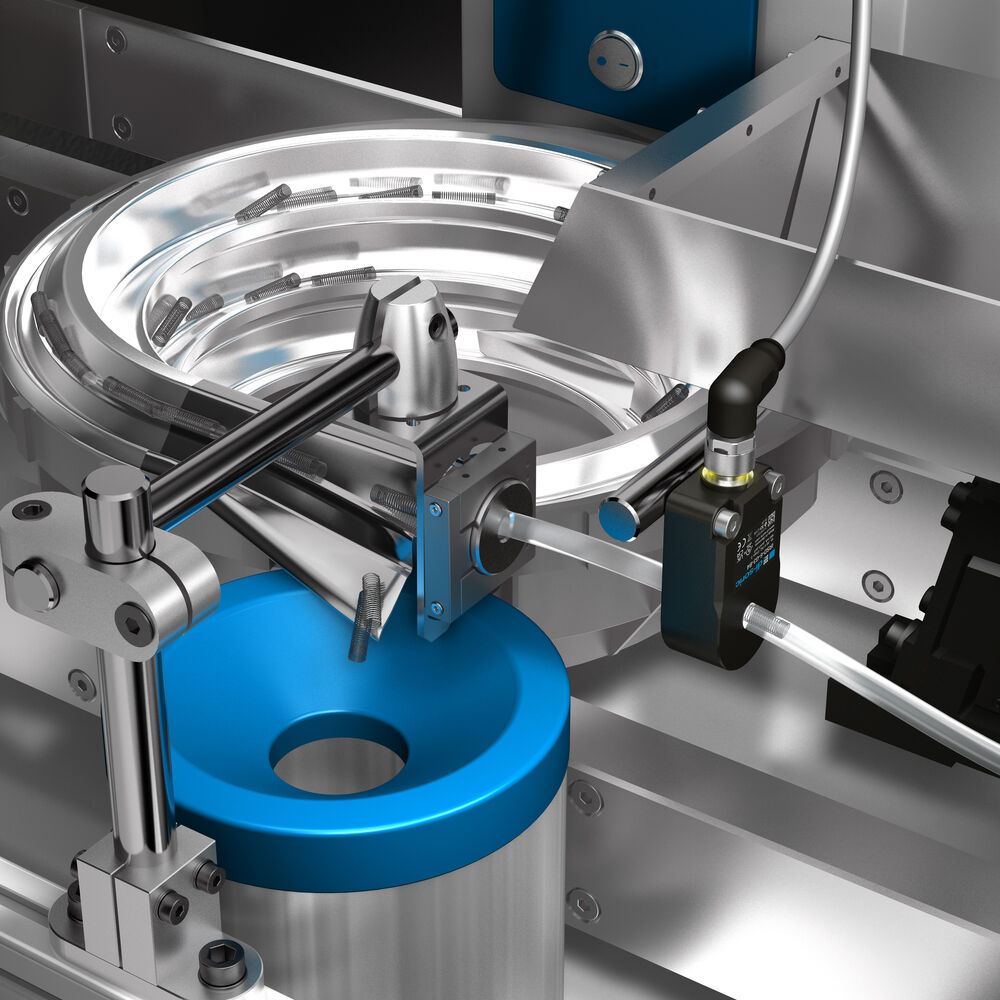
The inductive ring sensors of the IRSD series from Di-soric accurately and reliably detect the smallest metal parts. Even at high speeds and in dirty environments.
(Image:di-soric)
The feed of very small objects with low mass through tubes is commonplace in today's automated manufacturing processes. In the context of downstream work and assembly steps, the parts must be recognized and counted. Thanks to an optimized coil winding, the inductive ring sensors of the IRSD series from Di-soric achieve an above-average resolution. For fast-fed parts, the integrated pulse extension generates a well-evaluable output signal. The effective shielding makes the robust ring sensors immune to external influences. Even in dirty environments, users can rely on reliable results.
Gallery
Without influencing each other, the innovative ring sensors with their switchable operating frequencies can also be installed directly next to each other. With 16 variants, 8 sizes and detection ranges between 6 mm and 50 mm, there are sufficient variants available for nearly every feed application, even under cramped installation conditions.
The digital interface offers users various process-optimizing parameter setting and diagnosis options. The multifunctional ring sensors can be precisely and easily adapted to customer-specific tasks: for example, one can specifically choose between NO/NC, static and dynamic switching principle, antiparallel (Push-Pull), pnp and npn. The Autoteach/Intelliteach function is used for learning falling and quickly passing objects. The stability diagnostic function, which indicates, for example, when object detection is impaired by dirt, is also helpful.
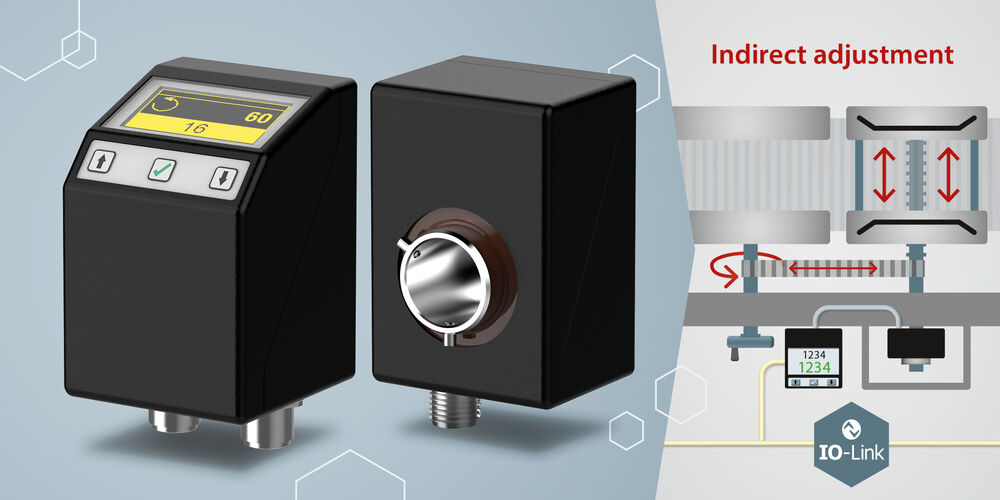
Indirect format adjustment with GEL Sepod L and GEL Serot.
(Image:Lenord+Bauer)
The digital position display SeGMo-Assist by Lenord+Bauer simplifies manual adjustment processes. It can be combined with the external rotary sensor GEL Serot, which is suitable for installation in hard-to-reach places thanks to its hollow shaft and compact design. It contactlessly records position changes of a machine shaft or spindle. It is mounted at a spatial distance from the associated position display GEL Sepod L. Therefore, the measured values can be read and acknowledged independently of the measuring point. The integrated multiturn encoder makes reference runs after a power outage or emergency stop unnecessary and is electrically maintenance-free thanks to battery-less operation. It resists high shock and vibration loads.
The recorded values as well as the operating states are transferred to the position display, displayed on the screen, and transmitted to the higher-level system control.
Even more precise force measurements
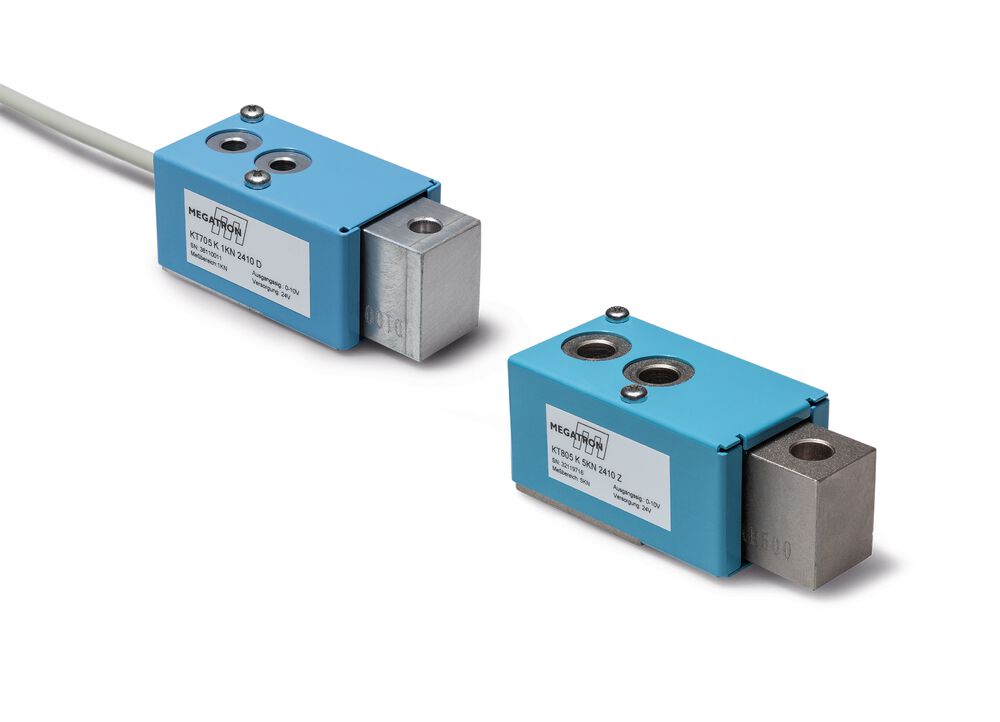
Megatron has completely revised the electronics of its KT705 and KT805 series force sensors. The sensors now also have an integrated analog amplifier.
(Image:Megatron Electronics GmbH & Co. KG)
Megatron has further optimized the electronics of its strain gauge series KT705 and KT805. The force sensors of series KT705 and KT805 have been equipped with a completely new electronics. By integrating these new analog electronics, the force transducers now also deliver a negative output voltage, or indicate when the force transducers are actuated against the intended force direction.
The new integrated analog amplifier also eliminates the need for external electronics. Despite the additional electronics, the sensors are very compact (KT705: 68x30x31 mm) and require significantly less space and wiring effort in the application than sensors with a separate amplifier. The small diameter of the flexible cable (Ø 3.4 mm) also contributes to this. New is also the individual test protocol, which is now included with each force sensor.
Both force sensor series have the same options for output signals (0...10 V / -10...+10 V / 4...20 mA) and the same electronics, but they differ in the nominal forces, the size, and the material. While the measuring body and housing of the KT805 are made of nickel-plated steel, the KT705 is made of aluminum. Both force sensors work according to the Wheatstone strain gauge full bridge principle. The KT705 measures nominal forces of 200 N, 500 N, and 1 kN, the KT805 can detect forces up to 2 kN and 5 kN. With a limiting frequency of 1.6 kHz (response time 650 µs), the force sensor can be used for fast processing cycles in automation.
Date: 08.12.2025
Naturally, we always handle your personal data responsibly. Any personal data we receive from you is processed in accordance with applicable data protection legislation. For detailed information please see our privacy policy.
Consent to the use of data for promotional purposes
I hereby consent to Vogel Communications Group GmbH & Co. KG, Max-Planck-Str. 7-9, 97082 Würzburg including any affiliated companies according to §§ 15 et seq. AktG (hereafter: Vogel Communications Group) using my e-mail address to send editorial newsletters. A list of all affiliated companies can be found here
Newsletter content may include all products and services of any companies mentioned above, including for example specialist journals and books, events and fairs as well as event-related products and services, print and digital media offers and services such as additional (editorial) newsletters, raffles, lead campaigns, market research both online and offline, specialist webportals and e-learning offers. In case my personal telephone number has also been collected, it may be used for offers of aforementioned products, for services of the companies mentioned above, and market research purposes.
Additionally, my consent also includes the processing of my email address and telephone number for data matching for marketing purposes with select advertising partners such as LinkedIn, Google, and Meta. For this, Vogel Communications Group may transmit said data in hashed form to the advertising partners who then use said data to determine whether I am also a member of the mentioned advertising partner portals. Vogel Communications Group uses this feature for the purposes of re-targeting (up-selling, cross-selling, and customer loyalty), generating so-called look-alike audiences for acquisition of new customers, and as basis for exclusion for on-going advertising campaigns. Further information can be found in section “data matching for marketing purposes”.
In case I access protected data on Internet portals of Vogel Communications Group including any affiliated companies according to §§ 15 et seq. AktG, I need to provide further data in order to register for the access to such content. In return for this free access to editorial content, my data may be used in accordance with this consent for the purposes stated here. This does not apply to data matching for marketing purposes.
Right of revocation
I understand that I can revoke my consent at will. My revocation does not change the lawfulness of data processing that was conducted based on my consent leading up to my revocation. One option to declare my revocation is to use the contact form found at https://contact.vogel.de. In case I no longer wish to receive certain newsletters, I have subscribed to, I can also click on the unsubscribe link included at the end of a newsletter. Further information regarding my right of revocation and the implementation of it as well as the consequences of my revocation can be found in the data protection declaration, section editorial newsletter.
The force transducers of the KT705 and KT805 series are used to measure preload forces during crimping processes in cable assembly and to record press-in and joining forces in industrial manufacturing processes. The force sensors are also used in medical technology and fitness equipment.
Simply use flexibly
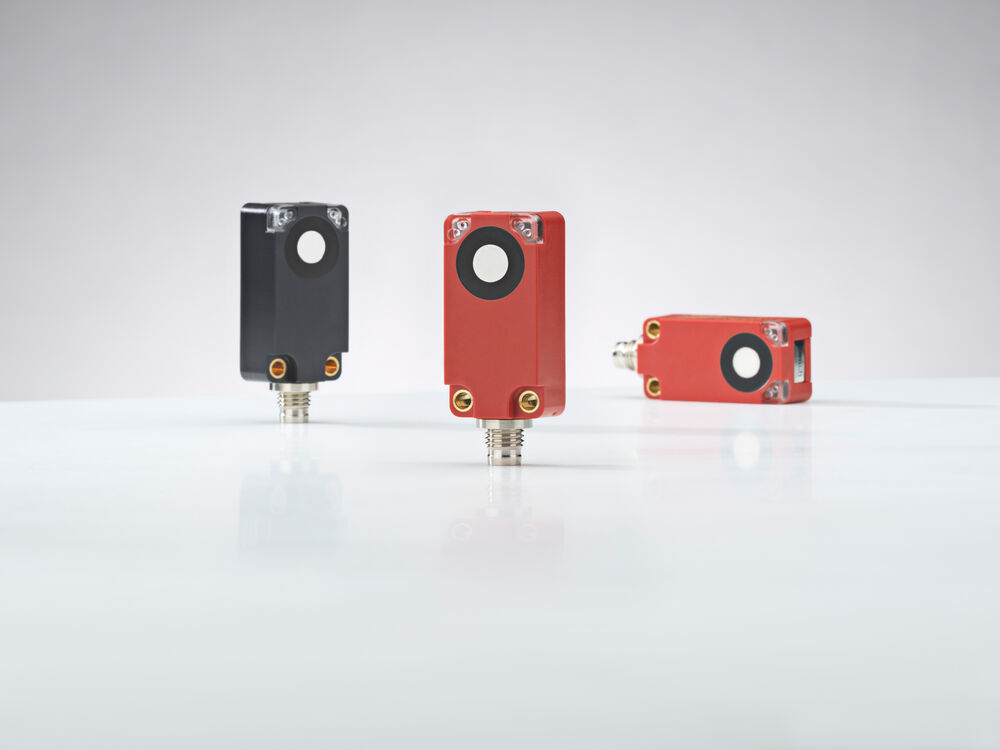
With the new Series 420B, Leuze offers compact ultrasonic sensors in cubic housings. They reliably detect even shiny, reflective, very dark or transparent surfaces as well as liquids.
(Image:Leuze)
The new ultrasonic buttons of the 420B and 412B series from Leuze are available with adjustable sound lobes and both as switching (HTU) or measuring (DMU) sensors - this allows for very flexible use. The sound lobe can be adjusted via an IO-Link interface in three stages to narrow, medium or broad, and thus adapt to the respective application. The ultrasonic sensors operate with maximum precision: They reliably detect where optical sensors reach their limits. They also effortlessly detect shiny, reflective, very dark, or transparent surfaces as well as liquids. The 420B series includes ultrasonic sensors in compact cubic plastic housings. It replaces the 420 series. With the new devices, users benefit from smaller dead zones with the same or higher sensor range. The 412B series complements the cylindrical sensor portfolio in the M12 housing with devices with IO-Link and analog output.
The HTU420B ultrasonic buttons in the red housing are suitable for demanding detection tasks thanks to the adjustable sound lobe, IO-Link interface, and two switching outputs. For example, two positions can be monitored simultaneously, or two filling levels can be recognized. The changeable sound lobe makes the sensors versatile all-rounders. A narrow sound lobe, for example, is suitable for detecting a filling level through small container openings. When set wide, the sound lobe, on the other hand, covers larger areas - optimal for bulk goods or diffusely reflecting objects with a complex surface or structure. Practical: An interruption filter recognizes short-term measurement changes within a certain interval due to interfering objects, for example, a stirring mechanism. The sensor filters out these interference signals via the IO-Link interface, ensuring a smooth production process.
To measure distances, plant operators can also rely on the DMU420B and DMU412B ultrasonic distance sensors. The devices have an analog output (either current or voltage), an IO-Link interface, and an adjustable sonic cone as well.



:quality(80)/p7i.vogel.de/wcms/53/f7/53f7dadbe4d656a3fd4f4077445f29f6/0129828707v1.jpeg "Thanks to its compact design and drilling/unscrewing function, the Fire Birdie is suitable for applications with limited installation space and frequent tool changes. (Image:Marcel Kraibühler)")
:quality(80)/p7i.vogel.de/wcms/da/4d/da4da8d34671dc6bce80e496212de877/0129850788v1.jpeg "Mate-XT Go supports the arms and shoulders during overhead work and repetitive tasks and is designed to significantly reduce muscle strain in everyday working life. (Image:Comau)")
:quality(80)/p7i.vogel.de/wcms/95/97/95976dbaac68b249eb65e74c5aad5300/0129651893v1.jpeg "The C2.0 centric clamps, the S2 fixed jaw clamps and the \"gredoc\" zero-point clamping systems are used for machining the raw parts. Fastening is carried out with width across flats 27. (Image:Gressel)")
:quality(80)/p7i.vogel.de/wcms/57/1b/571b8895efb299d70846bbdbd7af2338/0130043886v1.jpeg "Servo hydraulics independent of the control system: The servo hydraulics software module is integrated directly into the b Maxx 5500 servo drive (pictured: Mehmet Sari, Export Sales Manager at Hürsan Pres (left), Özgür Deniz Demirbaş, Country Manager at Baumüller Turkey) (Image:Baumüller)")
:quality(80)/p7i.vogel.de/wcms/3b/27/3b27f6c5848be73acecb04054bf0a146/0130115209v1.jpeg "Spectroscopic glucose measurement with infrared spectroscopy enables more regular measurements without physical strain. (Image:Endrich)")
:quality(80)/p7i.vogel.de/wcms/3f/cc/3fccb748b0fe16f1f61249d94c72f126/0130149439v1.jpeg "Requirements for integrated power supply systems: Precise AC and DC power supply systems that not only provide energy, but also reliably combine measurement, analysis and system integration. (Image:Schulz Electronic)")
:quality(80)/p7i.vogel.de/wcms/fd/93/fd93e01c16f5a4709278499d981a459c/0130061090v1.jpeg "Revealed: These servo drives are assembled at Aerotech in Fürth. (Image:Aerotech)")
:quality(80)/p7i.vogel.de/wcms/cb/8a/cb8ae7f5205365efce3e7285154fc3cf/0130132198v1.jpeg "Markus Huber (left) and Nicolai Friis from TU Wien know how to make quantum computers multidimensional in order to perform computing operations even better. (Image:TU Vienna / A. Rommel)")
:quality(80)/p7i.vogel.de/wcms/63/21/6321beb732bf7d92640df46d7aa77573/0130125122v1.jpeg "As part of the Carbon Lab Factory Lausitz, a pilot plant for the production of sustainable, cost-effective and competitive carbon fibers will be built at the Guben site. (Image:Fraunhofer IAP / Kristin Stein)")
:quality(80)/p7i.vogel.de/wcms/53/4f/534fe0f168f6ee070ded4a48faca4cef/business-wire-main-image-1103x620v1.jpeg "The new UR AI Trainer, developed by Universal Robots and Scale AI, is the first direct lab-to-factory solution for AI model training.
(Source: Universal Robots)")
:quality(80)/p7i.vogel.de/wcms/08/70/087062e2e1a9b9add5777410dd746ee9/adobestock-1923991605-5607x3156v1v1.jpeg "A new type of tactile sensor, inspired by human skin, even recognizes grains of sand. (Image:Curioso.Photography - stock.adobe.com)")
:quality(80)/p7i.vogel.de/wcms/7f/08/7f087d7013424d123ab7275cd2e3fe55/adobestock-809456218--c2-a9-20degimages-20-e2-80-93-20stock-adobe-com-ki-generiert-4179x2351v1v1.jpeg "The digital upgrading of existing machines conserves resources, saves energy and reduces the need for new production. (Image:Degimages - stock.adobe.com/AI-generated)")
:quality(80)/p7i.vogel.de/wcms/90/db/90db3087d3af0560fcdb4dbc42443ce1/0130157448v1.jpeg "The switch to SDV is the most complex transformation the industry has ever had to master. The end consumer gets a vehicle that gains rather than loses value over its lifetime. (Image:Sonatus)")
:quality(80)/p7i.vogel.de/wcms/73/f0/73f00bb99a23197db05bb584fe78f20f/0130080581v1.jpeg "The \"China Speed\" analysis by Roland Berger shows that the speed of development has only a limited connection with labor costs. (Image:freely licensed at Pexels)")
:quality(80)/p7i.vogel.de/wcms/2f/5b/2f5ba6a150b52c2b8efada560c5cdafe/0130143442v1.jpeg "Automotive suppliers are facing a severe crisis, which is primarily due to a combination of structural change and economic problems. (Image:freely licensed at Pexels)")
:quality(80)/p7i.vogel.de/wcms/22/d0/22d03cd48e992435338b59464c428d41/0129739814v1.jpeg "More electric vehicles on the roads mean a higher demand for electricity - which should ideally be covered by renewable energies. (Image:BMW)")
:quality(80)/p7i.vogel.de/wcms/94/7a/947ac066b98cbcd3470e83ff9da3e25f/0130096114v1.jpeg "The use of amorphous steels in the stator enables a significant reduction in losses and increases the efficiency of modern electric motors in vehicle drives. (Image:Horse Powertrain)")
:quality(80)/p7i.vogel.de/wcms/e5/f1/e5f171d3d7ae021332cc0aeae4d6e299/0130127049v1.jpeg "In collaboration with Shanghai Jiao Tong University, Lenovo has presented a silicon anode battery under the name \"ED1000\" as a proof of concept for mobile workstations. (Image:Lenovo)")
:quality(80)/p7i.vogel.de/wcms/fa/69/fa696e59706b96fff02283dd74cc2398/0130129635v1.jpeg "Samsung Co-CEO Jun Young-hyun wants to respond to the AI-driven boom in demand in the memory market with contracts for up to five years. This should provide more planning security in the traditionally volatile storage business. At the same time, however, this is likely to increase the pressure on customers to secure precise long-term requirements, prices and supply chains. (Image:Samsung)")
:quality(80)/p7i.vogel.de/wcms/31/a8/31a883a47b86634c382923e78fd9a4c9/0130133225v1.jpeg "Figure 1: GMSL-capable point-to-point connection. (Image:ADI)")
:fill(fff,0)/images.vogel.de/vogelonline/companyimg/76800/76895/65.jpg "FAULHABER_120mm.jpg ()")
:quality(80)/p7i.vogel.de/wcms/2d/29/2d294ff255cf4f8534067d2e07132606/0117801535.jpeg "The inductive ring sensors of the IRSD series from Di-soric accurately and reliably detect the smallest metal parts. Even at high speeds and in dirty environments.(Image: di-soric)")
:quality(80)/p7i.vogel.de/wcms/92/84/928415c4d637c53133397c057aa80420/0117802246.jpeg "Indirect format adjustment with GEL Sepod L and GEL Serot.(Image: Lenord+Bauer)")
:quality(80)/p7i.vogel.de/wcms/0e/73/0e73344a01cf42c556c330432145e84f/0117802814.jpeg "Megatron has completely revised the electronics of its KT705 and KT805 series force sensors. The sensors now also have an integrated analog amplifier.(Image: Megatron Electronics GmbH & Co. KG)")
:quality(80)/p7i.vogel.de/wcms/80/53/80539ae25224af79d7b3cd11c178ddf3/0117802833.jpeg "With the new Series 420B, Leuze offers compact ultrasonic sensors in cubic housings. They reliably detect even shiny, reflective, very dark or transparent surfaces as well as liquids.(Image: Leuze)")
:quality(80)/p7i.vogel.de/wcms/24/0b/240b0b955b85b67a3018b7184d3dc620/0126934153v1.jpeg "The Opto NCDT 1220 laser triangulation sensor from Micro-Epsilon is used for measuring board contours. (Image:Micro-Epsilon Messtechnik GmbH & Co. KG)")
:quality(80)/p7i.vogel.de/wcms/6b/13/6b13416a7bde25cee8f238a685d10677/0125363149v1.jpeg "The laser triangulation sensors are ideal for numerous applications, including factory automation, electronics manufacturing, and robotics. (Image:Micro-Epsilon Messtechnik GmbH & Co. KG)")