Industry expert and IDEA analyst Marco Mezger provided an outlook for 2026 in February 2026, analyzing the developments in the semiconductor market: What challenges does the European electronics industry need to tackle? What developments are positive?
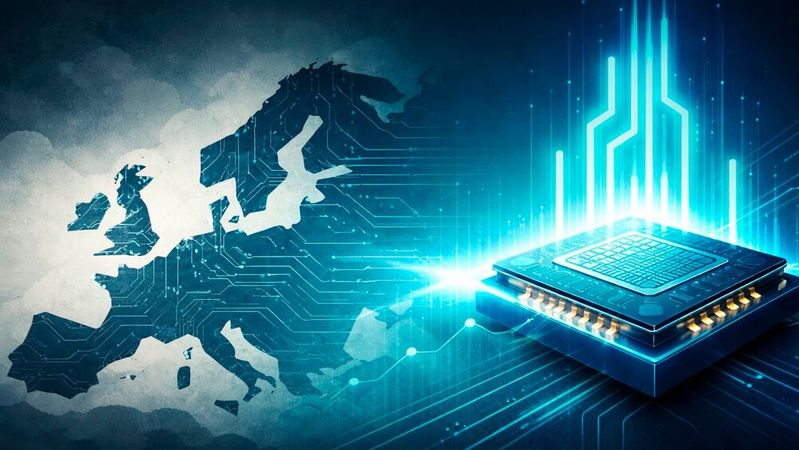
AI will continue to drive growth in the semiconductor market in 2026.
(Image: Dall-E / AI-generated)
The earnings prospects for the semiconductor market in 2026 look downright fantastic, as several analysts have already moved the trillion-dollar mark significantly forward in December 2025 - from 2030 to 2026. The main drivers are the enormous AI investments by hyperscalers and disproportionate growth in memory and logic chips. These prospects are particularly encouraging for investors.
But not all that glitters is gold. In a talk for the distributor association IDEA, industry expert and analyst Marco Mezger warned of a continuing shortage in the storage market and distorted market mechanics due to hyperscalers. He also recognizes a European upswing, but even this should not be viewed through rose-tinted glasses, as this upswing is coming from a low starting point. What opportunities and challenges does Mezger see for the semiconductor market in 2026, primarily in Europe?
The AI Turbo
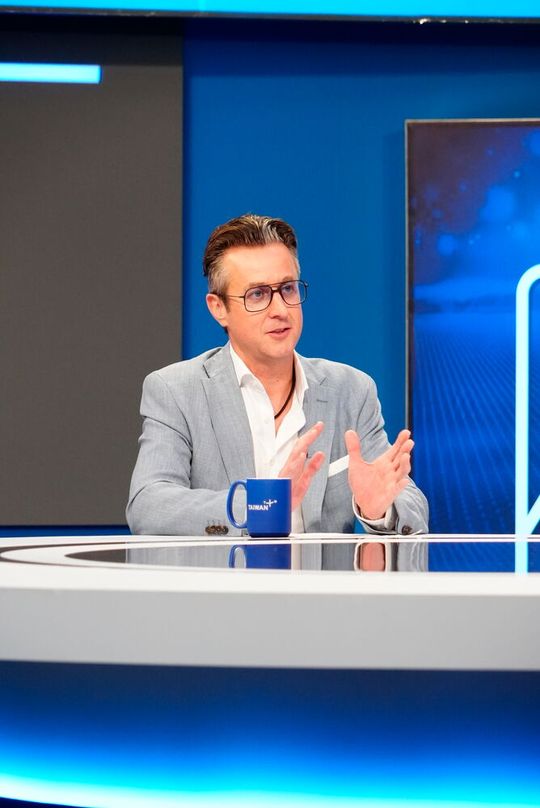
Marco Mezger is a global entrepreneur, investor and consultant with over 30 years of experience in the semiconductor industry. Born in Germany and based in Taipei based in Taipei, Marco Mezger has a unique understanding of global semiconductor companies and their challenges, which translates into a track record as a matchmaker in the industry. A thought leader in the field of memory technology, Marco has a significant number of global readers on LinkedIn. He is also a regular guest commentator in international publications and television programs on semiconductor industry news and market trends.
(Image: IDEA)
The assumption that the semiconductor market could break through the trillion US dollar mark as early as 2026 (instead of 2030) was triggered by, among other things, a significant increase in expectations for 2026 from the World Semiconductor Trade Statistics (WSTS), which sees the global market for semiconductors reaching USD 975 billion in 2026 instead of USD 800 billion. Other analysts agreed with this assessment. The trillion mark seems within reach.
According to Mezger, this dynamic is driven less by unit numbers than by rising average prices (ASPs). As an example, he cites an increase of 59.4% in average prices for December 2025, while the number of units fell at the same time (-8.2%). Nevertheless, sales increased significantly by 46.3%. The dominant growth drivers are quickly identified, with memory and logic together accounting for around 88% of growth. According to Mezger, this will not stop any time soon. The enormous AI expansion of hyperscalers is progressing just as rapidly as the continued strong increase in willingness to invest. Google, for example, is forecasting investments in data center and AI infrastructure in the region of 200 to 250 billion US dollars for this year; around three times as much as in 2025. While this growth looks fantastic on paper, there are, of course, downsides.
The Other Side of the Coin
Mezger does not expect any noticeable relief for NAND and DRAM in 2026, as additional wafer capacities are hardly attainable in the short term. "I found it quite interesting for all of us here to learn how significant the influence is, or how much memory content is involved in the various types of applications," explains Mezger. "In high-end servers, 53 percent is attributed to DRAM and NAND. For smartphones, it’s around 20 percent, in industrial PCs 20 to 25 percent, and in the automotive sector, depending on the vehicle class, it ranges from less than 1 percent to about 8 percent."
Yes, there are reactions from manufacturers. Micron has purchased a new fab in Taiwan that still needs to be equipped and plans to invest in DRAM production capacities in the USA. It is likely to take until 2027 before these capacities noticeably impact the market. No capacity expansions are planned for NAND, quite the opposite. Manufacturers like Samsung and SK Hynix are even reducing output by around five percent.
This has consequences for end markets: while hyperscalers "absorb" volumes, consumer electronics and traditional OEMs will be less able to absorb price increases. Mezger therefore sees greater challenges for PCs and smartphones in 2026 due to price and allocation pressure. Manufacturers will have to pass on price increases sooner rather than later, which in turn could shift demand.
Manufacturers Under Pressure, Despite Slight Book-to-Bill Easing in Europe
For Europe, Mezger highlights the return to a positive book-to-bill ratio in his talk; he cites 1.22 for Q4 2025. At the same time, he clearly urges for a realistic assessment. "I think this performance in the fourth quarter provides a very positive outlook for the future. I also don’t want to spoil the mood. But I must tell you that we are starting from a much lower level," explains Mezger. The billings are significantly below previous levels, and the positive figure comes from a lower base. In an example for Italy, he describes that while the billings decreased less sharply year-over-year in 2025 (Q4 about minus 7 percent), the bookings were already showing a significant positive trend; he mentions Q4 with nearly plus 36 percent.
Date: 08.12.2025
Naturally, we always handle your personal data responsibly. Any personal data we receive from you is processed in accordance with applicable data protection legislation. For detailed information please see our privacy policy.
Consent to the use of data for promotional purposes
I hereby consent to Vogel Communications Group GmbH & Co. KG, Max-Planck-Str. 7-9, 97082 Würzburg including any affiliated companies according to §§ 15 et seq. AktG (hereafter: Vogel Communications Group) using my e-mail address to send editorial newsletters. A list of all affiliated companies can be found here
Newsletter content may include all products and services of any companies mentioned above, including for example specialist journals and books, events and fairs as well as event-related products and services, print and digital media offers and services such as additional (editorial) newsletters, raffles, lead campaigns, market research both online and offline, specialist webportals and e-learning offers. In case my personal telephone number has also been collected, it may be used for offers of aforementioned products, for services of the companies mentioned above, and market research purposes.
Additionally, my consent also includes the processing of my email address and telephone number for data matching for marketing purposes with select advertising partners such as LinkedIn, Google, and Meta. For this, Vogel Communications Group may transmit said data in hashed form to the advertising partners who then use said data to determine whether I am also a member of the mentioned advertising partner portals. Vogel Communications Group uses this feature for the purposes of re-targeting (up-selling, cross-selling, and customer loyalty), generating so-called look-alike audiences for acquisition of new customers, and as basis for exclusion for on-going advertising campaigns. Further information can be found in section “data matching for marketing purposes”.
In case I access protected data on Internet portals of Vogel Communications Group including any affiliated companies according to §§ 15 et seq. AktG, I need to provide further data in order to register for the access to such content. In return for this free access to editorial content, my data may be used in accordance with this consent for the purposes stated here. This does not apply to data matching for marketing purposes.
Right of revocation
I understand that I can revoke my consent at will. My revocation does not change the lawfulness of data processing that was conducted based on my consent leading up to my revocation. One option to declare my revocation is to use the contact form found at https://contact.vogel.de. In case I no longer wish to receive certain newsletters, I have subscribed to, I can also click on the unsubscribe link included at the end of a newsletter. Further information regarding my right of revocation and the implementation of it as well as the consequences of my revocation can be found in the data protection declaration, section editorial newsletter.
There are also positive signs for the automotive sector. Mezger believes that demand for semiconductors in this sector will continue to rise, regardless of the powertrain. A look at the data from Trendforce helps to classify this, as the automotive sector is expected to generate around USD 100 billion in semiconductor sales by 2029. Despite the ongoing crisis, Mezger sees structural growth potential in the premium segment in particular.
For distributors, he also emphasizes the need to be able to serve customers depending on their exposure to China. "[Geopolitics] leads to instability in procurement. You've seen what happened with Nexperia in Europe, for example, but also that customers have become more sensitive to China. So you have to find the right ways to offer customers a wide choice of alternatives or sources. Or if your customers are doing business in China, you should be able to continue to offer these types of products. We have very high volatility in different markets."
Sticks in Europe's Spokes
The International Distributors of Electronics Association (IDEA) is a global association of leading electronics distributors committed to transparency, quality assurance and market integrity in the electronics trade.
(Image: IDEA)
Mezger cites the regulatory complexity that companies have to deal with here as one of Europe's biggest structural disadvantages. They have to build up resources and teams to meet compliance and reporting requirements, while other regions do little or nothing in this direction. His appeal: Europe urgently needs to examine whether it really needs to be ahead everywhere, especially in this area. Otherwise, Europe risks falling behind in terms of cost structure and speed of innovation in the long term.
"I think this is really one of the biggest challenges that we probably also need to raise with our local governments and also with the European Union, that they need to relax the compliance requirements and the complexity of the regulations a little bit. We need less regulations and we need to optimize the business environment." (sb)



:quality(80)/p7i.vogel.de/wcms/bc/29/bc29ee18ce776b1915e10e07c1525f3a/0129766196v1.jpeg "The control cabinet is integrated into the rear of the press frame and offers accessibility with a small overhang thanks to the variable door opening. (Image:Tox)")
:quality(80)/p7i.vogel.de/wcms/fe/8a/fe8af1b829b085210fef4c1fa8abddb5/0129784389v1.jpeg "As an integral part of Koch Pac-Systeme's Predictive Pack digital service product, the gearboxes with Cynapse and Wittenstein's Smart Services make it possible to detect damage risks in the packaging specialist's machines at an early stage. (Image:Koch Pac systems)")
:quality(80)/p7i.vogel.de/wcms/9f/7b/9f7be35880605811e045acd3af8b571b/0129558586v1.jpeg "An example of the V210 processing machine, which, according to Voortman, supplements the laser cutting of the V353 with drilling, thread cutting and milling. (Image:Voortman)")
:quality(80)/p7i.vogel.de/wcms/b0/41/b041264d931df4347bc760fff1c7cb7b/0129439236v1.jpeg "The circular milling system proves to be a problem solver in the numerous standard variants, as well as in special shapes for some other milling processes. (Image:Horn/Sauermann)")
:quality(80)/p7i.vogel.de/wcms/6b/0d/6b0d694b060190016a4db18401fa55eb/0129937458v1.jpeg "(Picture: ©AI-generated)")
:quality(80)/p7i.vogel.de/wcms/db/68/db689490e348201603dd30447711ea2b/0129578734v1.jpeg "With three-axis vibration measurement (X, Y and Z axes) and temperature detection, the CMSVT38 condition monitoring sensor provides detailed status information that helps to detect machine damage at an early stage. (Image:Kübler)")
:quality(80)/p7i.vogel.de/wcms/49/09/49095c6192a6c46d47b567e1def31ea6/0130024626v1.jpeg "The new TUM \"RoboGym\" (powered by Neura) is Europe's largest training center for next-generation humanoid robots. It focuses on the implementation of artificial intelligence in robotic systems. At the same time, it is a forge for AI experts ... (Image:Neura Robotics)")
:quality(80)/p7i.vogel.de/wcms/92/5e/925ee98ea36ad9bd574fa1cea11d0e53/0129964352v1.jpeg "The production of hardware components for humanoid robots offers great market potential. (Image:Fraunhofer IPA)")
:quality(80)/p7i.vogel.de/wcms/7f/08/7f087d7013424d123ab7275cd2e3fe55/adobestock-809456218--c2-a9-20degimages-20-e2-80-93-20stock-adobe-com-ki-generiert-4179x2351v1v1.jpeg "The digital upgrading of existing machines conserves resources, saves energy and reduces the need for new production. (Image:Degimages - stock.adobe.com/AI-generated)")
:quality(80)/p7i.vogel.de/wcms/dd/ce/ddcef80b290218276bf857cdb64a45e1/finkel-stephan-4162x2341v1.jpeg "Stephan Finkel, Partner and Industry Lead Defence & Security at 3DSE (Source: 3DSE)")
:quality(80)/p7i.vogel.de/wcms/cb/fe/cbfe2741917274bbbf93d5b93e47a4f5/contact-software-launcht-fourier-20aiv1v1.png "Fourier AI combines AI models with AI applications developed for demanding engineering tasks. (Image:Contact Software)")
:quality(80)/p7i.vogel.de/wcms/bc/f7/bcf7a56980850be13ed37d220cd514bc/elchinator-security-5042249-1280-1280x720v1v1.jpeg "The HP Wolf Security Report shows: Attackers use AI for speed, modularity and automation, while the quality of campaigns is low. (Image:Picture: Pixabay)")
:quality(80)/p7i.vogel.de/wcms/f5/80/f5809e877017e40b413b48fcd8452246/cefmof-hydrogen-station-29-2048x1366-2048x1152v1v1.jpeg "The hydrogen filling station in Jyväskylä. The electrolyzer is installed in the fenced area at the top right. (Image:Cefmof Hydrogen)")
:quality(80)/p7i.vogel.de/wcms/69/f5/69f516f07a0ba999c5ba8763891853f1/0130030553v1.jpeg "Can be reloaded in 210 seconds for a return trip on the Greenford branch line: the GWR's 230001. (Image:Jack Boskett Media | GWR)")
:quality(80)/p7i.vogel.de/wcms/31/84/3184f9ac736d8df7c2e934593684bc74/0130024314v1.jpeg "Here, the Bavarian car manufacturer BMW looks ahead to 2025: business was sluggish due to US tariffs and weakening sales in China ... (Image:BMW)")
:quality(80)/p7i.vogel.de/wcms/f0/5e/f05e720c52f757660ddbf7c410074f64/adobestock-222131875-5616x3157v1.jpeg "(Source: © jeson - stock.adobe.com)")
:quality(80)/p7i.vogel.de/wcms/02/36/02364f083b3023cee3b3f0893ea3f859/0129857003v1.jpeg "AI will continue to drive growth in the semiconductor market in 2026. (Image:Dall-E / AI-generated)")
:quality(80)/p7i.vogel.de/wcms/61/8f/618f16f8fa95ec6cc838ca9bfb5dbaf1/0130027046v1.jpeg "The Belgian Research Institute has set up a European university consortium on the subject of CMOS 2.0. It brings together 26 university groups to research chip technologies that go beyond conventional transistor scaling. (Image:Imec)")
:quality(80)/p7i.vogel.de/wcms/db/a2/dba29322d0934dea1bbc4b31df80e392/0129953760v1.jpeg "SEM image: High-density electrode array with 128 nm dots. (Image:imec)")
:quality(80)/p7i.vogel.de/wcms/c2/a8/c2a8a93f306c1475489dff074ad59731/0129967672v1.jpeg "Figure 1: Imec's logic technology roadmap showing the extension of the nanosheet era from 2nm to the A10 node with the outer-wall forksheet, before the transition to CFET for A7 and beyond. (Image:imec)")
:fill(fff,0)/images.vogel.de/vogelonline/companyimg/76800/76895/65.jpg "FAULHABER_120mm.jpg ()")

:quality(80)/p7i.vogel.de/wcms/8d/2f/8d2f7919476f218e58f73dbcc1f2090e/0126622896v1.jpeg "Developments in the semiconductor market in Q2/2025: Globally, there is growth, while revenue in Europe continues to stagnate. (Image:Dall-E / AI-generated)")
:quality(80)/p7i.vogel.de/wcms/8d/2f/8d2f7919476f218e58f73dbcc1f2090e/0126622896v1.jpeg "Developments in the semiconductor market in Q2/2025: Globally, there is growth, while revenue in Europe continues to stagnate. (Image:Dall-E / AI-generated)")
:quality(80)/p7i.vogel.de/wcms/39/7f/397faf16947efd3096f64181ef34239d/chatgpt-20image-2023--20juni-202025-2c-2013-04-56-1536x864v1.png "Hopes for the European semiconductor industry, according to Mezger, lie in the form of a second wave of AI that is not just happening in server rooms, but everywhere: “AI Everywhere.” (Image: Dall-E / AI-Generated)")