There are several ways to achieve a high-quality connector connection. Some can be achieved by correctly selecting the individual components, others depend on the manufacturing quality of the manufacturer. Read here to find out how to choose the right connectors for your application.
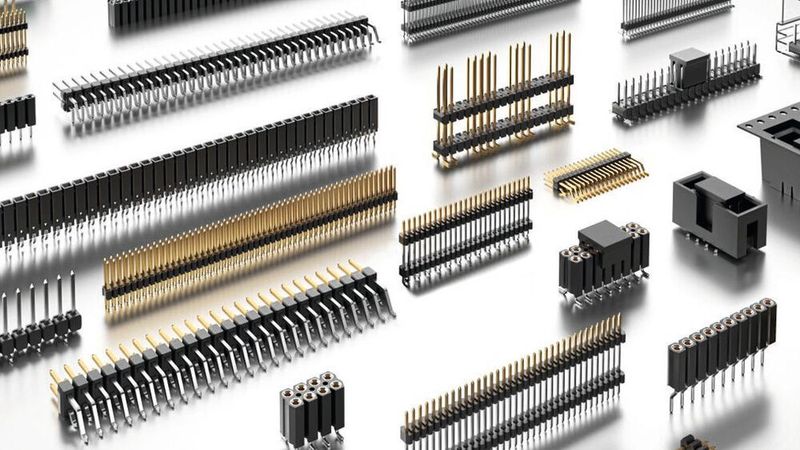
Image 1: A wide selection of various printed circuit board connectors makes it easier to select the one suitable for the application.
(Image: Fischer Electronics)
Timon Dahlhaus is a development engineer for PCB connectors at Fischer Elektronik.
For the design of a high-quality connector on the circuit board, the developer must consider various criteria. These include the choice of materials, the soldering process, and the correct pairing of contact pin and socket. In addition, the different versions of the pin and socket strips play an important role for the respective application.
These two types of connectors can be divided into different quality levels. The use of connectors of each quality level is legitimate and can achieve the required performance in various application areas. The following sections describe the various quality levels and explain why even less good and cheaper connectors can provide high-quality connections.
Gallery
Material selection: The insulator body
The quality of the insulating body in PCB connectors is largely determined by the technical thermoplastic used. A high fiber glass content in the plastic improves the shape stability, dimensional accuracy and resistance to mechanical loads. Although technical thermoplastics may seem overdimensioned for applications without high temperatures, they are essential due to the high temperatures in the reflow soldering process and the good flame retardant class. In the end, it is by no means advisable to make qualitative compromises when selecting the material for the insulating body. Here, attention should always be paid to a UL94 V-0 certification and the best mechanical properties.
The right contact material combined with the right coating
In electronics, copper alloys, which are characterized by high electrical conductivity, are typically used for contacts of pin or socket strips. Brass and bronze are the most common materials, while beryllium copper, for example, is less commonly used, but is ideal for precision inner contact springs. However, these alloys tend to react with oxygen and form a passive layer, which affects electrical conductivity and increases the risk of short circuits due to flaking particles. To avoid this effect, a finishing layer is required.
A gold finish offers excellent conductivity and, due to the hardness of the material, a high number of mating cycles. Thus, gold is an optimal surface coating, with the thickness of the gold layer being crucial for the lifespan and resistance of the connector. Even thin layers of just 0.2 µm can guarantee 50 mating cycles, while a thinner flash gold plating of 0.02 µm can guarantee a maximum of ten mating cycles. In applications where the connection is rarely or never disconnected, the thinner gold layer provides a sufficient and resource-saving solution.
Tin - the alternative to gold
Tin is a more cost-effective alternative to gold on contacts. Tin is especially suitable for applications with low currents up to 3 A and offers good conductivity for up to ten mating cycles. Furthermore, tin has better solderability, regardless of whether the connector is soldered using wave soldering or a reflow soldering process. The use of selectively gold-plated contacts combines the advantages of both materials: the gold-plated side ensures a low contact resistance, while the tin-plated side ensures optimal solderability (image 1).
A silver-plated surface even surpasses a gold coating in terms of electrical conductivity. Silver offers the highest conductivity of all materials, but is also prone to the formation of an oxidation layer, which leads to contact difficulties with repeated plugging operations. Therefore, the exact application and the associated requirements, such as the number of plugging operations due to (de-) assembly, must be taken into account when choosing the contact material.
The differences in contact springs
The connector specialists in Lüdenscheid use two types of contact springs in the socket strips: a stamped fork contact and a round, stamped-coiled contact spring. Which contact spring fits best depends on the area of application and the environmental conditions.
The stamped-coiled contact spring is suitable for environments where the electronics are exposed to vibrations and shock loads, as its six contact fingers ensure reliable contact (Image 2). Even strong movements are compensated in this way without interrupting the connection to the contact pin.
In contrast, the fork spring with a rectangular cross-section is a cost-effective solution for static applications. The fork spring touches the contact on two opposite sides. In combination with a square contact pin, the contact surfaces fit perfectly together, maximizing the contact area and achieving an effective electrical connection.
SMT and THT: The connection technology - circuit board connectors
Once the appropriate parameters for the quality level of the pin and socket strip pair have been selected, the last step is to choose an adequate connection technology between the connector and the circuit board. The Surface Mount Technology (SMT) is particularly recommended when the connectors are assembled using a fully automatic system.
Date: 08.12.2025
Naturally, we always handle your personal data responsibly. Any personal data we receive from you is processed in accordance with applicable data protection legislation. For detailed information please see our privacy policy.
Consent to the use of data for promotional purposes
I hereby consent to Vogel Communications Group GmbH & Co. KG, Max-Planck-Str. 7-9, 97082 Würzburg including any affiliated companies according to §§ 15 et seq. AktG (hereafter: Vogel Communications Group) using my e-mail address to send editorial newsletters. A list of all affiliated companies can be found here
Newsletter content may include all products and services of any companies mentioned above, including for example specialist journals and books, events and fairs as well as event-related products and services, print and digital media offers and services such as additional (editorial) newsletters, raffles, lead campaigns, market research both online and offline, specialist webportals and e-learning offers. In case my personal telephone number has also been collected, it may be used for offers of aforementioned products, for services of the companies mentioned above, and market research purposes.
Additionally, my consent also includes the processing of my email address and telephone number for data matching for marketing purposes with select advertising partners such as LinkedIn, Google, and Meta. For this, Vogel Communications Group may transmit said data in hashed form to the advertising partners who then use said data to determine whether I am also a member of the mentioned advertising partner portals. Vogel Communications Group uses this feature for the purposes of re-targeting (up-selling, cross-selling, and customer loyalty), generating so-called look-alike audiences for acquisition of new customers, and as basis for exclusion for on-going advertising campaigns. Further information can be found in section “data matching for marketing purposes”.
In case I access protected data on Internet portals of Vogel Communications Group including any affiliated companies according to §§ 15 et seq. AktG, I need to provide further data in order to register for the access to such content. In return for this free access to editorial content, my data may be used in accordance with this consent for the purposes stated here. This does not apply to data matching for marketing purposes.
Right of revocation
I understand that I can revoke my consent at will. My revocation does not change the lawfulness of data processing that was conducted based on my consent leading up to my revocation. One option to declare my revocation is to use the contact form found at https://contact.vogel.de. In case I no longer wish to receive certain newsletters, I have subscribed to, I can also click on the unsubscribe link included at the end of a newsletter. Further information regarding my right of revocation and the implementation of it as well as the consequences of my revocation can be found in the data protection declaration, section editorial newsletter.
In this process, the component is sucked up using a suction device on the assembly aid or a flat surface and placed on a pre-assembled solder pad. Only in the reflow oven does the solder pad melt and establish a secure connection with the connector.
The Through-Hole Technology (THT) is characterized by increased stability of the soldering. The combination of the hole in the circuit board and the contact offers additional robustness to the soldering. The disadvantage is that automation is more difficult in the soldering process, as it doesn't occur in the reflow soldering oven, but with a conventional soldering wave.
The automated placement of the connectors is made more difficult by the additional fit between the hole in the board and the contact pin. The positioning tolerance is significantly smaller than is the case with SMT.
THR: The fusion of SMT and THT
The Through-Hole-Reflow technique (THR) has emerged from the fusion of the two connection techniques mentioned above. This combines the advantages of both soldering processes and guarantees a stable and modern connection between the connector and the circuit board (Image 3). This results in a stable and secure connection that offers stability by using the holes in the circuit board and saves space in the circuit board layout.
Due to the Pin-In-Paste technique (PiP), the connector can be soldered in the reflow oven automatically. The only disadvantage compared to SMT is the complicated positioning. However, this is also possible with modern placement machines and increasingly precise connectors, making it more and more popular.
In addition, there are applications where soldering is not possible. This could be due, for example, to another component on the circuit board that would be damaged by the temperature of the peak zone of the reflow oven.
Pressfit: When soldering is not possible
For these cases, there is also the option to use press-fit connectors. These are simply pressed into the hole in the board and do not require any additional soldering. A punched area in the contact pin is responsible for this, which deforms when pressed into the board in such a way that this connection can only be loosened again with a high effort.
Conclusion: There are several ways to achieve a high-quality connector. Some can be achieved by correctly choosing the individual components, others depend on the manufacturing quality of the manufacturer. If you consider the mentioned factors and specifications, nothing stands in the way of a long-lasting and durable connector. (kr)



:quality(80)/p7i.vogel.de/wcms/dd/08/dd086510d9ae7b50181f6070e4463b44/0129363730v1.jpeg "Typical application for ionizing devices: Wrapping films. (Picture: ©Adobe Stock/SMC)")
:quality(80)/p7i.vogel.de/wcms/35/57/3557c819943c53acec41a0ccba87da4f/0130049064v1.jpeg "Researchers at the Fraunhofer IWU in Chemnitz have long known that many typical sheet metal parts can be manufactured more cost-effectively using hollow embossing rollers. Now there is news to report ... (Image:Fraunhofer IWU)")
:quality(80)/p7i.vogel.de/wcms/59/02/590246e3b3f415c65edbee377c14ca77/26-06-pi-fraunhofer-iws-41450-direktplattieren-pic-01-7771x4369v1v1.jpeg "The Fraunhofer IWS has developed the new \"direct laser cladding\" process, which creates a functional layer directly on the base body by applying a strip-shaped metal to rotationally symmetrical components in a spiral and bonding it locally by laser. (Image:Christoph Wilsnack/Fraunhofer IWS)")
:quality(80)/p7i.vogel.de/wcms/73/60/73608418789b1d9c393f5e2fa974eda2/0130209906v1.jpeg "The robots of the X6 generation from b+m enable very high painting quality and are also particularly compact and easy to maintain. (Image:Beckhoff)")
:quality(80)/p7i.vogel.de/wcms/78/e9/78e9188c25a8a94e67c34c9bf8ffe495/visual-agile-20robots-20and-20google-20deepmind-20partner-20to-20bring-20intelligence-20to-20robotics-2500x1406v1v1.jpeg "Together, the partners are developing adaptable, intelligent robots for a wide range of applications (Image:Agile Robots SE)")
:quality(80)/p7i.vogel.de/wcms/e7/66/e7669ecf0260ae8fc54c214e34e4902a/0130316817v1.jpeg "Siemens and Palo Alto Networks offer tested cybersecurity solution for industrial 5G. (Image:Siemens)")
:quality(80)/p7i.vogel.de/wcms/9f/55/9f55324832c4f426958031375124d9de/siemens-20ubtech-20hmnd-1920x1079v1v1.png "Ready for the factory floor: While Ubtech is planning mass production, Siemens is already testing humanoids in real factory applications in Erlangen. (Image:Siemens)")
:quality(80)/p7i.vogel.de/wcms/11/36/113695ed260e29c8c2d9d39dc5f9d869/0130213768v1.jpeg "AI can work cheaply in China and deliver the results rapidly all over the world. (Image:Dall-E / AI-generated)")
:quality(80)/p7i.vogel.de/wcms/62/5f/625f41e87ebfef156a98c8e6393e32fd/0130211654v1.jpeg "Axial flux motors have some advantages over radial flux motor—but their production is currently still expensive. (Image:RWTH Aachen University)")
:quality(80)/p7i.vogel.de/wcms/77/9b/779b0685d010dfe45c9c2cb1cfecd467/0128886425v1.jpeg "The BlueEye is the first \"real\" hyperspectral camera for the UV range and covers the wavelength range from 220 to 380nm. (Image:Inno-spec GmbH)")
:quality(80)/p7i.vogel.de/wcms/e4/51/e451d52ce0182fb0aaa46a5774f832ef/26-04-pi-fraunhofer-iws-21160-bioslide-pic-01-4128x2321v1v1.jpeg "With the BioSlide research project, the Fraunhofer IWS is investigating how sliding systems can be designed to be more sustainable and energy-efficient. New materials can be tested in a particularly application-oriented manner on this plain bearing test stand. (Image:Fraunhofer IWS)")
![Thanks to advanced 3D printing technology, a more efficient use of resources should contribute to lower-emission aviation—this is the goal of ['skai]-lab. (Image:Oleksandr Pashchenko - stock.adobe.com / AI-generated)](https://cdn1.vogel.de/nghHNSbySccfOjG3n1qCA-FVOjQ=/288x162/smart/filters:format(jpg):quality(80)/p7i.vogel.de/wcms/62/64/626424c97a16e69f871bf216c9629c2a/adobestock-1927043193--c2-a9-20oleksandr-20pashchenko-20-e2-80-93-20stock-adobe-com-ki-generiertv1v1.jpeg "Thanks to advanced 3D printing technology, a more efficient use of resources should contribute to lower-emission aviation—this is the goal of ['skai]-lab. (Image:Oleksandr Pashchenko - stock.adobe.com / AI-generated)")
:quality(80)/p7i.vogel.de/wcms/c3/c4/c3c4ce270b083eeac55654148611f064/0130237945v1.jpeg "China is not giving up on hydrogen, but is intensifying its efforts. (Image:freely licensed from Pixabay)")
:quality(80)/p7i.vogel.de/wcms/4e/c0/4ec0bd19390b169edfa23677373dcdf1/0130260089v1.jpeg "Renewable fuels can supply European road traffic, according to a study. (Image:Aral)")
:quality(80)/p7i.vogel.de/wcms/6f/c9/6fc9050301d745cad25585c6780f8f51/0130197341v1.jpeg "Production facilities are a worthwhile target and are therefore at risk. (Image:ABB Robotics)")
:quality(80)/p7i.vogel.de/wcms/b6/62/b662adc2cec8227d8172509bbfb6ee42/25c0207-107-4961x2789v1v1.jpeg "The GLB is the second model based on Mercedes' new MMA platform. Apparently, Geely's platform is better and cheaper, which is why the two companies are negotiating a partnership. (Image:Mercedes-Benz)")
:quality(80)/p7i.vogel.de/wcms/4d/dd/4dddf438e91f394c04a095dbfd109d1c/0130236430v1.jpeg "Measurement modules: The 720301 module in combination with the SL2000 enables RMS and power calculations, among other things. (Image:Yokogawa)")
:quality(80)/p7i.vogel.de/wcms/61/fc/61fcf95f5cca15494ad18343901ae585/0130317237v1.jpeg "With the AGI CPU, Arm says it is taking a \"historic step\": With the processor aimed at AI in data centers, the company is presenting itself for the first time as a provider of its own chips, not just as a pure IP licensor. (Image:Arm)")
:quality(80)/p7i.vogel.de/wcms/82/90/8290dfe3595b6c6b33726ae8b76172c7/0130319587v1.jpeg "The concept image illustrates how the pattern of tiny protrusions and depressions created on the substrate (MgO, bottom) controls the arrangement of atoms in the superconducting material (YBCO, top). At the interface between the two layers, an electronic structure enables superconductivity to occur at higher temperatures than previously possible. (Image:Chalmers University of Technology / Riccardo Arpaia)")
:fill(fff,0)/p7i.vogel.de/companies/67/eb/67eba621ef6ea/logo2.png "logo2 (Wuxi InfiMotion)")
:quality(80)/p7i.vogel.de/wcms/f2/a1/f2a1f1b5fff25af30eea1f8a80d9c88b/0117823453.jpeg "Image 3: Example of Mixed Technology with the SL 28 SMD THR; Connectors in SMT and THR technology.(Image: Fischer Electronics)")
:quality(80)/p7i.vogel.de/wcms/ba/8d/ba8d5a5b11e8672c3fdbb224caa089a6/0117823445.jpeg "Image: Examples of various precision contacts including internal contact springs.(Image: Fischer Electronics)")
:quality(80)/p7i.vogel.de/wcms/21/5d/215d053fa69010b36fdc6ca59332692b/0117823440.jpeg "Image: A wide range of various printed circuit board connectors makes it easier to select the appropriate one for your application.(Image: Fischer Electronics)")
:quality(80)/p7i.vogel.de/wcms/59/0d/590d3c7ae4b7a4df0ff976a33510b7ec/0128999676v1.jpeg "A multitasker in action: During assembly work, the B&M Contactscrew ensures a secure ground connection and clean threads. (Image:b&m)")
:quality(80)/p7i.vogel.de/wcms/9e/f1/9ef1ff431545691ab7ee74b2037b9a49/0128623861v1.jpeg "ept TechDay 2025: More than 100 participants followed the invitation to Peiting, Bavaria. (Image:Kristin Rinortner)")