Qubits open up new possibilities in data processing. However, their high sensitivity to external influences—decoherence—limits computing power. Fortunately, not all qubits are the same. New architectures promise more robustness.
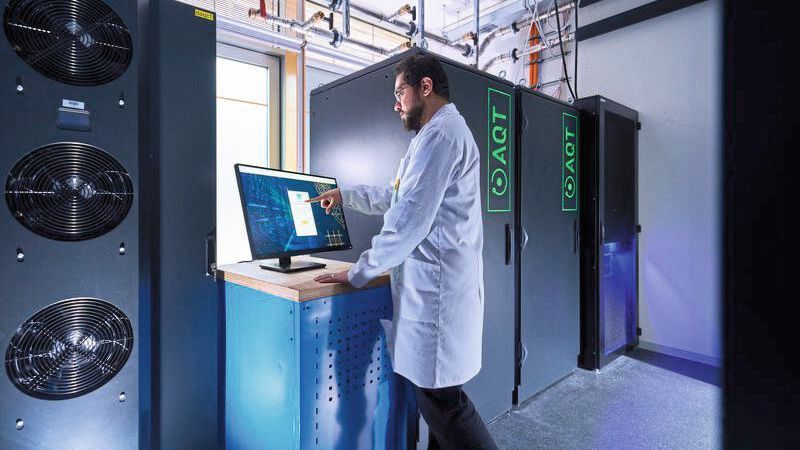
At the Leibniz Computing Center (LRZ) of the Bavarian Academy of Sciences, this 20-qubit ion trap quantum computer from Alpine Quantum Technologies is available for innovative research tasks.
(Image: Munich Quantum Valley | Jan Greune)
Anna Kobylinska and Filipe Pereia Martins work for McKinley Denali, Inc., USA.
Qubits, the fundamental computing units of a quantum processor, have the bizarre ability to take on a third state known as superposition, in addition to the states 0 and 1, allowing them to capture multiple values simultaneously. This behavior forms the basis for the computational advantages of a quantum computer. The biggest challenge remains the error-proneness of qubits as information storage. However, different qubit implementations behave differently. Each architecture has its own strengths and technical challenges.
In Germany, the Helmholtz Association is among those researching new qubit platforms. These include Majorana qubits (FZJ), phase-slip qubits, and molecular qubits (KIT, DLR).
In the lament of superconducting qubits
Superconducting qubits combine high-frequency technology with quantum mechanics. The core component is the Josephson junction—a nonlinear tunneling connection that generates discrete energy levels, similar to an artificial atom. Unlike classical LC oscillators, it allows the creation of discrete energy levels that behave similarly to the states of an artificial atom.
Control is achieved via precise microwave pulses (4–10 GHz). Superconducting qubits can execute quantum gates in the nanosecond range, but they are short-lived.
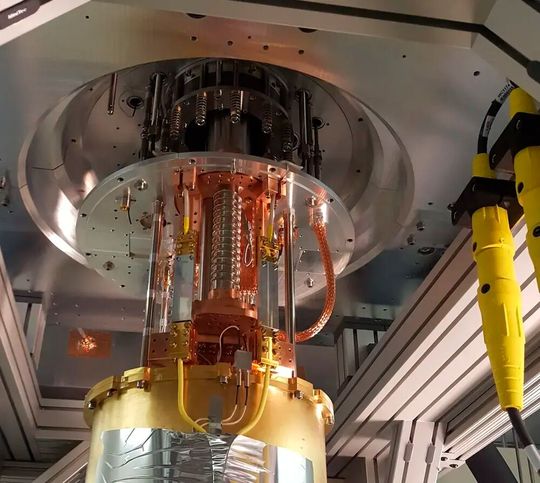
From an engineering perspective, the greatest challenge is to minimize environmental influences. Even tiny changes in the Earth's magnetic field, thermal noise, ground vibrations, and electromagnetic fields accelerate decoherence. Therefore, superconducting qubits are operated in highly efficient cryosystems at a few millikelvin.
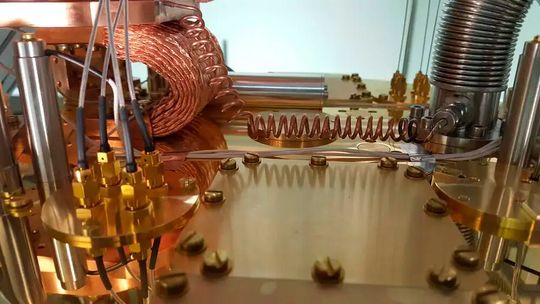
A quantum computer at Nokia Bell Labs
(Image: Nokia Bell Labs)
Superconducting qubits can be integrated on silicon wafers, but due to the requirements for advanced cryotechnology, only a few companies can currently produce such systems in significant quantities. The main players include IBM, Google, Rigetti Computing, IQM, D-Wave, and Quantinuum (a merger of Honeywell Quantum Solutions and Cambridge Quantum).
"Cat qubits" from Alice&Bob in Paris
Conventional superconducting qubits (e.g., transmon qubits) are sensitive to bit-flip errors (the X errors) and phase-flip errors (the Z errors). A European startup named Alice&Bob aims to realize a fault-tolerant architecture with the so-called "cat qubits," which requires fewer physical qubits per logical qubit than common approaches from companies like IBM or Google.
Named in reference to Schrödinger's cat thought experiment, these qubits differ from conventional qubits by their inherent error resistance to one of the central problems in quantum computing: bit-flip errors.
Cat qubits represent a specific physical architectural variant within the family of superconducting qubits. They are based on the coherent superposition of two macroscopic quantum states in a nonlinear superconducting resonator.
The coherent states of a cat qubit are stabilized by a nonlinear potential landscape that creates a high energy barrier between them, thus suppressing bit-flip errors.
A cat qubit consists of a superconducting circuit with a nonlinear element. The latter is usually a Josephson junction (JJ). This creates an anharmonic energy level structure that allows for precise control of the qubit states.
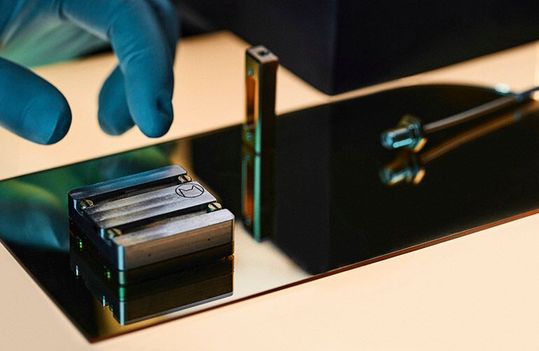
The Boson 4 quantum chip from Alice&Bob based on cat qubits demonstrates unprecedented error resistance. By combining inductance, Josephson junction, and capacitive coupling, a nonlinear superconducting circuit is formed in a cat qubit; it behaves like a harmonic oscillator with additional nonlinear interactions.
(Image: Alice&Bob)
These superconducting circuits generate a coherent superposition of two opposite states in phase space. These two states can still be precisely controlled and read out with standard quantum operations. However, they are separated by an energy barrier, preventing easy transitions between them—which curtails bit-flip errors.
Cat qubits use multiple components to maintain their coherent states.
Initially, a superconducting inductance (L) combined with a nonlinear superconducting element, the Josephson junction—the nonlinear core of the circuit—creates an anharmonic energy level structure. The superconducting inductance is a loss-free coil made of superconducting material such as niobium or aluminum, used for energy storage.
A Josephson junction (JJ) is a superconducting tunnel connection with nonlinear inductance. It consists of two thin layers of superconducting material separated by a non-superconducting insulating layer (such as an oxide layer or a normal conducting metal). The barrier is thin enough that electrons can quantum mechanically tunnel through without encountering electrical resistance.
Date: 08.12.2025
Naturally, we always handle your personal data responsibly. Any personal data we receive from you is processed in accordance with applicable data protection legislation. For detailed information please see our privacy policy.
Consent to the use of data for promotional purposes
I hereby consent to Vogel Communications Group GmbH & Co. KG, Max-Planck-Str. 7-9, 97082 Würzburg including any affiliated companies according to §§ 15 et seq. AktG (hereafter: Vogel Communications Group) using my e-mail address to send editorial newsletters. A list of all affiliated companies can be found here
Newsletter content may include all products and services of any companies mentioned above, including for example specialist journals and books, events and fairs as well as event-related products and services, print and digital media offers and services such as additional (editorial) newsletters, raffles, lead campaigns, market research both online and offline, specialist webportals and e-learning offers. In case my personal telephone number has also been collected, it may be used for offers of aforementioned products, for services of the companies mentioned above, and market research purposes.
Additionally, my consent also includes the processing of my email address and telephone number for data matching for marketing purposes with select advertising partners such as LinkedIn, Google, and Meta. For this, Vogel Communications Group may transmit said data in hashed form to the advertising partners who then use said data to determine whether I am also a member of the mentioned advertising partner portals. Vogel Communications Group uses this feature for the purposes of re-targeting (up-selling, cross-selling, and customer loyalty), generating so-called look-alike audiences for acquisition of new customers, and as basis for exclusion for on-going advertising campaigns. Further information can be found in section “data matching for marketing purposes”.
In case I access protected data on Internet portals of Vogel Communications Group including any affiliated companies according to §§ 15 et seq. AktG, I need to provide further data in order to register for the access to such content. In return for this free access to editorial content, my data may be used in accordance with this consent for the purposes stated here. This does not apply to data matching for marketing purposes.
Right of revocation
I understand that I can revoke my consent at will. My revocation does not change the lawfulness of data processing that was conducted based on my consent leading up to my revocation. One option to declare my revocation is to use the contact form found at https://contact.vogel.de. In case I no longer wish to receive certain newsletters, I have subscribed to, I can also click on the unsubscribe link included at the end of a newsletter. Further information regarding my right of revocation and the implementation of it as well as the consequences of my revocation can be found in the data protection declaration, section editorial newsletter.
In a normal conductor, electric current flows when a voltage is applied. In a Josephson junction, a superconducting current (the so-called Josephson current) can flow even without voltage—solely due to the quantum coherence between the two superconducting electrodes.
The nonlinear sinusoidal dependence of the Josephson current on the phase difference of the superconducting wave functions is one of the central properties of the Josephson junction. This nonlinearity enables the targeted creation of discrete and coherent quantum states in superconducting circuits, which manifest as coherent states in phase space. This behavior can be modeled using the nonlinear Schrödinger equation.
Through capacitive coupling (C), the system interacts with the control and measurement technology and can be specifically excited or read out via a microwave resonator. This element is a superconducting cavity or transmission line resonator used for the manipulation and readout of qubit states.
Unlike conventional superconducting qubits (e.g., transmon qubits), where bit-flip errors frequently occur, the coherent states of a cat qubit are trapped in a stable potential landscape in phase space. This results in intrinsic suppression of bit-flip errors, reducing the need for complex error correction methods. Phase-flip errors (Z errors) remain a challenge.
The momentum of silicon spin qubits
Silicon spin qubits use the spin of a single electron trapped in a tiny semiconductor structure called a quantum dot. These qubits can be manufactured like miniaturized transistors, and their spin states can be manipulated using electric or magnetic fields.
Since they usually have lower excitation energies compared to superconducting qubits, they are less sensitive to thermal noise. However, their realization requires a highly pure starting material (for example, 99.9999% high-purity silicon, abbreviated as "^28Si"). With less than 1 part per million (ppm) of the problematic isotope silicon-29 (^29Si), ^28Si is primarily used in quantum computing as a substrate for qubits.
Silicon spin qubits are considered very space-efficient as they can connect to the classical CMOS manufacturing process. With successful optimization, thousands or millions of spin qubits can be implemented on a single chip.
The great strength of silicon spin qubits is their space-saving potential: with successful optimization, thousands or even millions of these qubits could be integrated onto a single chip. This prospect of high scalability attracts renowned players like Intel, HRL Laboratories, and the Dutch QuTech, who are familiar with CMOS processes and have extensive manufacturing capabilities. Universities, including the University of New South Wales (UNSW), are also intensively researching the spin-based architecture. Thanks to long coherence times in isotopically pure silicon, this technology could represent an important step toward widely deployable quantum processors.
Trapped in an ion trap
Ion trap qubits utilize individual electrically charged atoms (ions, e.g., of ytterbium or barium) trapped in an electromagnetic field and can be controlled by laser pulses.
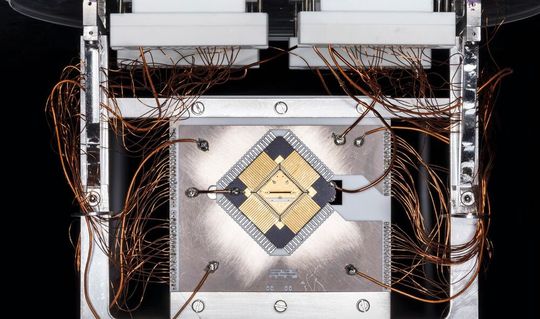
Interconnection of a micro-segmented ion trap for quantum computing applications (in the "Quantum, Atomic, and Neutron Physics (QUANTUM)" group at the Institute of Physics at Johannes Gutenberg University Mainz (JGU)).
(Image: Thomas Klink via Helmholtz Quantum)
A typical ion trap system consists of laser fields that cool the ion and control its quantum states, RF or DC electrodes that fix the ion in the vacuum, and optical systems that read out the qubit.
In contrast to superconducting or spin-based qubits, ions are natural quantum objects with inherently well-defined quantum states. This gives them exceptionally long coherence times of several minutes or even hours and enables extremely precise gate operations. However, they can only be driven slowly (in the microsecond range) and present scalability challenges.
In addition to Quantinuum, pioneers of this technology include IonQ, a spin-off of the University of Maryland; Oxford Ionics; and Alpine Quantum Technologies, a spin-off from the University of Innsbruck (Germany) by Rainer Blatt and Thomas Monz, two leading quantum physicists.
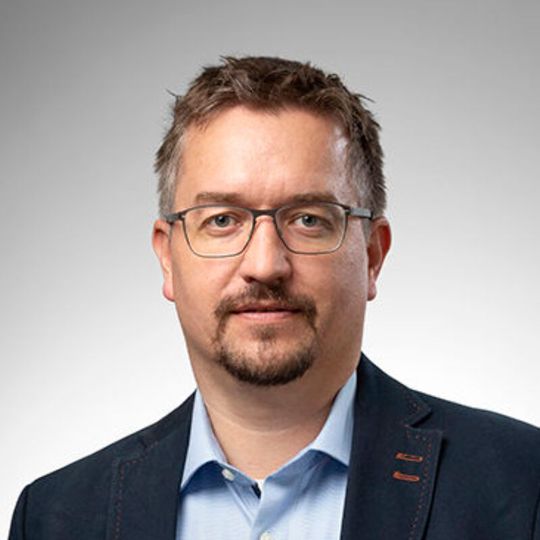
Dr. Thomas Monz, CEO of AQT, founded the company together with Prof. Dr. Rainer Blatt and Prof. Dr. Peter Zoller.
(Image: Alpine Quantum Technologies GmbH)
AQT is working on developing modular ion trap quantum computers that can be operated in standard data centers—without the need for extreme cooling or laboratory-sized vacuum chambers. Research at the University of Innsbruck and the Institute for Quantum Optics and Quantum Information (IQOQI) of the Austrian Academy of Sciences has played a central role in the development of this technology.
At the Leibniz Computing Center (LRZ) of the Bavarian Academy (Germany) of Sciences, a 20-qubit ion trap quantum computer from Alpine Quantum Technologies is available for novel research tasks. The system was procured by the Leibniz Computing Center and the Munich Quantum Valley with funding from Bavarian state ministries as part of the Hightech Agenda Bayern. With this modular machine in a 19-inch architecture, AQT became the first hardware provider to install and commission an ion-trap quantum computer in a data center, according to Dr. Thomas Monz, founder and CEO of AQT.
"This collaboration strengthens MQV's resources, enhances its capacity for innovation, enables groundbreaking discoveries, and reinforces MQV's position as a leading initiative in the field of quantum computing," commented Prof. Dr. Joachim Ullrich, Director General MQV.
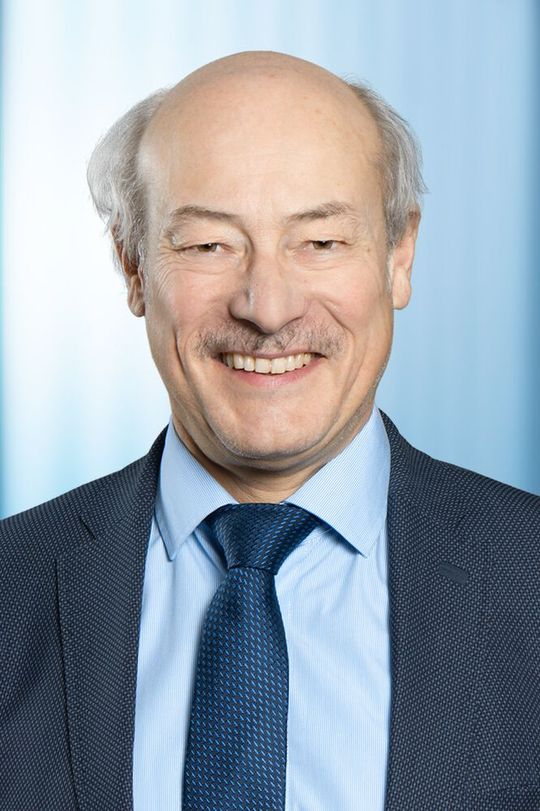
Prof. Dr. Joachim Ullrich, Vice President of the German Physical Society (DPG)
(Image: Physikalisch-Technische Bundesanstalt)
The LRZ intends to advance the development of the Munich Quantum Software Stack in close collaboration with AQT and MQV to "provide users with a robust, end-to-end hybrid quantum-HPC computing resource for scientific activities," reveals Laura Schulz, Head of Quantum Computing and Technology at the LRZ.
Photonic qubits
Photonic qubits use the quantum mechanical properties of light particles (photons) to store and process quantum information. Photonic qubits can be easily networked and are room-temperature capable, as photons do not interact directly with their environment and therefore exhibit very long coherence times.
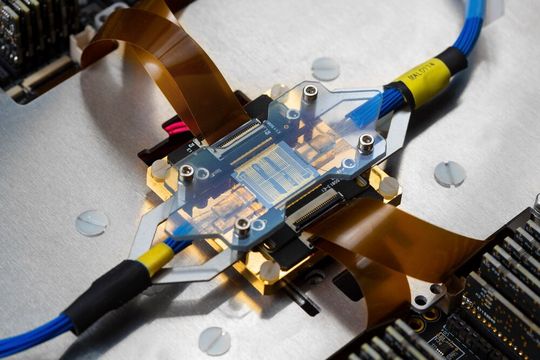
The photonic processor QuiX: When the QuiX photonic processor is connected to a series of single photon sources, it acts as a "switchboard for light."
(Image: QuiX Quantum)
Quantum information can be encoded in various degrees of freedom of photons, be it polarization states (horizontal/vertical or right-/left-circular), time-bin encoding (early vs. late arrival time), or path encoding (different light paths in interferometers).
In Germany, research on photonic qubits is being conducted by TRUMPF subsidiary Q.ANT from Stuttgart (Germany), Fraunhofer IOF in Jena (germany), Max Planck Institute for Quantum Optics (MPQ, Garching), Karlsruhe Institute of Technology (KIT), QuNET (German quantum communication network, funded by the BMBF), and LMU Munich & Humboldt University of Berlin.
On an international level, companies such as PsiQuantum (USA/UK), Canadian Xanadu, and British ORCA Computing are active in this field, alongside research institutions at MIT, Harvard, Caltech, and others.
Topological qubits
Topological qubits are a promising yet experimental type of qubits based on the exotic properties of quasiparticles (anyons). Their main advantage over other qubit technologies is intrinsic error resistance. Topological qubits encode quantum information in the system's global properties, which are not easily affected by local disturbances.
As a basis for qubit manipulations, anyons with their non-trivial exchange statistics are used here. A particularly interesting type of these particles are non-abelian anyons—their quantum states depend not only on their current position but also on their exchange path, the so-called braiding (the twisting of quasiparticle paths).
In a topological system, one can "encircle" or "twist" two anyons. The order of the movements determines the final state of the system—similar to a logic gate in classical computers. Since these qubit states are not locally stored but distributed across the entire system, they are robust against disturbances and decoherence.
Research on topological qubits includes efforts by Microsoft (StationQ, QuArC) and Nokia Bell Labs, a research facility of the Finnish telecommunications company by the same name. Redmond relies on Majorana fermions in hybrid semiconductor-superconductor structures, while Nokia focuses on the Nobel Prize-winning discovery of the fractional quantum Hall effect.
"We are developing a completely new type of qubit that is inherently stable and easy to control," explains research leader Robert Willett from Nokia Bell Labs. The resulting quantum computer is intended to fit into a server rack.
(Image: Nokia Bell Labs)
Molecular qubits
Molecular qubits encode quantum information in the electron spin of paramagnetic metal complexes (e.g., with copper, vanadium, or lanthanides) and/or nuclear spin within a molecule. The quantum information in electron spin-based molecular qubits is stored and read using magnetic fields or microwaves. Nuclear spin-based molecular qubits are controlled using NMR (Nuclear Magnetic Resonance) or ESR (Electron Spin Resonance) techniques.
A key advantage of molecular qubits is the ability to optimize properties such as coherence time and coupling through targeted molecular synthesis. Additionally, these qubits can be combined with other qubit technologies. They can be integrated into solid-state structures or superconducting systems, among others. In Germany, research in this area is being conducted by institutions including the University of Stuttgart (Germany) and the Fraunhofer IAF.
Conclusion
Through their bizarre quantum properties, qubits open up completely new perspectives for research and industry. However, not all qubits are the same: each architecture sets its own priorities and brings peculiar challenges on the way to large-scale industrial quantum computing.
Superconducting qubits excel with extremely fast switching operations but suffer from comparatively short coherence times. Silicon spin qubits are compatible with the established semiconductor industry and could facilitate the transition from the laboratory to industrial manufacturing processes. In an ion trap, qubit states remain stable for a particularly long time, promising high reliability. Photonic qubits, on the other hand, are easy to network and can potentially operate even at room temperature.
In the long run, other, today completely unthinkable, qubit platforms could prevail. The race for the best qubit architectures is certainly in full swing. (mbf)



:quality(80)/p7i.vogel.de/wcms/9d/2b/9d2b802f800e5caf17b2831e74228cd3/screenshot-202026-03-03-20103822-609x343v1v1.png "Visual comparison: on the left, a clean, burr-free cut edge; on the right, typical burr formation with oxidation discoloration. This illustrates how strongly parameter control and gas management influence the quality of the result. (CO₂ laser, oxygen cutting gas, sheet thickness approx. 15 mm). (Image:Picture: Rime)")
:quality(80)/p7i.vogel.de/wcms/dd/08/dd086510d9ae7b50181f6070e4463b44/0129363730v1.jpeg "Typical application for ionizing devices: Wrapping films. (Picture: ©Adobe Stock/SMC)")
:quality(80)/p7i.vogel.de/wcms/35/57/3557c819943c53acec41a0ccba87da4f/0130049064v1.jpeg "Researchers at the Fraunhofer IWU in Chemnitz have long known that many typical sheet metal parts can be manufactured more cost-effectively using hollow embossing rollers. Now there is news to report ... (Image:Fraunhofer IWU)")
:quality(80)/p7i.vogel.de/wcms/59/02/590246e3b3f415c65edbee377c14ca77/26-06-pi-fraunhofer-iws-41450-direktplattieren-pic-01-7771x4369v1v1.jpeg "The Fraunhofer IWS has developed the new \"direct laser cladding\" process, which creates a functional layer directly on the base body by applying a strip-shaped metal to rotationally symmetrical components in a spiral and bonding it locally by laser. (Image:Christoph Wilsnack/Fraunhofer IWS)")
:quality(80)/p7i.vogel.de/wcms/78/e9/78e9188c25a8a94e67c34c9bf8ffe495/visual-agile-20robots-20and-20google-20deepmind-20partner-20to-20bring-20intelligence-20to-20robotics-2500x1406v1v1.jpeg "Together, the partners are developing adaptable, intelligent robots for a wide range of applications (Image:Agile Robots SE)")
:quality(80)/p7i.vogel.de/wcms/e7/66/e7669ecf0260ae8fc54c214e34e4902a/0130316817v1.jpeg "Siemens and Palo Alto Networks offer tested cybersecurity solution for industrial 5G. (Image:Siemens)")
:quality(80)/p7i.vogel.de/wcms/9f/55/9f55324832c4f426958031375124d9de/siemens-20ubtech-20hmnd-1920x1079v1v1.png "Ready for the factory floor: While Ubtech is planning mass production, Siemens is already testing humanoids in real factory applications in Erlangen. (Image:Siemens)")
:quality(80)/p7i.vogel.de/wcms/11/36/113695ed260e29c8c2d9d39dc5f9d869/0130213768v1.jpeg "AI can work cheaply in China and deliver the results rapidly all over the world. (Image:Dall-E / AI-generated)")
:quality(80)/p7i.vogel.de/wcms/62/5f/625f41e87ebfef156a98c8e6393e32fd/0130211654v1.jpeg "Axial flux motors have some advantages over radial flux motor—but their production is currently still expensive. (Image:RWTH Aachen University)")
:quality(80)/p7i.vogel.de/wcms/77/9b/779b0685d010dfe45c9c2cb1cfecd467/0128886425v1.jpeg "The BlueEye is the first \"real\" hyperspectral camera for the UV range and covers the wavelength range from 220 to 380nm. (Image:Inno-spec GmbH)")
:quality(80)/p7i.vogel.de/wcms/e4/51/e451d52ce0182fb0aaa46a5774f832ef/26-04-pi-fraunhofer-iws-21160-bioslide-pic-01-4128x2321v1v1.jpeg "With the BioSlide research project, the Fraunhofer IWS is investigating how sliding systems can be designed to be more sustainable and energy-efficient. New materials can be tested in a particularly application-oriented manner on this plain bearing test stand. (Image:Fraunhofer IWS)")
![Thanks to advanced 3D printing technology, a more efficient use of resources should contribute to lower-emission aviation—this is the goal of ['skai]-lab. (Image:Oleksandr Pashchenko - stock.adobe.com / AI-generated)](https://cdn1.vogel.de/nghHNSbySccfOjG3n1qCA-FVOjQ=/288x162/smart/filters:format(jpg):quality(80)/p7i.vogel.de/wcms/62/64/626424c97a16e69f871bf216c9629c2a/adobestock-1927043193--c2-a9-20oleksandr-20pashchenko-20-e2-80-93-20stock-adobe-com-ki-generiertv1v1.jpeg "Thanks to advanced 3D printing technology, a more efficient use of resources should contribute to lower-emission aviation—this is the goal of ['skai]-lab. (Image:Oleksandr Pashchenko - stock.adobe.com / AI-generated)")
:quality(80)/p7i.vogel.de/wcms/c3/c4/c3c4ce270b083eeac55654148611f064/0130237945v1.jpeg "China is not giving up on hydrogen, but is intensifying its efforts. (Image:freely licensed from Pixabay)")
:quality(80)/p7i.vogel.de/wcms/4e/c0/4ec0bd19390b169edfa23677373dcdf1/0130260089v1.jpeg "Renewable fuels can supply European road traffic, according to a study. (Image:Aral)")
:quality(80)/p7i.vogel.de/wcms/6f/c9/6fc9050301d745cad25585c6780f8f51/0130197341v1.jpeg "Production facilities are a worthwhile target and are therefore at risk. (Image:ABB Robotics)")
:quality(80)/p7i.vogel.de/wcms/b6/62/b662adc2cec8227d8172509bbfb6ee42/25c0207-107-4961x2789v1v1.jpeg "The GLB is the second model based on Mercedes' new MMA platform. Apparently, Geely's platform is better and cheaper, which is why the two companies are negotiating a partnership. (Image:Mercedes-Benz)")
:quality(80)/p7i.vogel.de/wcms/4d/dd/4dddf438e91f394c04a095dbfd109d1c/0130236430v1.jpeg "Measurement modules: The 720301 module in combination with the SL2000 enables RMS and power calculations, among other things. (Image:Yokogawa)")
:quality(80)/p7i.vogel.de/wcms/61/fc/61fcf95f5cca15494ad18343901ae585/0130317237v1.jpeg "With the AGI CPU, Arm says it is taking a \"historic step\": With the processor aimed at AI in data centers, the company is presenting itself for the first time as a provider of its own chips, not just as a pure IP licensor. (Image:Arm)")
:quality(80)/p7i.vogel.de/wcms/82/90/8290dfe3595b6c6b33726ae8b76172c7/0130319587v1.jpeg "The concept image illustrates how the pattern of tiny protrusions and depressions created on the substrate (MgO, bottom) controls the arrangement of atoms in the superconducting material (YBCO, top). At the interface between the two layers, an electronic structure enables superconductivity to occur at higher temperatures than previously possible. (Image:Chalmers University of Technology / Riccardo Arpaia)")
:quality(80)/p7i.vogel.de/wcms/2e/be/2ebe7a3fd5bc91773110a9b66e3e95cf/86592347v1.jpeg "Quantum computers exploit quantum mechanical effects such as superposition and entanglement to deliver enormous computing power. (Image:public domain)")
:quality(80)/p7i.vogel.de/wcms/18/4a/184a4f40eb2c88c7d124f15637e76e63/0125307842v1.jpeg "Existing quantum computers could one day be eclipsed by a new concept. This is because the Spinning project was able to demonstrate the application advantages of so-called \"spin photon\" quantum computers. (Image:IBM)")