Low-Code, No-Code, Citizen Developer – these terms represent a new approach to the topic of enterprise and departmental software. Programming no longer happens through manual writing of source code, but in a visual environment.
With No-Code systems, it is almost possible for anyone to create applications tailored to their own needs.
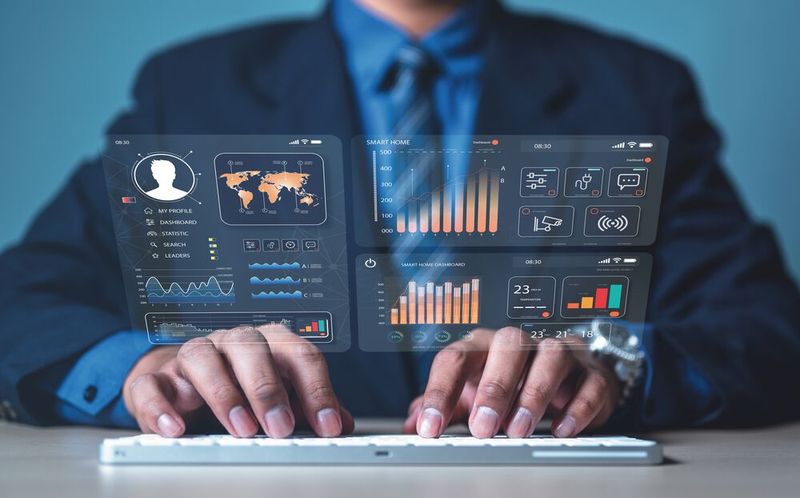
(Image: Day Of Victory Stu. - stock.adobe.com)
Every department within a company requires software that supports the work of the respective department. The requirements are very different and often highly specific – just consider the CAD system of product developers or production planning. Therefore, in most companies, a proliferation of software solutions has established over many years, leading to the much-discussed silos in which the data of the departments are enclosed.
Over the years, various providers have tried to cover as wide a range of the company as possible, usually at the expense of department functions. A single system and a single manufacturer simply cannot represent all the functions of all departments as cleanly as a system specialized in the respective area can. Moreover, such all-round systems ultimately create a huge monolithic block that becomes increasingly difficult to maintain.
Map department-specific functionalities and provide them flexibly
Current software architectures offer an interesting alternative: Modular software, cloud technology, and Software-as-a-Service (SaaS) make it possible to represent department-specific functionalities and provide them flexibly. The data is stored in a database in the cloud. The software packages, which also run in the cloud, access this cloud storage and can thus access all the company's data. Software updates are applied centrally, and users access the software via the browser. This reduces both IT effort and hardware costs.
Yet at the same time, the requirements for software are becoming higher as digitalization encompasses more and more processes. Off-the-shelf solutions often are insufficient to optimally support the processes of a specific company. Individual adjustments to standard programs are costly and require extensive modifications during updates. This, in turn, prevents flexible adaptation to new circumstances.
This is where Low-Code and No-Code platforms, as well as Citizen Developers, come into play. The former are novel programming environments in which software is assembled from pre-made building blocks. Programming no longer occurs, as in the past, through manual writing of source code, but in a visual environment. The platform provides function blocks that the programmer connects by defining which data flows from the output of one module to the input of another. The module then provides processing functions or tools. In the end, the platform generates the new software solution.
The difference between Low-Code and No-Code platforms is fluid and lies in the degree of abstraction: While Low-Code development is intended to make work easier for programmers with the necessary knowledge, No-Code systems require no or very little prior knowledge. This makes it practically possible for anyone to create applications tailored precisely to their own needs. And this anyone is referred to as a Citizen Developer, meaning an ordinary citizen as a software developer.
Dashboards display the status
The number of software solutions is exploding, often consisting of relatively simple dashboards, i.e., human-computer interfaces that display the status and certain values. A good example is the Internet of Things (IoT), in which smart products, devices, and machines are networked and can thus exchange data. Instead of physical display instruments, these products have sensors whose values are available on the network – locally or even over the Internet.
To view these values and control the products, software programs, referred to as apps, are necessary. For a machine or product, not just one app is necessary, but often several – for a smart car, the owner can check certain values and, for example, start the heating from outside, while the app for the workshop goes much deeper, displays many additional data, and allows access, for example, to the engine control. For a manufacturing machine, operators, foremen or production planners, and service technicians use different apps.
An ecosystem of applications emerges
Thousands of products, each with several apps – the demand for software can hardly be met by the existing programmers. Additionally, customers often need specially adapted apps – for example, the aforementioned production planner would like to have a dashboard on the tablet that displays the utilization of all machines in the hall. This means that this app must be written specifically for this person – and preferably by the person themselves. Because who knows better how the optimal software should look than its operator.
Date: 08.12.2025
Naturally, we always handle your personal data responsibly. Any personal data we receive from you is processed in accordance with applicable data protection legislation. For detailed information please see our privacy policy.
Consent to the use of data for promotional purposes
I hereby consent to Vogel Communications Group GmbH & Co. KG, Max-Planck-Str. 7-9, 97082 Würzburg including any affiliated companies according to §§ 15 et seq. AktG (hereafter: Vogel Communications Group) using my e-mail address to send editorial newsletters. A list of all affiliated companies can be found here
Newsletter content may include all products and services of any companies mentioned above, including for example specialist journals and books, events and fairs as well as event-related products and services, print and digital media offers and services such as additional (editorial) newsletters, raffles, lead campaigns, market research both online and offline, specialist webportals and e-learning offers. In case my personal telephone number has also been collected, it may be used for offers of aforementioned products, for services of the companies mentioned above, and market research purposes.
Additionally, my consent also includes the processing of my email address and telephone number for data matching for marketing purposes with select advertising partners such as LinkedIn, Google, and Meta. For this, Vogel Communications Group may transmit said data in hashed form to the advertising partners who then use said data to determine whether I am also a member of the mentioned advertising partner portals. Vogel Communications Group uses this feature for the purposes of re-targeting (up-selling, cross-selling, and customer loyalty), generating so-called look-alike audiences for acquisition of new customers, and as basis for exclusion for on-going advertising campaigns. Further information can be found in section “data matching for marketing purposes”.
In case I access protected data on Internet portals of Vogel Communications Group including any affiliated companies according to §§ 15 et seq. AktG, I need to provide further data in order to register for the access to such content. In return for this free access to editorial content, my data may be used in accordance with this consent for the purposes stated here. This does not apply to data matching for marketing purposes.
Right of revocation
I understand that I can revoke my consent at will. My revocation does not change the lawfulness of data processing that was conducted based on my consent leading up to my revocation. One option to declare my revocation is to use the contact form found at https://contact.vogel.de. In case I no longer wish to receive certain newsletters, I have subscribed to, I can also click on the unsubscribe link included at the end of a newsletter. Further information regarding my right of revocation and the implementation of it as well as the consequences of my revocation can be found in the data protection declaration, section editorial newsletter.
Of course, such apps must be closely linked to the software running in the product itself. That's why, for example, providers of machine controls offer Low-Code or No-Code platforms. With their help, apps can be created for machines with these controls. Thus, based on a platform, an entire ecosystem of applications is created that, on the one hand, control the machine or product and, on the other hand, enable interaction with or monitoring of this control. In doing so, the manufacturers take various approaches and set different priorities.
Efficient software development as an important lever for the future
In the modern world of smart products, where software plays an increasingly important role, the efficiency of software development is an important lever to make or keep a company innovative and successful. An optimally chosen Low-Code or No-Code platform is thus one of the most important components of business success in the era of digital transformation.



:quality(80)/p7i.vogel.de/wcms/53/f7/53f7dadbe4d656a3fd4f4077445f29f6/0129828707v1.jpeg "Thanks to its compact design and drilling/unscrewing function, the Fire Birdie is suitable for applications with limited installation space and frequent tool changes. (Image:Marcel Kraibühler)")
:quality(80)/p7i.vogel.de/wcms/da/4d/da4da8d34671dc6bce80e496212de877/0129850788v1.jpeg "Mate-XT Go supports the arms and shoulders during overhead work and repetitive tasks and is designed to significantly reduce muscle strain in everyday working life. (Image:Comau)")
:quality(80)/p7i.vogel.de/wcms/95/97/95976dbaac68b249eb65e74c5aad5300/0129651893v1.jpeg "The C2.0 centric clamps, the S2 fixed jaw clamps and the \"gredoc\" zero-point clamping systems are used for machining the raw parts. Fastening is carried out with width across flats 27. (Image:Gressel)")
:quality(80)/p7i.vogel.de/wcms/57/1b/571b8895efb299d70846bbdbd7af2338/0130043886v1.jpeg "Servo hydraulics independent of the control system: The servo hydraulics software module is integrated directly into the b Maxx 5500 servo drive (pictured: Mehmet Sari, Export Sales Manager at Hürsan Pres (left), Özgür Deniz Demirbaş, Country Manager at Baumüller Turkey) (Image:Baumüller)")
:quality(80)/p7i.vogel.de/wcms/3b/27/3b27f6c5848be73acecb04054bf0a146/0130115209v1.jpeg "Spectroscopic glucose measurement with infrared spectroscopy enables more regular measurements without physical strain. (Image:Endrich)")
:quality(80)/p7i.vogel.de/wcms/3f/cc/3fccb748b0fe16f1f61249d94c72f126/0130149439v1.jpeg "Requirements for integrated power supply systems: Precise AC and DC power supply systems that not only provide energy, but also reliably combine measurement, analysis and system integration. (Image:Schulz Electronic)")
:quality(80)/p7i.vogel.de/wcms/fd/93/fd93e01c16f5a4709278499d981a459c/0130061090v1.jpeg "Revealed: These servo drives are assembled at Aerotech in Fürth. (Image:Aerotech)")
:quality(80)/p7i.vogel.de/wcms/cb/8a/cb8ae7f5205365efce3e7285154fc3cf/0130132198v1.jpeg "Markus Huber (left) and Nicolai Friis from TU Wien know how to make quantum computers multidimensional in order to perform computing operations even better. (Image:TU Vienna / A. Rommel)")
:quality(80)/p7i.vogel.de/wcms/63/21/6321beb732bf7d92640df46d7aa77573/0130125122v1.jpeg "As part of the Carbon Lab Factory Lausitz, a pilot plant for the production of sustainable, cost-effective and competitive carbon fibers will be built at the Guben site. (Image:Fraunhofer IAP / Kristin Stein)")
:quality(80)/p7i.vogel.de/wcms/53/4f/534fe0f168f6ee070ded4a48faca4cef/business-wire-main-image-1103x620v1.jpeg "The new UR AI Trainer, developed by Universal Robots and Scale AI, is the first direct lab-to-factory solution for AI model training.
(Source: Universal Robots)")
:quality(80)/p7i.vogel.de/wcms/08/70/087062e2e1a9b9add5777410dd746ee9/adobestock-1923991605-5607x3156v1v1.jpeg "A new type of tactile sensor, inspired by human skin, even recognizes grains of sand. (Image:Curioso.Photography - stock.adobe.com)")
:quality(80)/p7i.vogel.de/wcms/7f/08/7f087d7013424d123ab7275cd2e3fe55/adobestock-809456218--c2-a9-20degimages-20-e2-80-93-20stock-adobe-com-ki-generiert-4179x2351v1v1.jpeg "The digital upgrading of existing machines conserves resources, saves energy and reduces the need for new production. (Image:Degimages - stock.adobe.com/AI-generated)")
:quality(80)/p7i.vogel.de/wcms/90/db/90db3087d3af0560fcdb4dbc42443ce1/0130157448v1.jpeg "The switch to SDV is the most complex transformation the industry has ever had to master. The end consumer gets a vehicle that gains rather than loses value over its lifetime. (Image:Sonatus)")
:quality(80)/p7i.vogel.de/wcms/73/f0/73f00bb99a23197db05bb584fe78f20f/0130080581v1.jpeg "The \"China Speed\" analysis by Roland Berger shows that the speed of development has only a limited connection with labor costs. (Image:freely licensed at Pexels)")
:quality(80)/p7i.vogel.de/wcms/2f/5b/2f5ba6a150b52c2b8efada560c5cdafe/0130143442v1.jpeg "Automotive suppliers are facing a severe crisis, which is primarily due to a combination of structural change and economic problems. (Image:freely licensed at Pexels)")
:quality(80)/p7i.vogel.de/wcms/22/d0/22d03cd48e992435338b59464c428d41/0129739814v1.jpeg "More electric vehicles on the roads mean a higher demand for electricity - which should ideally be covered by renewable energies. (Image:BMW)")
:quality(80)/p7i.vogel.de/wcms/94/7a/947ac066b98cbcd3470e83ff9da3e25f/0130096114v1.jpeg "The use of amorphous steels in the stator enables a significant reduction in losses and increases the efficiency of modern electric motors in vehicle drives. (Image:Horse Powertrain)")
:quality(80)/p7i.vogel.de/wcms/e5/f1/e5f171d3d7ae021332cc0aeae4d6e299/0130127049v1.jpeg "In collaboration with Shanghai Jiao Tong University, Lenovo has presented a silicon anode battery under the name \"ED1000\" as a proof of concept for mobile workstations. (Image:Lenovo)")
:quality(80)/p7i.vogel.de/wcms/fa/69/fa696e59706b96fff02283dd74cc2398/0130129635v1.jpeg "Samsung Co-CEO Jun Young-hyun wants to respond to the AI-driven boom in demand in the memory market with contracts for up to five years. This should provide more planning security in the traditionally volatile storage business. At the same time, however, this is likely to increase the pressure on customers to secure precise long-term requirements, prices and supply chains. (Image:Samsung)")
:quality(80)/p7i.vogel.de/wcms/31/a8/31a883a47b86634c382923e78fd9a4c9/0130133225v1.jpeg "Figure 1: GMSL-capable point-to-point connection. (Image:ADI)")
:fill(fff,0)/p7i.vogel.de/companies/69/88/69882c428938e/tmts2026-ticec-banner-en-2000px.png "tmts2026-ticec-banner-en-2000px (https://www.tmts.tw/en)")
:fill(fff,0)/p7i.vogel.de/companies/67/eb/67eba621ef6ea/logo2.png "logo2 (Wuxi InfiMotion)")
:quality(80)/p7i.vogel.de/wcms/e5/21/e521cf46070d0593285d20a7bcbddd26/0115662029.jpeg "Jan Hartmann verantwortet als Geschäftsführer die Bereiche Verwaltung, Vertrieb, Systemberatung und Marketing. (Bild: IDS Imaging Development Systems GmbH )")
:quality(80)/p7i.vogel.de/wcms/cd/5b/cd5bd06301f16b68773aa4af7ee03dba/0116162337.jpeg "In der Produktion bieten Apps und der drahtlose Zugriff eine komfortable Möglichkeit, die Komponenten einzustellen und auszulesen (Bild: Production Perig - stock.adobe.com)")
:quality(80)/p7i.vogel.de/wcms/75/13/75139f428ba57205c692b17d742281f7/0124874362v1.jpeg "Digitalization with Weidmüller: machine operation via HMI or via cloud. (Image:M. Christa)")
:quality(80)/p7i.vogel.de/wcms/4c/21/4c21ad6e334d3c15981608c75ec6a628/0125867170v1.jpeg "We showcase solutions and tips that ensure greater efficiency in design. (Image:Kisters)")