Precise temperature sensors enable the exact control of manufacturing processes in industrial automation and process applications. The non-contact process monitoring of modern sensors also ensures early and fast fault detection, which saves material and prevents failures. Non-contact infrared pyrometers from Micro-Epsilon combine all of this.
Temperature measuring devices are essential for monitoring industrial processes and thus ensuring high product quality.
(Image: Micro-Epsilon)
Measuring temperatures is—alongside measuring time—one of the oldest measurement disciplines of all. Its origins date back to antiquity, the Middle Ages and the first pre-industrial thermometers invented by Fahrenheit, Celsius or Kelvin. In the 20th century, different measuring principles such as thermocouples, resistance thermometers or infrared sensors developed from these. Today, temperatures are measured without contact using fast, high-precision infrared pyrometers. These are used in almost all industries and areas of life. They measure temperatures in industrial applications, automation, the plastics, food and pharmaceutical industries, in semiconductor production and on test benches.
Durable, robust and easy-to-maintain temperature sensors are required for industrial measuring tasks. High accuracy of the measuring devices is also crucial to ensure that measurement errors do not lead to system downtimes or unforeseen actions.
For non-contact temperature measurement, Micro-Epsilon uses the infrared radiation of a body for its sensors. This is made up of the emission of the object, the transmission and the reflection. To determine the actual object temperature, only the emission is considered. By entering an emissivity, the material properties described above are mapped and the correct temperature value is calculated based on the measured infrared energy without contact, very quickly and without influencing the object being measured.
Infrared pyrometers essentially consist of a sensor and a controller for signal processing and output. These components can be installed in a common housing or separately as sensor and controller. Micro-Epsilon offers both integrated systems and sensors with a separate controller. Depending on the application, the various advantages of a system variant contribute to the optimum overall solution. The company offers its customers a new, completely revised portfolio of non-contact temperature sensors.
Non-Contact Temperature Measurement Up to 2,010 °F
The new UC, SE and FI series of temperature sensors detect very high temperatures from −60 to 2,010 °F precisely and without contact. The stainless steel housing ensures that the sensors measure stably and precisely, even in harsh environmental conditions, while maintaining high signal quality and stability. A compact housing with a high degree of protection, industrial interfaces and simple installation with standard M12 cables make the sensors ideal for use in automation and process technology. All models are preset at the factory and can be put into operation quickly and easily without a PC. As an option, each model can be connected to the Micro-Epsilon Sensortool software, which enables extensive configuration options and simple commissioning. The most important distinguishing feature of the UC, SE and FI series is the design of the sensors.
Remote Controller for High Ambient Temperatures
The UC (Universal Controller) variant separates the sensor and controller from each other—connected by a cable of 3 to 49 ft in length—ideal for high ambient temperatures without endangering the controller unit. This means that the sensor can also be used at higher temperatures of up to 355 °F. The temperature measuring range covers −60 to 1,830 °F, with an accuracy of ±2 °F and a resolution of 50 mK. Due to the remote controller unit, the UC version is particularly suitable if the sensor is to be configured without the use of a PC. In addition, the measured values can be processed digitally, for example via industrial interfaces such as RS485. With its four input buttons on the front and the integrated LCD display and RGB backlighting, the sensor is quick and easy to operate. It can optionally be connected to a PC via an M12 USB cable and parameterized using the Sensortool software. Thanks to its inline and process capability, the UC thermometer is ideal for OEM or series use, for example in the field of process monitoring, automation or plant and machine integration.
Pre-Assembled, Ready-to-Use
The SE (Separate Electronic) thermometer series is pre-assembled and thus forms a unit consisting of sensor, controller and cable, with a simple and direct connection via open cable ends. The smallest sensor and controller design in the finished measuring channel measures non-contact temperatures from −40 to 2,010 °F at a maximum ambient temperature of 250 °F for the sensor. The inline and process-capable pyrometer is preset to current or voltage output (plug & play) and is supplied 'ready-to-use'. Users of this series can also use an optional USB converter to change presettings with the sensor tool and make individual configurations, such as scaling or switching the analog output from current to voltage. The industrial suitability is achieved through the IP65 protection class and the miniaturized design. This makes the sensor ideal for series use in industrial environments.
Date: 08.12.2025
Naturally, we always handle your personal data responsibly. Any personal data we receive from you is processed in accordance with applicable data protection legislation. For detailed information please see our privacy policy.
Consent to the use of data for promotional purposes
I hereby consent to Vogel Communications Group GmbH & Co. KG, Max-Planck-Str. 7-9, 97082 Würzburg including any affiliated companies according to §§ 15 et seq. AktG (hereafter: Vogel Communications Group) using my e-mail address to send editorial newsletters. A list of all affiliated companies can be found here
Newsletter content may include all products and services of any companies mentioned above, including for example specialist journals and books, events and fairs as well as event-related products and services, print and digital media offers and services such as additional (editorial) newsletters, raffles, lead campaigns, market research both online and offline, specialist webportals and e-learning offers. In case my personal telephone number has also been collected, it may be used for offers of aforementioned products, for services of the companies mentioned above, and market research purposes.
Additionally, my consent also includes the processing of my email address and telephone number for data matching for marketing purposes with select advertising partners such as LinkedIn, Google, and Meta. For this, Vogel Communications Group may transmit said data in hashed form to the advertising partners who then use said data to determine whether I am also a member of the mentioned advertising partner portals. Vogel Communications Group uses this feature for the purposes of re-targeting (up-selling, cross-selling, and customer loyalty), generating so-called look-alike audiences for acquisition of new customers, and as basis for exclusion for on-going advertising campaigns. Further information can be found in section “data matching for marketing purposes”.
In case I access protected data on Internet portals of Vogel Communications Group including any affiliated companies according to §§ 15 et seq. AktG, I need to provide further data in order to register for the access to such content. In return for this free access to editorial content, my data may be used in accordance with this consent for the purposes stated here. This does not apply to data matching for marketing purposes.
Right of revocation
I understand that I can revoke my consent at will. My revocation does not change the lawfulness of data processing that was conducted based on my consent leading up to my revocation. One option to declare my revocation is to use the contact form found at https://contact.vogel.de. In case I no longer wish to receive certain newsletters, I have subscribed to, I can also click on the unsubscribe link included at the end of a newsletter. Further information regarding my right of revocation and the implementation of it as well as the consequences of my revocation can be found in the data protection declaration, section editorial newsletter.
Contactless Infrared Temperature Measurement
The FI (Fully Integrated) thermometer is even more compact than the SE version. As a fully integrated compact pyrometer, it is suitable for contactless infrared temperature measurement of objects from −40 to 2,010 °F at an ambient temperature of up to 175 °F. Because the sensor and controller are combined in a robust stainless steel housing with an integrated M12 thread, the sensor is ideal for installation in confined spaces with minimal space requirements. Outstanding temperature compensation and high EMC immunity predestine the sensor for series use in industry. Two-color status LEDs (red, green) integrated in the cable outlet are used to check the function and also as an alignment aid for commissioning. The pyrometer is preset on delivery and only needs to be connected. For maximum flexibility, the pyrometer can be connected to the sensorTOOL software via a USB adapter and individually configured.
Simple Configuration And Networking
With the Sensortool software, which Micro-Epsilon makes available to its customers free of charge, users can easily configure and parameterize the new thermometers as well as the entire Micro-Epsilon product range. During commissioning, for example, the loop impedance of the cabling can be checked easily and conveniently via a simulation mode and fine-tuning can be carried out in the field via offset or gain. A freely scalable analog output, automatic emissivity calculation and intelligent averaging are further features that enable flexible use. Users also benefit from a collector alarm (SE and FI versions) and two alarm outputs on the UC model.
As temperature values need to be monitored in real time in modern industrial plants and users need to implement the measured values in digital control systems at the same time, the Thermometer UC series can be integrated into Ethercat, EthernetIP and Profinet environments via the IF 2035 interface module. This means that all requirements for modern fieldbus systems such as very high transmission rates in real time, a high degree of flexibility and various network topographies can be covered. This benefits modern automation systems with high speed requirements, PLC controllers as well as HMI and Scada systems.
Temperature Monitoring During the Production of Battery Foils
Industrial temperature measurements play a key role in the production of modern battery modules for electric vehicles, energy storage systems and smartphones. In order to meet the increasing demand for batteries, high quality production and cost-effective output are essential. In the wet process for battery foil production, a so-called slurry is applied to the strip material via a slot die and then cured in a drying oven. To ensure that the quality of the films is always consistent, precise temperature measurement is crucial for indirectly determining the degree of drying. Micro-Epsilon thermometers from the UC, SE and FI series measure the temperature of the slurry contact-free and in real time and ensure direct and precise control of the drying process with exact inline measurement. A particular advantage is the high temperature stability of the sensors, as high ambient temperatures can occur during the drying process. This enables Micro-Epsilon to ensure a high quality end product.
What the product manager says
Manfred Pfadt
(Image:Micro-Epsilon)
"Our completely newly developed temperature sensors from the UC, SE and FI thermometer series ensure high quality, efficiency and sustainability in modern industrial processes. OEMs benefit from reliable, non-contact measurement with modern interfaces to provide data quickly and with maximum precision at all times."
Manfred Pfadt, Product Manager, Micro-Epsilon
Drying Processes in Paint Booths
Thanks to the excellent temperature compensation, very good EMC immunity and high IP65 protection rating, the sensors are ideally suited for industrial use and also for hard-to-reach areas with extreme ambient conditions—for example in drying systems for paint lines in automotive production. Continuous temperature monitoring is essential here to ensure uniform curing of the paint layers and avoid paint defects. High paint quality also reduces cost-intensive rework and rejects. Micro-Epsilon UC thermometers measure the surface temperatures of the paint quickly, contactlessly and reliably and transmit the measurement results to higher-level control systems. They also measure the temperature evenly over the entire surface of the car body without leaving out individual components. Even high ambient temperatures are no problem for the UC thermometers, as the controller can be mounted separately from the sensor. As a result, the sensors ensure a high output of the drying system while maintaining the high quality of the paint layer—OEMs benefit from less rework and rejects, thus reducing overall production costs.
Conclusion
The Micro-Epsilon sensors of the UC, FI and SE thermometer series reliably measure object temperatures without contact, quickly and precisely and can be used at high ambient temperatures. Their outstanding temperature stability, fast commissioning and ease of maintenance make them ideal for OEM and series applications in factory automation, process monitoring and mechanical engineering. Their flexibility and wide range of functions play an important role when it comes to reliably serving a wide variety of industrial applications.



:quality(80)/p7i.vogel.de/wcms/31/1f/311fb5b8aa1683b31cca284c8d33f443/0130073373v1.jpeg "Ceratizit has forged a very stable supply chain through a sophisticated and comprehensive recycling concept as well as through its holdings in tungsten mines. Here are some details ... (Image:Ceratite)")
:quality(80)/p7i.vogel.de/wcms/4c/49/4c49ab206af08de47d42c35bacc89c1d/0129539746v1.jpeg "With CPQ software, sales staff can create quotes for complex heavy-duty vehicles in minutes. (Image:TII Scheuerle)")
:quality(80)/p7i.vogel.de/wcms/bc/29/bc29ee18ce776b1915e10e07c1525f3a/0129766196v1.jpeg "The control cabinet is integrated into the rear of the press frame and offers accessibility with a small overhang thanks to the variable door opening. (Image:Tox)")
:quality(80)/p7i.vogel.de/wcms/fe/8a/fe8af1b829b085210fef4c1fa8abddb5/0129784389v1.jpeg "As an integral part of Koch Pac-Systeme's Predictive Pack digital service product, the gearboxes with Cynapse and Wittenstein's Smart Services make it possible to detect damage risks in the packaging specialist's machines at an early stage. (Image:Koch Pac systems)")
:quality(80)/p7i.vogel.de/wcms/b5/34/b534e64b2db218cdb5ad938898cbed56/0130044810v1.jpeg "The magnet of the torus-shaped tokamak reactor will generate magnetic pulses lasting up to 500 seconds and heat the enclosed plasma to a temperature of 150 million degrees. (Image:Iter)")
:quality(80)/p7i.vogel.de/wcms/97/28/9728e560d751dd54acd8b88a82ff7330/0129610882v1.jpeg "Temperature measuring devices are essential for monitoring industrial processes and thus ensuring high product quality. (Image:Micro-Epsilon)")
:quality(80)/p7i.vogel.de/wcms/6b/0d/6b0d694b060190016a4db18401fa55eb/0129937458v1.jpeg "(Picture: ©AI-generated)")
:quality(80)/p7i.vogel.de/wcms/db/68/db689490e348201603dd30447711ea2b/0129578734v1.jpeg "With three-axis vibration measurement (X, Y and Z axes) and temperature detection, the CMSVT38 condition monitoring sensor provides detailed status information that helps to detect machine damage at an early stage. (Image:Kübler)")
:quality(80)/p7i.vogel.de/wcms/48/8a/488afa7c9416394023a5ea1095f4ee4b/rfc4800-1-787x443v1v1.jpeg "Precise, intelligent and robust sensors will play a key role in an increasingly automated and data-driven world. (Image:Novotechnology)")
:quality(80)/p7i.vogel.de/wcms/08/70/087062e2e1a9b9add5777410dd746ee9/adobestock-1923991605-5607x3156v1v1.jpeg "A new type of tactile sensor, inspired by human skin, even recognizes grains of sand. (Image:Curioso.Photography - stock.adobe.com)")
:quality(80)/p7i.vogel.de/wcms/7f/08/7f087d7013424d123ab7275cd2e3fe55/adobestock-809456218--c2-a9-20degimages-20-e2-80-93-20stock-adobe-com-ki-generiert-4179x2351v1v1.jpeg "The digital upgrading of existing machines conserves resources, saves energy and reduces the need for new production. (Image:Degimages - stock.adobe.com/AI-generated)")
:quality(80)/p7i.vogel.de/wcms/dd/ce/ddcef80b290218276bf857cdb64a45e1/finkel-stephan-4162x2341v1.jpeg "Stephan Finkel, Partner and Industry Lead Defence & Security at 3DSE (Source: 3DSE)")
:quality(80)/p7i.vogel.de/wcms/34/e2/34e2a9e46e59eb28f09f9a5fdf41ff9a/0130091813v1.jpeg "Electrical drive trains require a multidimensional concept of performance characterization. Rohde & Schwarz has developed the MXO 3 oscilloscope series for this purpose. (Image:Rohde & Schwarz)")
:quality(80)/p7i.vogel.de/wcms/c9/2a/c92af18e41b077a518994a2ba60eb09f/0130037726v1.jpeg "The Renault subsidiary has presented a new brand strategy (Image:Alpine)")
:quality(80)/p7i.vogel.de/wcms/d8/fc/d8fc13ba0ae6e2180b3954cb1f1bd34c/0130060162v1.jpeg "Volkswagen has started series production of the ID Unyx 08. The model was developed in collaboration with Xpeng. (Image:Volkswagen)")
:quality(80)/p7i.vogel.de/wcms/f5/80/f5809e877017e40b413b48fcd8452246/cefmof-hydrogen-station-29-2048x1366-2048x1152v1v1.jpeg "The hydrogen filling station in Jyväskylä. The electrolyzer is installed in the fenced area at the top right. (Image:Cefmof Hydrogen)")
:quality(80)/p7i.vogel.de/wcms/3d/f2/3df286b8c62e72218e4ea42dcd959ee1/0130050208v1.jpeg "The Heracles chip from Intel calculates fully encrypted data without decrypting it. According to the company, the chip is 1,074 to 1,547 times faster than an Intel Xeon with 24 cores in FHE (Fully Homomorphic Encryption) computing operations. (Image:Intel)")
:quality(80)/p7i.vogel.de/wcms/f6/a5/f6a587801c676040f1e6413a7d305e33/0130062380v1.jpeg "Nvidia is investing 4 billion US dollars in silicon photonics. The aim is to avoid an impending bottleneck in the AI infrastructure. (Image:freely licensed)")
:quality(80)/p7i.vogel.de/wcms/02/36/02364f083b3023cee3b3f0893ea3f859/0129857003v1.jpeg "AI will continue to drive growth in the semiconductor market in 2026. (Image:Dall-E / AI-generated)")
:quality(80)/p7i.vogel.de/wcms/61/8f/618f16f8fa95ec6cc838ca9bfb5dbaf1/0130027046v1.jpeg "The Belgian Research Institute has set up a European university consortium on the subject of CMOS 2.0. It brings together 26 university groups to research chip technologies that go beyond conventional transistor scaling. (Image:Imec)")
:fill(fff,0)/images.vogel.de/vogelonline/companyimg/76800/76895/65.jpg "FAULHABER_120mm.jpg ()")
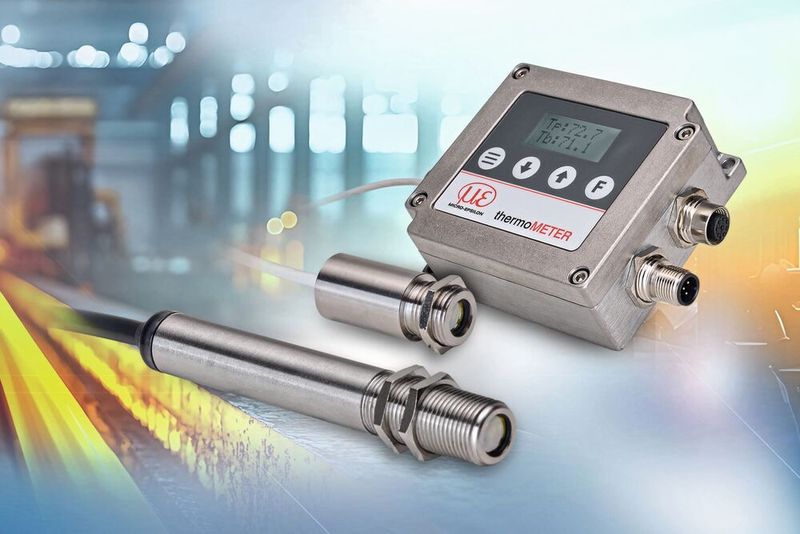
:quality(80)/p7i.vogel.de/wcms/8b/35/8b359fccdae08777753c8a71f559a41f/0129609685v1.jpeg "The UC (Universal Controller) thermometer separates sensor and controller - connected by a cable of 1 to 15 m length - ideal for high ambient temperatures without endangering the controller unit.(Image: Micro-Epsilon)")
:quality(80)/p7i.vogel.de/wcms/bf/3f/bf3f2e83cc9a0eede77bf81606a66bf4/0129609682v1.jpeg "Micro-Epsilon serves the temperature sensor market with the three newly developed thermometer series UC, SE and FI.(Image: Micro-Epsilon)")
:quality(80)/p7i.vogel.de/wcms/a3/f3/a3f3f39bfd7c6037b365728a65a1c9da/0129610689v1.jpeg "The FI (Fully Integrated) thermometer is a fully integrated compact pyrometer and is suitable for contactless infrared temperature measurement of objects from -40 to +1100 °C at an ambient temperature of up to 80 °C.(Image: Micro-Epsilon)")
:quality(80)/p7i.vogel.de/wcms/1a/63/1a630b2f3d3dc894d5f6f968e813377a/0129610859v1.jpeg "In drying systems for painting lines in automotive production, continuous temperature monitoring is essential to ensure uniform curing of the paint layers and to avoid paint defects. Micro-Epsilon UC thermometers measure very high paint surface temperatures constantly, contact-free and reliably.(Image: Micro-Epsilon)")

:quality(80):fill(efefef,0)/p7i.vogel.de/wcms/66/d0/66d08fb5ceae0/dossier-battery-technology.png "Dossier Battery Technology")
:quality(80)/p7i.vogel.de/wcms/dd/4e/dd4e6ce73e0e700dcc0f0584813ef47f/0128875162v1.jpeg "Thanks to their high precision, robustness and integration capability, Micro-Epsilon's measurement technology solutions are not only suitable for new systems, but also ideal for retrofit applications. (Image:Micro-Epsilon Messtechnik GmbH & Co. KG)")
:quality(80)/p7i.vogel.de/wcms/6b/13/6b13416a7bde25cee8f238a685d10677/0125363149v1.jpeg "The laser triangulation sensors are ideal for numerous applications, including factory automation, electronics manufacturing, and robotics. (Image:Micro-Epsilon Messtechnik GmbH & Co. KG)")