Over the years, new features have enhanced the safety, performance, and reliability of power supplies. This article demonstrates how digital control and programmability make power supplies valuable for developers of semiconductor equipment.
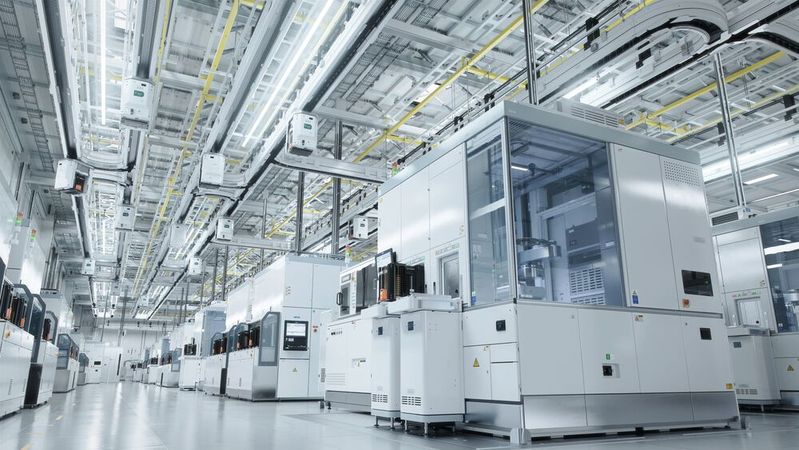
Image 1: Cleanroom for semiconductor manufacturing with a wafer overhead transport system.
(Image: IM Imagery - stock.adobe.com)
The semiconductor industry is undergoing a significant transformation, driven by AI and data techniques for training and inference. This progress is crucial for implementing an intelligent data and AI revolution across various fields. Heterogeneous integration and advanced packaging enhance the performance and efficiency of semiconductors. EUV lithography will enable smaller structures and more precision, producing more powerful and efficient chips. New materials are advancing innovations in chip design to further enhance function and performance.
Sustainability and Growth in the Semiconductor Sector
According to Gartner, the annual overall growth of the semiconductor industry could average between 6 and 8% by 2030, corresponding to a market volume of $1 trillion. There is increasing consensus in the industry that new fabs must be more efficient and operated with renewable energy, adhering to strict sustainability standards. This transition to environmentally friendly manufacturing processes is crucial for achieving net-zero goals and demonstrates a commitment to greater environmental responsibility. The production of semiconductor chips is particularly energy-intensive—from the initial manufacturing of silicon wafers to the final testing phase—with a substantial portion of the energy currently derived from fossil fuels.
Wafer Fab Equipment: Trends and Requirements
Manufacturers of wafer fab equipment require quick response from power supply manufacturers in process evaluation, especially with product samples and modifications. This quick response is crucial, as it directly impacts the closing of new manufacturing contracts.
Moreover, it is important to integrate more control and monitoring into power supplies. This facilitates data collection on the machine's operating condition and also aids in the quick identification and resolution of system issues. The consequences of a power outage in a semiconductor manufacturing facility are severe, as potential downtime can result in significant financial losses for end customers, often amounting to millions of dollars.
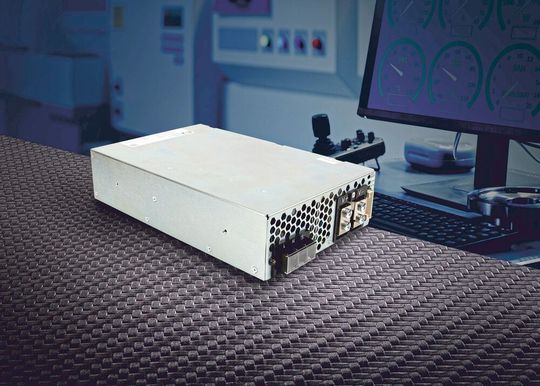
Image 2: The recently introduced HPF3K0 by XP Power delivers up to 3 kW of power from a universal single-phase input with configurable single output voltages ranging from 24 to 60 V.
(Image: XP Power)
Common Problems Associated with Building New Machines
Choosing the right power supply for new machines can be challenging. A common issue is limited 3-phase infrastructure at many locations, which affects where and how a new machine can be deployed. A power supply with a universal 1-phase input of 90-264 VAC solves this problem by providing greater site flexibility and enabling efficient operation of the machine in environments where 3-phase power is not available.
Another challenge is the lack of ability to control the power supply according to the requirements of the system and the end application. Developers can design their applications more flexibly and tailor system integration precisely to their needs when choosing a power supply that enables firmware configuration via a graphical user interface (GUI).
Another obstacle in high-performance applications is space constraints, as such machines usually occupy a large footprint. System integration and visibility of system status can also be problematic due to a lack of control and monitoring functions. A power supply with integrated custom digital controls, signals, and alarms can significantly optimize system design and reduce maintenance and operating costs by providing real-time insights into the system status and allowing immediate adjustments when needed.
Fluctuations in the connected load can lead to instability and potential damage. A power supply that can automatically switch between constant current and constant voltage modes protects against these issues and safeguards both the power supply and the end-user system from damage due to load fluctuations.
When selecting a power supply for new machines, several challenges must be addressed—from infrastructure limitations to regulatory compliance. By choosing a power supply tailored to these specific challenges, manufacturers can operate more flexibly, efficiently, and cost-effectively in their designs.
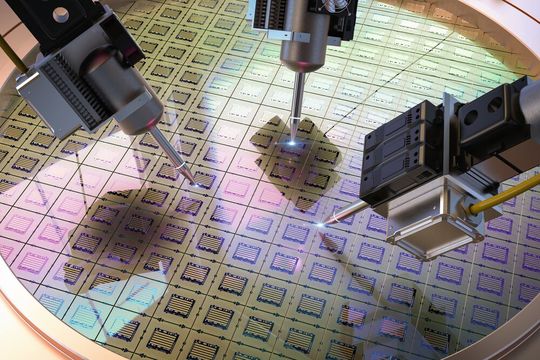
Image 3: The precise replication of the power and operating parameters of the power supply in semiconductor manufacturing is essential for consistency, quality, and reliability.
(Image: phonlamaiphoto - stock.adobe.com)
The Scalable, Digital, and Configurable Approach
The HP series of compact, flexible high-power supplies with 1- and 3-phase input embodies the scalable, digital, and configurable approach of XP Power. The HP series features ITE safety approvals and is SEMI-F47 compliant. The power supplies come in space-saving mechanical formats with digital signal processing, multiple communication protocols, user-configurable features, and are available from 1.5 to 30 kW. For added flexibility, 1- and 3-phase power supplies with nominal outputs from 24 to 200 VDC are offered.
The HPT series of 5kW power supplies, introduced in 2019, features a 3-phase, 3-wire 180-528VAC input, which simplifies installation as no neutral wire connection is required, often unavailable in semiconductor manufacturing facilities. With the introduction of the HPA series two years later, a 1.5kW single-phase unit, XP Power responded to the need for power supplies that offer constant voltage (CV) and constant current operation (CC), and are programmable, flexible, and user-configurable. In 2023, XP Power launched the HPF series of 3kW power supplies to meet the needs of semiconductor manufacturing facilities that require increasingly sophisticated and powerful power supplies.
Date: 08.12.2025
Naturally, we always handle your personal data responsibly. Any personal data we receive from you is processed in accordance with applicable data protection legislation. For detailed information please see our privacy policy.
Consent to the use of data for promotional purposes
I hereby consent to Vogel Communications Group GmbH & Co. KG, Max-Planck-Str. 7-9, 97082 Würzburg including any affiliated companies according to §§ 15 et seq. AktG (hereafter: Vogel Communications Group) using my e-mail address to send editorial newsletters. A list of all affiliated companies can be found here
Newsletter content may include all products and services of any companies mentioned above, including for example specialist journals and books, events and fairs as well as event-related products and services, print and digital media offers and services such as additional (editorial) newsletters, raffles, lead campaigns, market research both online and offline, specialist webportals and e-learning offers. In case my personal telephone number has also been collected, it may be used for offers of aforementioned products, for services of the companies mentioned above, and market research purposes.
Additionally, my consent also includes the processing of my email address and telephone number for data matching for marketing purposes with select advertising partners such as LinkedIn, Google, and Meta. For this, Vogel Communications Group may transmit said data in hashed form to the advertising partners who then use said data to determine whether I am also a member of the mentioned advertising partner portals. Vogel Communications Group uses this feature for the purposes of re-targeting (up-selling, cross-selling, and customer loyalty), generating so-called look-alike audiences for acquisition of new customers, and as basis for exclusion for on-going advertising campaigns. Further information can be found in section “data matching for marketing purposes”.
In case I access protected data on Internet portals of Vogel Communications Group including any affiliated companies according to §§ 15 et seq. AktG, I need to provide further data in order to register for the access to such content. In return for this free access to editorial content, my data may be used in accordance with this consent for the purposes stated here. This does not apply to data matching for marketing purposes.
Right of revocation
I understand that I can revoke my consent at will. My revocation does not change the lawfulness of data processing that was conducted based on my consent leading up to my revocation. One option to declare my revocation is to use the contact form found at https://contact.vogel.de. In case I no longer wish to receive certain newsletters, I have subscribed to, I can also click on the unsubscribe link included at the end of a newsletter. Further information regarding my right of revocation and the implementation of it as well as the consequences of my revocation can be found in the data protection declaration, section editorial newsletter.
All power supplies in the HP series feature a unique digital ID, allowing users to individually control and monitor each device in a multi-device system solution. The robust digital architecture has been further developed to offer sophisticated features for enhanced performance and safety. This includes a slew rate control to reduce voltage and current overshoot, ensuring system stability.
A unified graphical user interface ensures a consistent appearance across all HP series, thereby optimizing the user experience throughout. The units feature programmable fault detection and response mechanisms, as well as a logging option for tracking and analyzing incidents. Users are kept informed through alarms and warning messages about deviations in output voltage, current, and temperature, allowing them to take action.
Application Examples and Summary
In semiconductor manufacturing, the reproduction of the exact power characteristics and operating parameters of the power supply is a particular requirement to ensure the consistency, quality, and reliability of the application.
Dry etching offers higher precision and anisotropy than wet etching and is therefore suitable for advanced microfabrication, particularly in semiconductors, microelectromechanical systems (MEMS), and integrated circuits (ICs). Dry etching uses gases or plasmas to etch materials that are chemically resistant and thus cannot be wet etched, such as silicon carbide (SiC) or gallium nitride (GaN). A typical dry etching system requires a 3kW power supply that delivers 36 VDC, which the HPF series covers. For wafer test systems, which typically require 6 kW and 48 VDC, two HPF units can be operated in parallel via a single bus.
The integration of digital control and programmability in power supplies is revolutionizing the semiconductor industry by enhancing the safety, performance, and reliability of manufacturing facilities. As the sector continues to experience rapid growth, the introduction of digital features in power supplies is not just a trend but a necessity. The scalable, digital, and configurable approach of XP Power, particularly through the HP series power supplies, is an example of this forward-looking strategy.
These advancements allow developers to save significant time during the design and development phase and maximize the uptime of equipment on-site. Proactive predictive maintenance ensures that the equipment operates more efficiently and reliably, reducing the risk of costly downtime and promoting a more sustainable manufacturing environment. (mr)
*Hafiz Khalid is Product Marketing Director at XP Power
Future-Proof Authentication with Universal RFID Readers



:quality(80)/p7i.vogel.de/wcms/35/57/3557c819943c53acec41a0ccba87da4f/0130049064v1.jpeg "Researchers at the Fraunhofer IWU in Chemnitz have long known that many typical sheet metal parts can be manufactured more cost-effectively using hollow embossing rollers. Now there is news to report ... (Image:Fraunhofer IWU)")
:quality(80)/p7i.vogel.de/wcms/77/9b/779b0685d010dfe45c9c2cb1cfecd467/0128886425v1.jpeg "The BlueEye is the first \"real\" hyperspectral camera for the UV range and covers the wavelength range from 220 to 380nm. (Image:Inno-spec GmbH)")
:quality(80)/p7i.vogel.de/wcms/73/60/73608418789b1d9c393f5e2fa974eda2/0130209906v1.jpeg "The robots of the X6 generation from b+m enable very high painting quality and are also particularly compact and easy to maintain. (Image:Beckhoff)")
:quality(80)/p7i.vogel.de/wcms/82/90/8290dfe3595b6c6b33726ae8b76172c7/0130319587v1.jpeg "The concept image illustrates how the pattern of tiny protrusions and depressions created on the substrate (MgO, bottom) controls the arrangement of atoms in the superconducting material (YBCO, top). At the interface between the two layers, an electronic structure enables superconductivity to occur at higher temperatures than previously possible. (Image:Chalmers University of Technology / Riccardo Arpaia)")
:quality(80)/p7i.vogel.de/wcms/dd/08/dd086510d9ae7b50181f6070e4463b44/0129363730v1.jpeg "Typical application for ionizing devices: Wrapping films. (Picture: ©Adobe Stock/SMC)")
:quality(80)/p7i.vogel.de/wcms/78/e9/78e9188c25a8a94e67c34c9bf8ffe495/visual-agile-20robots-20and-20google-20deepmind-20partner-20to-20bring-20intelligence-20to-20robotics-2500x1406v1v1.jpeg "Together, the partners are developing adaptable, intelligent robots for a wide range of applications (Image:Agile Robots SE)")
:quality(80)/p7i.vogel.de/wcms/e7/66/e7669ecf0260ae8fc54c214e34e4902a/0130316817v1.jpeg "Siemens and Palo Alto Networks offer tested cybersecurity solution for industrial 5G. (Image:Siemens)")
:quality(80)/p7i.vogel.de/wcms/9f/55/9f55324832c4f426958031375124d9de/siemens-20ubtech-20hmnd-1920x1079v1v1.png "Ready for the factory floor: While Ubtech is planning mass production, Siemens is already testing humanoids in real factory applications in Erlangen. (Image:Siemens)")
:quality(80)/p7i.vogel.de/wcms/59/02/590246e3b3f415c65edbee377c14ca77/26-06-pi-fraunhofer-iws-41450-direktplattieren-pic-01-7771x4369v1v1.jpeg "The Fraunhofer IWS has developed the new \"direct laser cladding\" process, which creates a functional layer directly on the base body by applying a strip-shaped metal to rotationally symmetrical components in a spiral and bonding it locally by laser. (Image:Christoph Wilsnack/Fraunhofer IWS)")
:quality(80)/p7i.vogel.de/wcms/e4/51/e451d52ce0182fb0aaa46a5774f832ef/26-04-pi-fraunhofer-iws-21160-bioslide-pic-01-4128x2321v1v1.jpeg "With the BioSlide research project, the Fraunhofer IWS is investigating how sliding systems can be designed to be more sustainable and energy-efficient. New materials can be tested in a particularly application-oriented manner on this plain bearing test stand. (Image:Fraunhofer IWS)")
![Thanks to advanced 3D printing technology, a more efficient use of resources should contribute to lower-emission aviation—this is the goal of ['skai]-lab. (Image:Oleksandr Pashchenko - stock.adobe.com / AI-generated)](https://cdn1.vogel.de/nghHNSbySccfOjG3n1qCA-FVOjQ=/288x162/smart/filters:format(jpg):quality(80)/p7i.vogel.de/wcms/62/64/626424c97a16e69f871bf216c9629c2a/adobestock-1927043193--c2-a9-20oleksandr-20pashchenko-20-e2-80-93-20stock-adobe-com-ki-generiertv1v1.jpeg "Thanks to advanced 3D printing technology, a more efficient use of resources should contribute to lower-emission aviation—this is the goal of ['skai]-lab. (Image:Oleksandr Pashchenko - stock.adobe.com / AI-generated)")
:quality(80)/p7i.vogel.de/wcms/78/28/7828775af76773458b4d1409ceb1cf0c/368945-20dam-20imagery-digital-transformation-pc-1920x1079v1v1.jpeg "Complex development projects with high regulatory requirements, such as in the aerospace industry, benefit in particular from the Intelligent Product Lifecycle. (Image:PTC)")
:quality(80)/p7i.vogel.de/wcms/c1/79/c179ce9acd000e7cf48318e03e3fe4da/0130333964v1.jpeg "Magna is expanding its hybrid portfolio with the DHD REX, a dedicated hybrid drive for REEVs. (Image:Magna)")
:quality(80)/p7i.vogel.de/wcms/62/5f/625f41e87ebfef156a98c8e6393e32fd/0130211654v1.jpeg "Axial flux motors have some advantages over radial flux motor—but their production is currently still expensive. (Image:RWTH Aachen University)")
:quality(80)/p7i.vogel.de/wcms/80/c2/80c2ea3fbe2df808a263d99adad93f66/0130160344v1.jpeg "Francois Provost has been CEO of Renault since summer 2025. (Image:Renault)")
:quality(80)/p7i.vogel.de/wcms/8d/f8/8df87aa10e28419e1869acb641b4c4dd/0130324805v1.jpeg "With the Affela 1 in the Signature Edition, the Sony Honda Mobility joint project was to be launched in a few months' time. (Image:SHM)")
:quality(80)/p7i.vogel.de/wcms/4d/dd/4dddf438e91f394c04a095dbfd109d1c/0130236430v1.jpeg "Measurement modules: The 720301 module in combination with the SL2000 enables RMS and power calculations, among other things. (Image:Yokogawa)")
:quality(80)/p7i.vogel.de/wcms/61/fc/61fcf95f5cca15494ad18343901ae585/0130317237v1.jpeg "With the AGI CPU, Arm says it is taking a \"historic step\": With the processor aimed at AI in data centers, the company is presenting itself for the first time as a provider of its own chips, not just as a pure IP licensor. (Image:Arm)")
:quality(80)/p7i.vogel.de/wcms/11/36/113695ed260e29c8c2d9d39dc5f9d869/0130213768v1.jpeg "AI can work cheaply in China and deliver the results rapidly all over the world. (Image:Dall-E / AI-generated)")
:quality(80)/p7i.vogel.de/wcms/22/08/22085b4997a696887dd5a712a30b262b/0130211045v1.jpeg "Imec has announced that the world's most advanced high numerical aperture (High NA) EUV lithography system, the ASML EXE:5200, has arrived at its 300mm cleanroom in Leuven. (Image:Imec)")
:fill(fff,0)/images.vogel.de/vogelonline/companyimg/76800/76895/65.jpg "FAULHABER_120mm.jpg ()")
:fill(fff,0)/p7i.vogel.de/companies/69/88/69882c428938e/tmts2026-ticec-banner-en-2000px.png "tmts2026-ticec-banner-en-2000px (https://www.tmts.tw/en)")
:fill(fff,0)/p7i.vogel.de/companies/67/eb/67eba621ef6ea/logo2.png "logo2 (Wuxi InfiMotion)")
:quality(80):fill(efefef,0)/p7i.vogel.de/wcms/67/ae/67ae0b9ac31f8/elatec-wp-universal-reader.png "Elatec WP Universal Reader")
:quality(80)/p7i.vogel.de/wcms/17/e3/17e31da638e5fc121f8a8f030aba2782/0127907055v1.jpeg "Figure 1: The form factor of the regulated 5W DC/DC high-voltage converters of the HRC05 series. (Image:XP Power)")
:quality(80)/p7i.vogel.de/wcms/4d/74/4d740870522ccda3ca36efbbfd6f2b47/0127899702v1.jpeg "Comparison of tools before and after vibratory finishing. (Image:Anca)")