A guest post by
Oliver Guntner, Chemist/QMB of Polytives GmbH and Steffen Felzer, Sales Director of Polytives GmbH | Translated by AI
4 min Reading Time
Processors of plastics and compounds are aware of the limits of the application range of their materials and procedures and rely on established processes and years of experience. Polymeric additives can now shift these limitations.
Polytives GmbH has developed polymeric additives that exclusively optimize desired processing properties in the target polymer.
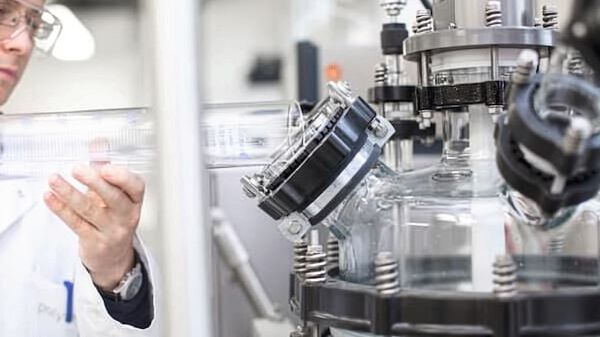
(Image: Polytives)
Given the myriad of additives and processing aids used for various applications in plastic processing, it's easy to lose track. One commonality among stabilizers, plasticizers, fillers, flame retardants, pigments, etc., is that they often significantly differ from the plastic to which they are added, in terms of molecular and physical properties, and often in their state of matter as well. It's usually only through these technological compromises that the final product can be endowed with the desired properties through the use of additives.
Gallery
What if, in the future, processing aids could be similar or "chemically identical" to the target polymer and still induce the desired property changes? Polytives GmbH from Rudolstadt in Thuringia has pondered this question. Since 2020, they have developed and distributed polymeric additives. This multi-award-winning young company plays a pioneering role in making polymeric additives usable for every type of plastic and user with its bFI (Flow Improver) product family. The Thuringian team describes itself as polymer architects who provide solutions with their additive toolbox for plastic raw material producers, plastic recyclers, masterbatch producers, plastic processors and recyclers, and compounders. These solutions can also be tailored to individual needs.
Compatible with petrochemical or biologically based plastics
The auxiliary substances used in polymeric additives are polymers themselves, bringing the chemical, physical, and macroscopic behavior closer to that of the target polymer. These additives differ only in the structure of their internal architecture, known as molecular architecture, from the target plastic. Moreover, the use of such additives greatly expands their application possibilities, making them compatible with most known plastics based on petrochemicals or biobased materials, whether virgin material or quality from post-industrial or post-consumer cycles.
The polymeric additives can be added to most types of plastics and polymer systems as a single variety as well as in blends, easily and in a manner typical for the industry. The additives are universally applicable: they show high compatibility in resin and thermoset applications.
In summary, a plastic is additivated with a plastic. The additive has a modified structure, which ensures that it behaves chemically, physically, and macroscopically similar to the target plastic but can specifically influence desired process and/or product properties to a significant extent. The simple secret of the additive effects is the aforementioned altered molecular architecture.
Polymeric additives enhance performance
Various studies have shown that the addition of polymeric additives leads to significantly lower melt viscosities. This improvement in flow behavior results in the Melt Flow Index (MFI or MVR) in some cases more than doubling. Therefore, polymeric additives can be used for bulk materials with different viscosity profiles. These can be subject to rheological homogenization without affecting other material properties. An extrusion product can be upgraded to injection molding grade. This qualitatively activates recyclates for the injection molding market, which has largely been closed to them, without their typically lower rheological quality leading to a loss of attractiveness.
Better realization of delicate injection-molded components
The reduced viscosity also offers advantages elsewhere in the processing process: Delicate injection-molded components can be better realized since the shaping is facilitated by improved mold filling. The additive integrates evenly within the molding compound into the polymer matrix. This effect comes from the very close chemical resemblance and the associated relationship between the additive and the material. Thus, the base polymer retains the additive's effect throughout its entire lifespan.
By adding polymeric additives, the original property of the material is preserved, with only the plastic-specific processing and product properties changing. The type of modification depends on the type of base polymer and also on the type and amount of the added additive. A performance comparison, for instance, between PMMA 7N and a corresponding blend of PMMA 7N with 10 wt% of a polymeric additive, illustrates that while the MVR is significantly increased, the pure additive modification of acrylic glass presented here does not lead to any loss in transparency.
Process aids for more sustainable production
When the polymeric additive is mixed with the plastic, processing temperatures can be significantly reduced. This effect is enabled by the described reduction in melt viscosity. As a result, plastics can be processed at lower plastification temperatures. Components and fillers that thermally decompose at elevated temperatures can be used in this now more gentle process environment, allowing for new products to be added to the portfolio of plastic processors.
Date: 08.12.2025
Naturally, we always handle your personal data responsibly. Any personal data we receive from you is processed in accordance with applicable data protection legislation. For detailed information please see our privacy policy.
Consent to the use of data for promotional purposes
I hereby consent to Vogel Communications Group GmbH & Co. KG, Max-Planck-Str. 7-9, 97082 Würzburg including any affiliated companies according to §§ 15 et seq. AktG (hereafter: Vogel Communications Group) using my e-mail address to send editorial newsletters. A list of all affiliated companies can be found here
Newsletter content may include all products and services of any companies mentioned above, including for example specialist journals and books, events and fairs as well as event-related products and services, print and digital media offers and services such as additional (editorial) newsletters, raffles, lead campaigns, market research both online and offline, specialist webportals and e-learning offers. In case my personal telephone number has also been collected, it may be used for offers of aforementioned products, for services of the companies mentioned above, and market research purposes.
Additionally, my consent also includes the processing of my email address and telephone number for data matching for marketing purposes with select advertising partners such as LinkedIn, Google, and Meta. For this, Vogel Communications Group may transmit said data in hashed form to the advertising partners who then use said data to determine whether I am also a member of the mentioned advertising partner portals. Vogel Communications Group uses this feature for the purposes of re-targeting (up-selling, cross-selling, and customer loyalty), generating so-called look-alike audiences for acquisition of new customers, and as basis for exclusion for on-going advertising campaigns. Further information can be found in section “data matching for marketing purposes”.
In case I access protected data on Internet portals of Vogel Communications Group including any affiliated companies according to §§ 15 et seq. AktG, I need to provide further data in order to register for the access to such content. In return for this free access to editorial content, my data may be used in accordance with this consent for the purposes stated here. This does not apply to data matching for marketing purposes.
Right of revocation
I understand that I can revoke my consent at will. My revocation does not change the lawfulness of data processing that was conducted based on my consent leading up to my revocation. One option to declare my revocation is to use the contact form found at https://contact.vogel.de. In case I no longer wish to receive certain newsletters, I have subscribed to, I can also click on the unsubscribe link included at the end of a newsletter. Further information regarding my right of revocation and the implementation of it as well as the consequences of my revocation can be found in the data protection declaration, section editorial newsletter.
The energy required to maintain temperature zones can also be reduced. Polytives has demonstrated this using polycarbonate as an example: here, the temperatures could be reduced from over 280°C to 230°C, thereby reducing them by about 20%. As a result, components can be more easily demolded at the end of the processing line: cooling times and cycle times can be reduced.
In addition to energy savings through reduced temperatures, injection molding pressures can be reduced. The pressure reduction also results from the rheological influence on the polymer melt. During the processing of PMMA on an injection molding machine, a pressure reduction of up to over 30% was observed.
The fleet of injection molding machines can thus be used much more broadly and flexibly for a part of the product assortments where previously clamping forces were limiting factors. With lower injection pressures, fewer inherent stresses remain in the component – improving component quality. Processors can therefore save energy and thus CO2 at different or even multiple points in their workflow and come closer to their optimization goals.



:quality(80)/p7i.vogel.de/wcms/53/f7/53f7dadbe4d656a3fd4f4077445f29f6/0129828707v1.jpeg "Thanks to its compact design and drilling/unscrewing function, the Fire Birdie is suitable for applications with limited installation space and frequent tool changes. (Image:Marcel Kraibühler)")
:quality(80)/p7i.vogel.de/wcms/da/4d/da4da8d34671dc6bce80e496212de877/0129850788v1.jpeg "Mate-XT Go supports the arms and shoulders during overhead work and repetitive tasks and is designed to significantly reduce muscle strain in everyday working life. (Image:Comau)")
:quality(80)/p7i.vogel.de/wcms/95/97/95976dbaac68b249eb65e74c5aad5300/0129651893v1.jpeg "The C2.0 centric clamps, the S2 fixed jaw clamps and the \"gredoc\" zero-point clamping systems are used for machining the raw parts. Fastening is carried out with width across flats 27. (Image:Gressel)")
:quality(80)/p7i.vogel.de/wcms/57/1b/571b8895efb299d70846bbdbd7af2338/0130043886v1.jpeg "Servo hydraulics independent of the control system: The servo hydraulics software module is integrated directly into the b Maxx 5500 servo drive (pictured: Mehmet Sari, Export Sales Manager at Hürsan Pres (left), Özgür Deniz Demirbaş, Country Manager at Baumüller Turkey) (Image:Baumüller)")
:quality(80)/p7i.vogel.de/wcms/3b/27/3b27f6c5848be73acecb04054bf0a146/0130115209v1.jpeg "Spectroscopic glucose measurement with infrared spectroscopy enables more regular measurements without physical strain. (Image:Endrich)")
:quality(80)/p7i.vogel.de/wcms/3f/cc/3fccb748b0fe16f1f61249d94c72f126/0130149439v1.jpeg "Requirements for integrated power supply systems: Precise AC and DC power supply systems that not only provide energy, but also reliably combine measurement, analysis and system integration. (Image:Schulz Electronic)")
:quality(80)/p7i.vogel.de/wcms/fd/93/fd93e01c16f5a4709278499d981a459c/0130061090v1.jpeg "Revealed: These servo drives are assembled at Aerotech in Fürth. (Image:Aerotech)")
:quality(80)/p7i.vogel.de/wcms/cb/8a/cb8ae7f5205365efce3e7285154fc3cf/0130132198v1.jpeg "Markus Huber (left) and Nicolai Friis from TU Wien know how to make quantum computers multidimensional in order to perform computing operations even better. (Image:TU Vienna / A. Rommel)")
:quality(80)/p7i.vogel.de/wcms/63/21/6321beb732bf7d92640df46d7aa77573/0130125122v1.jpeg "As part of the Carbon Lab Factory Lausitz, a pilot plant for the production of sustainable, cost-effective and competitive carbon fibers will be built at the Guben site. (Image:Fraunhofer IAP / Kristin Stein)")
:quality(80)/p7i.vogel.de/wcms/53/4f/534fe0f168f6ee070ded4a48faca4cef/business-wire-main-image-1103x620v1.jpeg "The new UR AI Trainer, developed by Universal Robots and Scale AI, is the first direct lab-to-factory solution for AI model training.
(Source: Universal Robots)")
:quality(80)/p7i.vogel.de/wcms/08/70/087062e2e1a9b9add5777410dd746ee9/adobestock-1923991605-5607x3156v1v1.jpeg "A new type of tactile sensor, inspired by human skin, even recognizes grains of sand. (Image:Curioso.Photography - stock.adobe.com)")
:quality(80)/p7i.vogel.de/wcms/7f/08/7f087d7013424d123ab7275cd2e3fe55/adobestock-809456218--c2-a9-20degimages-20-e2-80-93-20stock-adobe-com-ki-generiert-4179x2351v1v1.jpeg "The digital upgrading of existing machines conserves resources, saves energy and reduces the need for new production. (Image:Degimages - stock.adobe.com/AI-generated)")
:quality(80)/p7i.vogel.de/wcms/90/db/90db3087d3af0560fcdb4dbc42443ce1/0130157448v1.jpeg "The switch to SDV is the most complex transformation the industry has ever had to master. The end consumer gets a vehicle that gains rather than loses value over its lifetime. (Image:Sonatus)")
:quality(80)/p7i.vogel.de/wcms/73/f0/73f00bb99a23197db05bb584fe78f20f/0130080581v1.jpeg "The \"China Speed\" analysis by Roland Berger shows that the speed of development has only a limited connection with labor costs. (Image:freely licensed at Pexels)")
:quality(80)/p7i.vogel.de/wcms/2f/5b/2f5ba6a150b52c2b8efada560c5cdafe/0130143442v1.jpeg "Automotive suppliers are facing a severe crisis, which is primarily due to a combination of structural change and economic problems. (Image:freely licensed at Pexels)")
:quality(80)/p7i.vogel.de/wcms/22/d0/22d03cd48e992435338b59464c428d41/0129739814v1.jpeg "More electric vehicles on the roads mean a higher demand for electricity - which should ideally be covered by renewable energies. (Image:BMW)")
:quality(80)/p7i.vogel.de/wcms/94/7a/947ac066b98cbcd3470e83ff9da3e25f/0130096114v1.jpeg "The use of amorphous steels in the stator enables a significant reduction in losses and increases the efficiency of modern electric motors in vehicle drives. (Image:Horse Powertrain)")
:quality(80)/p7i.vogel.de/wcms/e5/f1/e5f171d3d7ae021332cc0aeae4d6e299/0130127049v1.jpeg "In collaboration with Shanghai Jiao Tong University, Lenovo has presented a silicon anode battery under the name \"ED1000\" as a proof of concept for mobile workstations. (Image:Lenovo)")
:quality(80)/p7i.vogel.de/wcms/fa/69/fa696e59706b96fff02283dd74cc2398/0130129635v1.jpeg "Samsung Co-CEO Jun Young-hyun wants to respond to the AI-driven boom in demand in the memory market with contracts for up to five years. This should provide more planning security in the traditionally volatile storage business. At the same time, however, this is likely to increase the pressure on customers to secure precise long-term requirements, prices and supply chains. (Image:Samsung)")
:quality(80)/p7i.vogel.de/wcms/31/a8/31a883a47b86634c382923e78fd9a4c9/0130133225v1.jpeg "Figure 1: GMSL-capable point-to-point connection. (Image:ADI)")
:fill(fff,0)/p7i.vogel.de/companies/67/eb/67eba621ef6ea/logo2.png "logo2 (Wuxi InfiMotion)")
:quality(80)/p7i.vogel.de/wcms/c8/7b/c87bbb257549098b574e04537cc8f97f/0117185688.jpeg "Exemplary selection of plastics addressable by polymeric additives(Image: Polytives)")
:quality(80)/p7i.vogel.de/wcms/df/1c/df1c57592e23160e560bf85e5c824144/0116899814.jpeg "The auxiliary substances used in polymeric additives are polymers themselves. This makes the chemical, physical, and macroscopic behavior closer to the target polymer.(Image: Polytives)")
:quality(80)/p7i.vogel.de/wcms/c1/21/c12161145cc92cbd5c031e578d08d426/0116899817.jpeg "Spider chart – Performance comparison of PMMA 7N and a blend additivated with 10%.(Image: Polytives)")
:quality(80)/p7i.vogel.de/wcms/0e/1c/0e1c9cdddcad84125c2a7bdb85bf64ea/66286705v1.jpeg "One possible application of radiation crosslinking is gears in mechanical engineering. (Image:Markus Steur/BGS)")
:quality(80)/p7i.vogel.de/wcms/69/38/69381399780e10e1bbb446a6a5bfd3e1/0129500927v1.jpeg "Complex design, simple production: With the \"Front-IQ Light\" headlamp, a film is three-dimensionally formed directly in the tool thanks to Colorform technology. (Image:Leonard Kurz)")