The VDI Knowledge Forum is hosting the international specialist congress PIAE (Plastics in Automotive Engineering) in Mannheim from 19 to 20 June 2024. Visitors to the industry can expect over 60 expert lectures, 80 national and international specialist exhibitors as well as the car salon. A special focus this year is on the circular economy and the use of recyclates.
A highlight and practical example of the use of sustainable materials and the use of recyclates will be the show car based on the Škoda Enyaq, which will be on display at the PIAE in Mannheim.
(Image: Skoda)
The international specialist Congress PIAE (Plastics in Automotive Engineering) is an important platform for the exchange of knowledge for both plastic and automotive experts. "An automobile without high-quality technical plastics is no longer conceivable. Plastic properties, such as low density, durability, surface and shaping possibilities, but also insulation or damping effects, are what make economical automobile construction possible in the first place," says Congress leader Thomas Drescher, head of pre-development and vehicle evaluation in the floor system at Volkswagen AG in Wolfsburg, pointing out the importance of the material.
In my opinion, the establishment of this circular economy is the greatest challenge for the plastics industry in the coming years.
Thomas Drescher
However, the idea of sustainability also requires the creation of cycles for high-quality plastics. Therefore, recyclers, process engineers, raw material and component developers are now being called upon to develop cycles for these valuable materials. "We are still at the beginning and need further economical sorting and processing techniques to ensure the required consistent quality of the technical plastic recyclates. Building up this circular economy is, in my opinion, the biggest challenge for the plastic industry in the coming years," says Drescher.
Climate change is affecting us all. So, we must do something to reduce the impacts of the CO2 footprint, for example, by using sustainable materials.
Dalibor Kopáč
Sustainable materials in practical use.
The show car based on the Škoda Enyaq will demonstrate the use of sustainable materials and the application of recycled materials.
"Climate change affects us all. So we have to do something to reduce the effects of the CO2 footprint, for example by using sustainable materials," says Dalibor Kopáč, development engineer in the field of corrosion, free weathering, material development at Škoda Auto a.s. in Mladá Boleslav/Czech Republic. In his contribution to the PIAE, he will describe the use of recycled materials for parts for which this was previously not possible using the example of a show car. "What is new is the much wider use of sustainable materials in the vehicle. These are primarily recycled plastics with a focus on post-consumer recyclates, mono materials and closed-loop applications. This sustainability approach is used for about 20 parts, for example for bumpers, seat covers, door panels, the headliner or the tailgate," Kopáč gives a preview.
The main potential of the sustainability approach clearly lies in reducing resource consumption for the production of plastics and in using waste or already used material. "But we are also preparing for future legal requirements of the EU End-of-Life Vehicle Directive," says Kopáč.
Challenges and Opportunities for the Circular Economy
The EU Commission has revised the existing rules for the reuse, recycling and recovery of vehicles and presented a proposal on this in July 2023. The new version of the EU End-of-Life Vehicle Regulation, which is currently being reviewed and still needs to be finally approved, provides for an obligatory share of 25 percent recycled plastics of the total amount of plastic in the vehicle for all new vehicles that are to receive type approval in the EU. The legislation places a clear focus on post-consumer recyclates (PCR) that ideally come from mechanical recycling processes; 25 percent of the mentioned 25 percent PCR share should come from the recycling of plastics from end-of-life vehicles. That is 6.25 percent of the total amount of plastic.
Polypropylene and particularly polypropylene compounds will therefore have to make a substantial, disproportionate contribution to achieving recycling targets.
Georg Grestenberger
"To meet this required recyclate quota, essentially all major plastic parts in and around the vehicle must be realized with recyclate or recyclate content, such as bumpers, sills or covers," says Georg Grestenberger, Application Marketing Manager Interior - Mobility at Borealis Polyolefins GmbH in Linz, Austria. "With about one third, polypropylene accounts for the largest share of plastics in the car. Therefore, polypropylene and especially polypropylene compounds will also have to contribute a major, disproportionate contribution to achieving recycling goals," Grestenberger continues.
How this can be achieved, he will demonstrate in Mannheim using the example of recycled post-consumer PP for high-quality automotive interior applications. "With the so-called 'advanced mechanical recycling' of plastics from household waste, Borealis has taken a big step towards a circular economy. We now offer a portfolio of PP compounds with more than 25 percent PCR content. These materials allow our customers to manufacture plastic components which meet common automotive requirements," he names fields of application. The first projects are expected to go into series production in 2024.
Vehicle underbodies made of natural fibers and recycled polypropylene
A sustainable overall concept for vehicle underbodies was developed as part of a research project within a development consortium for use in future electric vehicle platforms. The project partners Audi AG, Röchling Automotive SE, BBP Kunststoffwerk Marbach Baier GmbH, Fraunhofer Institute for Wood Research, Wilhelm-Klauditz Institute WKI and the Thuringian Institute for Textile and Plastic Research TITK were able to substitute the material concepts currently used in vehicles with natural fiber-reinforced composite materials within this project. "With the development of a sustainable vehicle underbody, a demanding group of components with high plastic content has been opened up for the use of natural materials. So far, natural fiber composite components have been used primarily as cladding parts without significant mechanical tasks in the automobile. However, the large components in the vehicle underbody considered in the project place high demands on bending and impact behavior," describes Fabian Groh, Development Add-on System at Audi AG in Neckarsulm, the challenge.
Date: 08.12.2025
Naturally, we always handle your personal data responsibly. Any personal data we receive from you is processed in accordance with applicable data protection legislation. For detailed information please see our privacy policy.
Consent to the use of data for promotional purposes
I hereby consent to Vogel Communications Group GmbH & Co. KG, Max-Planck-Str. 7-9, 97082 Würzburg including any affiliated companies according to §§ 15 et seq. AktG (hereafter: Vogel Communications Group) using my e-mail address to send editorial newsletters. A list of all affiliated companies can be found here
Newsletter content may include all products and services of any companies mentioned above, including for example specialist journals and books, events and fairs as well as event-related products and services, print and digital media offers and services such as additional (editorial) newsletters, raffles, lead campaigns, market research both online and offline, specialist webportals and e-learning offers. In case my personal telephone number has also been collected, it may be used for offers of aforementioned products, for services of the companies mentioned above, and market research purposes.
Additionally, my consent also includes the processing of my email address and telephone number for data matching for marketing purposes with select advertising partners such as LinkedIn, Google, and Meta. For this, Vogel Communications Group may transmit said data in hashed form to the advertising partners who then use said data to determine whether I am also a member of the mentioned advertising partner portals. Vogel Communications Group uses this feature for the purposes of re-targeting (up-selling, cross-selling, and customer loyalty), generating so-called look-alike audiences for acquisition of new customers, and as basis for exclusion for on-going advertising campaigns. Further information can be found in section “data matching for marketing purposes”.
In case I access protected data on Internet portals of Vogel Communications Group including any affiliated companies according to §§ 15 et seq. AktG, I need to provide further data in order to register for the access to such content. In return for this free access to editorial content, my data may be used in accordance with this consent for the purposes stated here. This does not apply to data matching for marketing purposes.
Right of revocation
I understand that I can revoke my consent at will. My revocation does not change the lawfulness of data processing that was conducted based on my consent leading up to my revocation. One option to declare my revocation is to use the contact form found at https://contact.vogel.de. In case I no longer wish to receive certain newsletters, I have subscribed to, I can also click on the unsubscribe link included at the end of a newsletter. Further information regarding my right of revocation and the implementation of it as well as the consequences of my revocation can be found in the data protection declaration, section editorial newsletter.
In the development of the underbody, high-performance glass fibers were replaced with natural materials such as flax, hemp, and cellulose fiber. Here, underbody components were realized with up to 45 percent natural fiber content. In addition, new polypropylene was completely avoided; only recycled materials were used.
Newly developed materials meet all standard requirements.
The produced components were extensively tested both at the component level and in driving tests. "The pleasing result of these tests is: The newly developed materials meet all standard requirements for underbody components and prove to be suitable for series production. Neither the use of natural fibers nor the use of post-consumer recyclates leads to a significant drop in properties for the customer," the expert confirms the practical relevance.
The newly developed materials are suitable for all component concepts used in the VW Group's vehicle underbody, according to Groh. Sustainable alternatives have been developed for the materials used there. "This affects a module of approximately 10 kilograms in each vehicle. So it can certainly be said that there is a large volume potential with high industrial relevance," he identifies the potential for use.
Sustainable and individual mobility for everyone.
In addition to sustainability topics, this year's PIAE program also offers an overview of challenging component examples, manufacturing processes, simulation methods, and lightweight construction applications.
And what distinguishes the vehicle concepts of the future? "In order for individual mobility to remain possible in the future, the vehicle must remain socially acceptable and affordable. At the same time, the vehicle of the future must be energy efficient, light, and environmentally friendly," says congress director Thomas Drescher, naming the global and essential cornerstones for vehicle development.



:quality(80)/p7i.vogel.de/wcms/dd/08/dd086510d9ae7b50181f6070e4463b44/0129363730v1.jpeg "Typical application for ionizing devices: Wrapping films. (Picture: ©Adobe Stock/SMC)")
:quality(80)/p7i.vogel.de/wcms/35/57/3557c819943c53acec41a0ccba87da4f/0130049064v1.jpeg "Researchers at the Fraunhofer IWU in Chemnitz have long known that many typical sheet metal parts can be manufactured more cost-effectively using hollow embossing rollers. Now there is news to report ... (Image:Fraunhofer IWU)")
:quality(80)/p7i.vogel.de/wcms/59/02/590246e3b3f415c65edbee377c14ca77/26-06-pi-fraunhofer-iws-41450-direktplattieren-pic-01-7771x4369v1v1.jpeg "The Fraunhofer IWS has developed the new \"direct laser cladding\" process, which creates a functional layer directly on the base body by applying a strip-shaped metal to rotationally symmetrical components in a spiral and bonding it locally by laser. (Image:Christoph Wilsnack/Fraunhofer IWS)")
:quality(80)/p7i.vogel.de/wcms/73/60/73608418789b1d9c393f5e2fa974eda2/0130209906v1.jpeg "The robots of the X6 generation from b+m enable very high painting quality and are also particularly compact and easy to maintain. (Image:Beckhoff)")
:quality(80)/p7i.vogel.de/wcms/78/e9/78e9188c25a8a94e67c34c9bf8ffe495/visual-agile-20robots-20and-20google-20deepmind-20partner-20to-20bring-20intelligence-20to-20robotics-2500x1406v1v1.jpeg "Together, the partners are developing adaptable, intelligent robots for a wide range of applications (Image:Agile Robots SE)")
:quality(80)/p7i.vogel.de/wcms/e7/66/e7669ecf0260ae8fc54c214e34e4902a/0130316817v1.jpeg "Siemens and Palo Alto Networks offer tested cybersecurity solution for industrial 5G. (Image:Siemens)")
:quality(80)/p7i.vogel.de/wcms/9f/55/9f55324832c4f426958031375124d9de/siemens-20ubtech-20hmnd-1920x1079v1v1.png "Ready for the factory floor: While Ubtech is planning mass production, Siemens is already testing humanoids in real factory applications in Erlangen. (Image:Siemens)")
:quality(80)/p7i.vogel.de/wcms/11/36/113695ed260e29c8c2d9d39dc5f9d869/0130213768v1.jpeg "AI can work cheaply in China and deliver the results rapidly all over the world. (Image:Dall-E / AI-generated)")
:quality(80)/p7i.vogel.de/wcms/62/5f/625f41e87ebfef156a98c8e6393e32fd/0130211654v1.jpeg "Axial flux motors have some advantages over radial flux motor—but their production is currently still expensive. (Image:RWTH Aachen University)")
:quality(80)/p7i.vogel.de/wcms/77/9b/779b0685d010dfe45c9c2cb1cfecd467/0128886425v1.jpeg "The BlueEye is the first \"real\" hyperspectral camera for the UV range and covers the wavelength range from 220 to 380nm. (Image:Inno-spec GmbH)")
:quality(80)/p7i.vogel.de/wcms/e4/51/e451d52ce0182fb0aaa46a5774f832ef/26-04-pi-fraunhofer-iws-21160-bioslide-pic-01-4128x2321v1v1.jpeg "With the BioSlide research project, the Fraunhofer IWS is investigating how sliding systems can be designed to be more sustainable and energy-efficient. New materials can be tested in a particularly application-oriented manner on this plain bearing test stand. (Image:Fraunhofer IWS)")
![Thanks to advanced 3D printing technology, a more efficient use of resources should contribute to lower-emission aviation—this is the goal of ['skai]-lab. (Image:Oleksandr Pashchenko - stock.adobe.com / AI-generated)](https://cdn1.vogel.de/nghHNSbySccfOjG3n1qCA-FVOjQ=/288x162/smart/filters:format(jpg):quality(80)/p7i.vogel.de/wcms/62/64/626424c97a16e69f871bf216c9629c2a/adobestock-1927043193--c2-a9-20oleksandr-20pashchenko-20-e2-80-93-20stock-adobe-com-ki-generiertv1v1.jpeg "Thanks to advanced 3D printing technology, a more efficient use of resources should contribute to lower-emission aviation—this is the goal of ['skai]-lab. (Image:Oleksandr Pashchenko - stock.adobe.com / AI-generated)")
:quality(80)/p7i.vogel.de/wcms/c3/c4/c3c4ce270b083eeac55654148611f064/0130237945v1.jpeg "China is not giving up on hydrogen, but is intensifying its efforts. (Image:freely licensed from Pixabay)")
:quality(80)/p7i.vogel.de/wcms/4e/c0/4ec0bd19390b169edfa23677373dcdf1/0130260089v1.jpeg "Renewable fuels can supply European road traffic, according to a study. (Image:Aral)")
:quality(80)/p7i.vogel.de/wcms/6f/c9/6fc9050301d745cad25585c6780f8f51/0130197341v1.jpeg "Production facilities are a worthwhile target and are therefore at risk. (Image:ABB Robotics)")
:quality(80)/p7i.vogel.de/wcms/b6/62/b662adc2cec8227d8172509bbfb6ee42/25c0207-107-4961x2789v1v1.jpeg "The GLB is the second model based on Mercedes' new MMA platform. Apparently, Geely's platform is better and cheaper, which is why the two companies are negotiating a partnership. (Image:Mercedes-Benz)")
:quality(80)/p7i.vogel.de/wcms/4d/dd/4dddf438e91f394c04a095dbfd109d1c/0130236430v1.jpeg "Measurement modules: The 720301 module in combination with the SL2000 enables RMS and power calculations, among other things. (Image:Yokogawa)")
:quality(80)/p7i.vogel.de/wcms/61/fc/61fcf95f5cca15494ad18343901ae585/0130317237v1.jpeg "With the AGI CPU, Arm says it is taking a \"historic step\": With the processor aimed at AI in data centers, the company is presenting itself for the first time as a provider of its own chips, not just as a pure IP licensor. (Image:Arm)")
:quality(80)/p7i.vogel.de/wcms/82/90/8290dfe3595b6c6b33726ae8b76172c7/0130319587v1.jpeg "The concept image illustrates how the pattern of tiny protrusions and depressions created on the substrate (MgO, bottom) controls the arrangement of atoms in the superconducting material (YBCO, top). At the interface between the two layers, an electronic structure enables superconductivity to occur at higher temperatures than previously possible. (Image:Chalmers University of Technology / Riccardo Arpaia)")
:fill(fff,0)/images.vogel.de/vogelonline/companyimg/76800/76895/65.jpg "FAULHABER_120mm.jpg ()")
:fill(fff,0)/p7i.vogel.de/companies/67/eb/67eba621ef6ea/logo2.png "logo2 (Wuxi InfiMotion)")
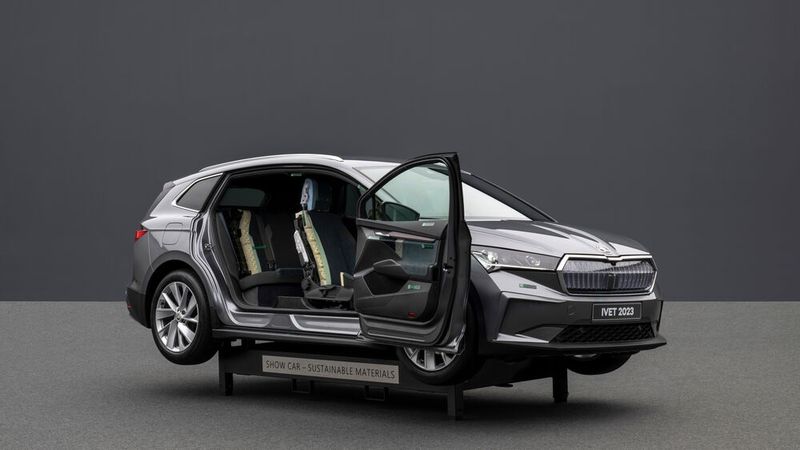
:quality(80)/p7i.vogel.de/wcms/a6/bf/a6bf3ad1af97fcdfc10c8eddad3335ea/0118588025v1.jpeg "A highlight and a very practical example of using sustainable materials and recycled materials will be the show car based on the Škoda Enyaq, which will be on display at the PIAE in Mannheim.(Image: Skoda)")
:quality(80)/p7i.vogel.de/wcms/62/0f/620f2fedd0e3e7d196393994961f1f1c/0118588019v1.jpeg "\"The newly developed materials fulfill all standard requirements for underbody components and prove to be suitable for series production. Neither the use of natural fibers nor that of post-consumer recyclates leads to a significant drop in properties for the customer,\" says Fabian Groh, development attachment system at Audi.(Image: Audi)")
:quality(80)/p7i.vogel.de/wcms/0c/b4/0cb4b21ec615e582ae469888bb8c2ca7/0118588013v1.jpeg "\"To meet the recycling quota required by the new EU end-of-life vehicle regulation, essentially all major plastic parts in and around the vehicle must be made with recyclate or a proportion of recyclate, such as bumpers, sills or trim,\" says Georg Grestenberger, Application Marketing Manager Interior – Mobility at Borealis.(Image: Borealis)")
:quality(80)/p7i.vogel.de/wcms/5a/a9/5aa9cdc289d9273575ec9b01666e2275/0118588021v1.jpeg "\"The main potential of Škoda's sustainability approach lies in reducing the resource consumption for the production of plastics and in the use of waste or already used material. But we are also preparing ourselves for future legal requirements of the EU End-of-Life Vehicles Directive,\" says Dalibor Kopáč, development engineer at Škoda.(Image: Skoda)")
:quality(80)/p7i.vogel.de/wcms/8a/72/8a729ed001cc40cc32ec256df46b5834/design-20ohne-20titel-1813x1020v1.png "In the joint program initiated by German GIZ, the project partners develop value chains for materials recycled from end-of-life automotive headlamps. (Image: © Covestro)")
:quality(80)/p7i.vogel.de/wcms/4d/ba/4dba830f2985a506fc9b3c6b108addf6/0129112067v1.jpeg "Attractive decors with sustainable materials, easy-to-read displays, integration of light and touch functions - these are just some of the trends for plastics in car interiors. (Image:Short)")