


:quality(80)/p7i.vogel.de/wcms/c2/e5/c2e58a3c742e1a82f7d4725fa571dd26/0130305463v1.jpeg "Europe has a Primus for humanoids! After the agreement to cooperate and found Primus Robotics (from left): Juan Etxebarria, Head of Business Development at Fagor Arrasate, and Alejandro Echeverría, Managing Director of Funditec Intelligence ... (Picture:Fagor Arrasate)")
:quality(80)/p7i.vogel.de/wcms/b8/90/b8906166b2acd38549ad7db16d37c3b8/opening-20ceremony-2400x1349v1.jpeg "SIMTOS 2026 Opens on April 13, Held at KINTEX for 5 Days Through April 17. (Source: SIMTOS)")
:quality(80)/p7i.vogel.de/wcms/4b/bc/4bbcff159df32ad396280fcbcdcc7c1f/0130537896v1.jpeg "A Westcotec camera monitors the speed of forklift trucks in an industrial hall. (Image:Westcotec)")
:quality(80)/p7i.vogel.de/wcms/d7/86/d786a07d3be5e5456457c567631ac884/0130409526v1.jpeg "According to the manufacturer, the ULT 2500.1 extraction and filter system is designed for the reliable filtration of large quantities of dust in various industrial applications. (Image:ULT)")
:quality(80)/p7i.vogel.de/wcms/94/45/9445c71536166caf0c5206f394cddf38/0130559574v1.jpeg "The Siemens Infrastructure Transition Monitor is a Siemens study published every two years. (Image:Siemens)")
:quality(80)/p7i.vogel.de/wcms/8e/b9/8eb9066e31655a551f25a256c949cc19/0130542642v1.jpeg "Symbolic image: Robotics manufacturers are on the way to mass production of humanoids. (Image:Dall-E / AI-generated)")
:quality(80)/p7i.vogel.de/wcms/0e/02/0e02d56de3a46514ab0ee9628082b595/0113143253v1.jpeg "In our China Market Insider, we regularly provide you with relevant information directly from China. (Image:© Eisenhans - stock.adobe.com)")
:quality(80)/p7i.vogel.de/wcms/57/2e/572eca8289966c32964ef4206d6240ff/0130350923v1.jpeg "Agentic AI refers to systems that not only evaluate information, but can also derive action steps from it and support operational processes. (Picture: ©GamePixel - stock.adobe.com)")
:quality(80)/p7i.vogel.de/wcms/7a/1a/7a1a6035f21cbb53d373d759944a680e/bild-01-co-improve-agile-produktentwicklung-systemkomplexit-c3-a4t-governance-compliance-finalv1.png "The agile framework - extended for product development in the regulatory environment. (Source: CO-Improve)")
:quality(80)/p7i.vogel.de/wcms/cb/02/cb02d24324dfacafb2f0a2228065eb39/0130583507v1.jpeg "Lennart Baramsky, designer at BMW Group Designworks, shows that design today is created in networked systems—no longer in the classic order of idea, sketch and elaboration. (Picture:Designworks Munich)")
:quality(80)/p7i.vogel.de/wcms/14/27/142774c1c27785d56d8ab10131fb648d/adobestock-844361487--c2-a9-20jk-kyoto-20-e2-80-93-20stock-adobe-com-ki-generiertv1.jpeg "Large-scale or rapidly growing IoT scenarios in factory automation can often only be implemented using conventional cabling with considerable infrastructure costs. Wireless technologies can offer great added value when used in a complementary and sensible way. (Source: © JK_kyoto - stock.adobe.com / AI-generated)")
:quality(80)/p7i.vogel.de/wcms/3d/bf/3dbfb672adb0446d40669e6403baf3b6/adobestock-1421003638--c2-a9-20tenpixels-20--20stock-adobe-comv1.jpeg "Many processes in design and development are undergoing change. PLM solutions ensure greater efficiency thanks to transparency and data consistency. (Source: © TenPixels - stock.adobe.com)")
:quality(80)/p7i.vogel.de/wcms/cf/3c/cf3c0062175086734baf2df773155fad/0130592310v1.jpeg "Bosch's Cockpit & ADAS Integration Platform integrates the previously separate infotainment and driver assistance functions into one system-on-chip. (Image:Bosch)")
:quality(80)/p7i.vogel.de/wcms/0b/64/0b64fa6f43a1f9c8e6fd60055f9d27ed/0130580085v1.jpeg "Stellantis is negotiating with Leapmotor about an Opel model to be developed in China. (Image:Opel)")
:quality(80)/p7i.vogel.de/wcms/87/f8/87f87cbd3669c82cf8a929f50541f806/0130618626v1.jpeg "Microchip's new hybrid MCU system-in-package SAM9X75 enables MPU computing power with the familiar development environment of MCU-based designs, (Image:Microchip)")
:quality(80)/p7i.vogel.de/wcms/6b/63/6b635ddc12a03c966cc8c6e836dcdcb2/0130616488v1.jpeg "Keep your hands off the wheel, it may soon be said throughout Europe! Because Tesla wants to introduce its \"Full Self Driving\" (FDS) driver assistance system, at least in the \"Monitored\" version ... (Picture:Tesla)")
:quality(80)/p7i.vogel.de/wcms/00/0f/000f67225299d0ad9123896d49aa25e5/0130564619v1.jpeg "Infrastructure for AI agents: Intel and Sambanova share computing load across three processor types (Image:Gemini / AI-generated)")
:quality(80)/p7i.vogel.de/wcms/e4/54/e454fcca7009b106cda2e228992a7a47/0130565746v1.jpeg "Hand in hand: Intel CEO Lip-Bu Tan enters into a strategic partnership with his company in the grandiose Terafab project. But the scope, timeframe and purpose remain vague. (Image:SemWiki/X)")
:quality(80)/p7i.vogel.de/wcms/22/32/22328957aafda3529c5b0069c0790595/0130537290v1.jpeg "Human knowledge, artificial intelligence: intelligent data processing directly at the point of use requires the interaction of AI, hardware expertise and concrete application experience. (Image:Dall-E / AI-generated)")
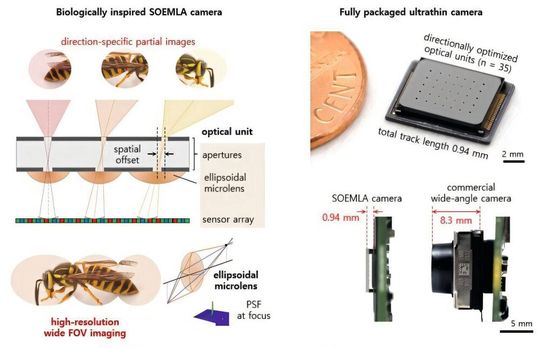
:quality(80)/p7i.vogel.de/wcms/ed/ff/edfff4eab0635db8530fcc8da1943fd4/0130612359v1.jpeg "Using a special microlens array, Korean researchers have developed a wide-angle camera that is less than 1 mm (0.04 inches) thick and offers a field of view of 140 degrees. (Image:freely licensed)")
:fill(fff,0)/images.vogel.de/vogelonline/companyimg/76800/76895/65.jpg "FAULHABER_120mm.jpg ()")

:quality(80)/p7i.vogel.de/wcms/eb/f5/ebf58d64fc89d34f7c3c12b9644ad7f0/0129310207v1.jpeg "The surroundings in view at all times: Thanks to the very thin heating element, which is integrated directly into the internal lens design, this is possible. The advantages are the smaller space requirement with higher efficiency. (Image:VIA optronics)")
Date: 08.12.2025
Naturally, we always handle your personal data responsibly. Any personal data we receive from you is processed in accordance with applicable data protection legislation. For detailed information please see our privacy policy.
Consent to the use of data for promotional purposes
I hereby consent to Vogel Communications Group GmbH & Co. KG, Max-Planck-Str. 7-9, 97082 Würzburg including any affiliated companies according to §§ 15 et seq. AktG (hereafter: Vogel Communications Group) using my e-mail address to send editorial newsletters. A list of all affiliated companies can be found here
Newsletter content may include all products and services of any companies mentioned above, including for example specialist journals and books, events and fairs as well as event-related products and services, print and digital media offers and services such as additional (editorial) newsletters, raffles, lead campaigns, market research both online and offline, specialist webportals and e-learning offers. In case my personal telephone number has also been collected, it may be used for offers of aforementioned products, for services of the companies mentioned above, and market research purposes.
Additionally, my consent also includes the processing of my email address and telephone number for data matching for marketing purposes with select advertising partners such as LinkedIn, Google, and Meta. For this, Vogel Communications Group may transmit said data in hashed form to the advertising partners who then use said data to determine whether I am also a member of the mentioned advertising partner portals. Vogel Communications Group uses this feature for the purposes of re-targeting (up-selling, cross-selling, and customer loyalty), generating so-called look-alike audiences for acquisition of new customers, and as basis for exclusion for on-going advertising campaigns. Further information can be found in section “data matching for marketing purposes”.
In case I access protected data on Internet portals of Vogel Communications Group including any affiliated companies according to §§ 15 et seq. AktG, I need to provide further data in order to register for the access to such content. In return for this free access to editorial content, my data may be used in accordance with this consent for the purposes stated here. This does not apply to data matching for marketing purposes.
Right of revocation
I understand that I can revoke my consent at will. My revocation does not change the lawfulness of data processing that was conducted based on my consent leading up to my revocation. One option to declare my revocation is to use the contact form found at https://contact.vogel.de. In case I no longer wish to receive certain newsletters, I have subscribed to, I can also click on the unsubscribe link included at the end of a newsletter. Further information regarding my right of revocation and the implementation of it as well as the consequences of my revocation can be found in the data protection declaration, section editorial newsletter.
:quality(80)/p7i.vogel.de/wcms/9a/ae/9aaef670837541d2b6f435f6636f2201/0124995913v1.jpeg "The fully automatic 3D capture system operates without traditional teaching. (Image:Fraunhofer IGD)")
:quality(80)/p7i.vogel.de/wcms/1a/d3/1ad3b385cbe9d8695351970614137c9a/0125117571v1.jpeg "Infrared light passes through the metalens and is converted into violet light due to the material and special surface structures (magnified in the lens), and is bundled at a focal point. (Image:Ü.Talts / ETH Zurich)")