Evolution or revolution—much is happening in the drive sector. This ranges from detailed improvements to individual engine components to new drive architectures and business models.
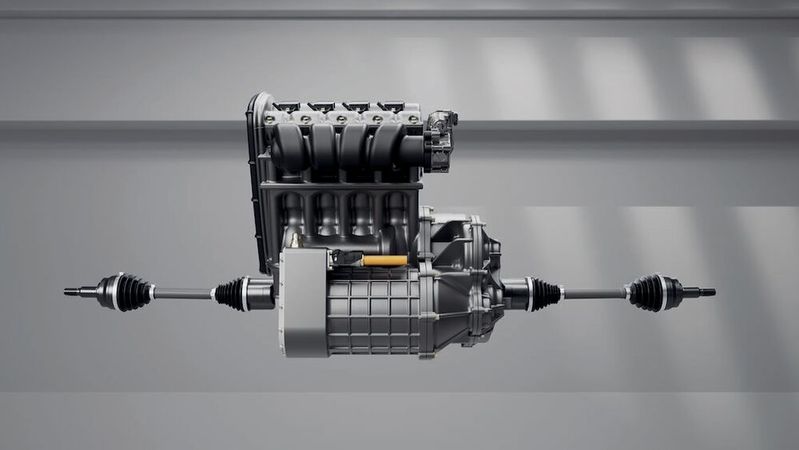
The new hybrid concept from Horse also includes heat pumps and the use of the refrigerant R290.
(Image: Horse Powertrain)
The trend toward more electric drives has already prompted some OEMs to scale back or outsource their development activities for combustion engines. Horse Powertrain is one such new company that emerged from the engine activities of Renault, Geely, and Volvo—including a stake held by the Saudi Arabian oil company Aramco. Horse aims to act as an external and neutral partner to develop and produce hybrid drives or combustion engines for OEMs, thereby freeing them up to focus on the development of battery-electric drives.
For this business model, a new hybrid drive was presented in 2025, featuring a 0.48 gallons four-cylinder combustion engine as its centerpiece, delivering 80 kilowatts of power and 127 lb-ft of torque. It is coupled with an electric motor (50 kilowatts, 156 lb-ft) that draws its energy from a lithium-ion battery with an energy capacity of 1.4 kilowatt-hours. The transmission and power electronics have also been integrated into the overall solution from the beginning, making the drive unit very compact. According to Horse, a technical highlight of the drive is the combustion engine, which operates on the Atkinson cycle, is compatible with common flex-fuel blends containing up to ten percent ethanol, and already meets the Euro 7 emission standard. CEO Matias Giannini stated that Horse designed the hybrid drive "as a global solution" to cover many markets and vehicle segments.
Hybridization With Range Extender
Horse takes it a step further with the concept of a separate range extender, which could hybridize battery-electric vehicles as an add-on. The drive, presented at Auto Shanghai, consists of a combustion engine, electric motor, transmission, flanged drive shafts, and complete electronics. According to Horse CEO Matias Giannini, the compact unit, thanks to comprehensive integration, is "25 percent narrower and 20 percent more cost-effective than previous solutions." He stated that it can be installed on the front axle of electric vehicles without requiring significant modifications to their architecture.
This would enable an electric all-wheel drive, as well as a type of "hybrid drive" with the combustion engine acting as a generator and range extender. The concept is also intended to serve as a replacement for a conventional gasoline or diesel engine in a combustion platform. The combustion engine operates with pre-chamber ignition and can run on various fuels such as E85, ethanol, methanol, and synthetic fuels. According to Horse, the first vehicles featuring the Future Hybrid Concept are expected to hit the roads in 2028.
Fully Electric Skateboard Chassis
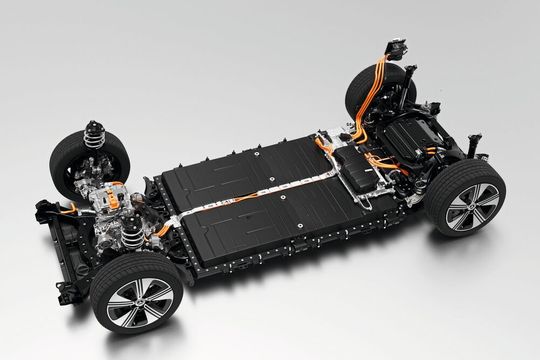
The new MMA platform from Mercedes-Benz is set to make its production debut in the new CLA.
(Image: Mercedes-Benz Group AG)
Mercedes-Benz will introduce the new MMA architecture in 2025, which is set to debut in series production with the new entry-level CLA model. The MMA architecture is a so-called skateboard chassis, on which various body variants can be built. The 800-volt architecture enables a charging capacity of 320 kilowatts or up to 186 miles of range in just ten minutes. It is planned that the charging unit will later also support bidirectional charging.
The permanently excited synchronous motor (PSM) with a silicon carbide inverter on the rear axle delivers up to 200 kilowatts of power and transfers its force to the rear wheels via a two-speed transmission. Optionally, an additional PSM electric motor with 80 kilowatts can be installed on the front axle, primarily activated during acceleration and, for efficiency purposes, can also be disengaged using a clutch. These structural efficiency measures, an optional recuperation power of up to 200 kilowatts down to coasting, as well as sophisticated operating modes, are designed to reduce energy consumption to around twelve kilowatt-hours per 62 miles.
The battery features new cell chemistries and a cell-to-pack design. In the base version with lithium iron phosphate (LFP) cells, it offers an energy capacity of 58 kilowatt-hours. The top version with NMC technology holds 85 kilowatt-hours and has an energy density of 680 watt-hours per liter. According to Mercedes-Benz, this is approximately 20 percent better compared to the previous generation, while the costs at the battery level have decreased by 30 percent.
Evolution Instead of Revolution at VW
Volkswagen has reduced the energy consumption of its APP310 electric drive (PSM with 229 lb-ft of torque, series launch in 2020) not through a generational change but through refinement measures. Since the new APP350 evolution stage is to be produced on the same line as the APP310 variant, new windings for the electric motor or a new cooling system were ruled out. Instead, the focus was on detailed optimizations.
Date: 08.12.2025
Naturally, we always handle your personal data responsibly. Any personal data we receive from you is processed in accordance with applicable data protection legislation. For detailed information please see our privacy policy.
Consent to the use of data for promotional purposes
I hereby consent to Vogel Communications Group GmbH & Co. KG, Max-Planck-Str. 7-9, 97082 Würzburg including any affiliated companies according to §§ 15 et seq. AktG (hereafter: Vogel Communications Group) using my e-mail address to send editorial newsletters. A list of all affiliated companies can be found here
Newsletter content may include all products and services of any companies mentioned above, including for example specialist journals and books, events and fairs as well as event-related products and services, print and digital media offers and services such as additional (editorial) newsletters, raffles, lead campaigns, market research both online and offline, specialist webportals and e-learning offers. In case my personal telephone number has also been collected, it may be used for offers of aforementioned products, for services of the companies mentioned above, and market research purposes.
Additionally, my consent also includes the processing of my email address and telephone number for data matching for marketing purposes with select advertising partners such as LinkedIn, Google, and Meta. For this, Vogel Communications Group may transmit said data in hashed form to the advertising partners who then use said data to determine whether I am also a member of the mentioned advertising partner portals. Vogel Communications Group uses this feature for the purposes of re-targeting (up-selling, cross-selling, and customer loyalty), generating so-called look-alike audiences for acquisition of new customers, and as basis for exclusion for on-going advertising campaigns. Further information can be found in section “data matching for marketing purposes”.
In case I access protected data on Internet portals of Vogel Communications Group including any affiliated companies according to §§ 15 et seq. AktG, I need to provide further data in order to register for the access to such content. In return for this free access to editorial content, my data may be used in accordance with this consent for the purposes stated here. This does not apply to data matching for marketing purposes.
Right of revocation
I understand that I can revoke my consent at will. My revocation does not change the lawfulness of data processing that was conducted based on my consent leading up to my revocation. One option to declare my revocation is to use the contact form found at https://contact.vogel.de. In case I no longer wish to receive certain newsletters, I have subscribed to, I can also click on the unsubscribe link included at the end of a newsletter. Further information regarding my right of revocation and the implementation of it as well as the consequences of my revocation can be found in the data protection declaration, section editorial newsletter.
For example, by switching from silicon IGBT semiconductors (efficiency 94 to 97%) to SiC MOSFETs (efficiency 97 to 99%) from Bosch, which have lower losses and thus reduced cooling requirements. Another measure involves using variable switching frequencies in pulse width modulation (PWM), in addition to continuous switching frequencies, depending on speed and load conditions, as well as alternative modulation methods like block operation and no-zero-pointer modulation.
Additionally, Volkswagen has reduced the sheet thicknesses in the stator, thereby decreasing core losses caused by the changing magnetic fields. Furthermore, the wiring configuration of the stator winding was switched from a star connection to a delta connection, and the number of parallel branches was halved to improve efficiency at customer-relevant operating points.
25 Miles more Range
Volkswagen also identified savings potential in oil quality, now using a particularly low-friction oil. It halves viscosity in typical operating temperature ranges, enabling up to 7.5 miles more range.
Through these measures, VW engineers were able to improve the efficiency of the APP350 drive compared to its predecessor APP310 in many operating map areas (primarily the operationally relevant ones), in some cases by up to ten percent. As a result, the new drive saves around 36 percent energy in the ID 4 reference vehicle during the WLTP cycle. This increases the range of the electric vehicle by up to 25 miles. Additionally, operating noise has been significantly reduced through design improvements to the rotor and new software functions.
Future-Proof Authentication with Universal RFID Readers



:quality(80)/p7i.vogel.de/wcms/dd/08/dd086510d9ae7b50181f6070e4463b44/0129363730v1.jpeg "Typical application for ionizing devices: Wrapping films. (Picture: ©Adobe Stock/SMC)")
:quality(80)/p7i.vogel.de/wcms/35/57/3557c819943c53acec41a0ccba87da4f/0130049064v1.jpeg "Researchers at the Fraunhofer IWU in Chemnitz have long known that many typical sheet metal parts can be manufactured more cost-effectively using hollow embossing rollers. Now there is news to report ... (Image:Fraunhofer IWU)")
:quality(80)/p7i.vogel.de/wcms/59/02/590246e3b3f415c65edbee377c14ca77/26-06-pi-fraunhofer-iws-41450-direktplattieren-pic-01-7771x4369v1v1.jpeg "The Fraunhofer IWS has developed the new \"direct laser cladding\" process, which creates a functional layer directly on the base body by applying a strip-shaped metal to rotationally symmetrical components in a spiral and bonding it locally by laser. (Image:Christoph Wilsnack/Fraunhofer IWS)")
:quality(80)/p7i.vogel.de/wcms/73/60/73608418789b1d9c393f5e2fa974eda2/0130209906v1.jpeg "The robots of the X6 generation from b+m enable very high painting quality and are also particularly compact and easy to maintain. (Image:Beckhoff)")
:quality(80)/p7i.vogel.de/wcms/78/e9/78e9188c25a8a94e67c34c9bf8ffe495/visual-agile-20robots-20and-20google-20deepmind-20partner-20to-20bring-20intelligence-20to-20robotics-2500x1406v1v1.jpeg "Together, the partners are developing adaptable, intelligent robots for a wide range of applications (Image:Agile Robots SE)")
:quality(80)/p7i.vogel.de/wcms/e7/66/e7669ecf0260ae8fc54c214e34e4902a/0130316817v1.jpeg "Siemens and Palo Alto Networks offer tested cybersecurity solution for industrial 5G. (Image:Siemens)")
:quality(80)/p7i.vogel.de/wcms/9f/55/9f55324832c4f426958031375124d9de/siemens-20ubtech-20hmnd-1920x1079v1v1.png "Ready for the factory floor: While Ubtech is planning mass production, Siemens is already testing humanoids in real factory applications in Erlangen. (Image:Siemens)")
:quality(80)/p7i.vogel.de/wcms/11/36/113695ed260e29c8c2d9d39dc5f9d869/0130213768v1.jpeg "AI can work cheaply in China and deliver the results rapidly all over the world. (Image:Dall-E / AI-generated)")
:quality(80)/p7i.vogel.de/wcms/62/5f/625f41e87ebfef156a98c8e6393e32fd/0130211654v1.jpeg "Axial flux motors have some advantages over radial flux motor—but their production is currently still expensive. (Image:RWTH Aachen University)")
:quality(80)/p7i.vogel.de/wcms/77/9b/779b0685d010dfe45c9c2cb1cfecd467/0128886425v1.jpeg "The BlueEye is the first \"real\" hyperspectral camera for the UV range and covers the wavelength range from 220 to 380nm. (Image:Inno-spec GmbH)")
:quality(80)/p7i.vogel.de/wcms/e4/51/e451d52ce0182fb0aaa46a5774f832ef/26-04-pi-fraunhofer-iws-21160-bioslide-pic-01-4128x2321v1v1.jpeg "With the BioSlide research project, the Fraunhofer IWS is investigating how sliding systems can be designed to be more sustainable and energy-efficient. New materials can be tested in a particularly application-oriented manner on this plain bearing test stand. (Image:Fraunhofer IWS)")
![Thanks to advanced 3D printing technology, a more efficient use of resources should contribute to lower-emission aviation—this is the goal of ['skai]-lab. (Image:Oleksandr Pashchenko - stock.adobe.com / AI-generated)](https://cdn1.vogel.de/nghHNSbySccfOjG3n1qCA-FVOjQ=/288x162/smart/filters:format(jpg):quality(80)/p7i.vogel.de/wcms/62/64/626424c97a16e69f871bf216c9629c2a/adobestock-1927043193--c2-a9-20oleksandr-20pashchenko-20-e2-80-93-20stock-adobe-com-ki-generiertv1v1.jpeg "Thanks to advanced 3D printing technology, a more efficient use of resources should contribute to lower-emission aviation—this is the goal of ['skai]-lab. (Image:Oleksandr Pashchenko - stock.adobe.com / AI-generated)")
:quality(80)/p7i.vogel.de/wcms/c3/c4/c3c4ce270b083eeac55654148611f064/0130237945v1.jpeg "China is not giving up on hydrogen, but is intensifying its efforts. (Image:freely licensed from Pixabay)")
:quality(80)/p7i.vogel.de/wcms/4e/c0/4ec0bd19390b169edfa23677373dcdf1/0130260089v1.jpeg "Renewable fuels can supply European road traffic, according to a study. (Image:Aral)")
:quality(80)/p7i.vogel.de/wcms/6f/c9/6fc9050301d745cad25585c6780f8f51/0130197341v1.jpeg "Production facilities are a worthwhile target and are therefore at risk. (Image:ABB Robotics)")
:quality(80)/p7i.vogel.de/wcms/b6/62/b662adc2cec8227d8172509bbfb6ee42/25c0207-107-4961x2789v1v1.jpeg "The GLB is the second model based on Mercedes' new MMA platform. Apparently, Geely's platform is better and cheaper, which is why the two companies are negotiating a partnership. (Image:Mercedes-Benz)")
:quality(80)/p7i.vogel.de/wcms/4d/dd/4dddf438e91f394c04a095dbfd109d1c/0130236430v1.jpeg "Measurement modules: The 720301 module in combination with the SL2000 enables RMS and power calculations, among other things. (Image:Yokogawa)")
:quality(80)/p7i.vogel.de/wcms/61/fc/61fcf95f5cca15494ad18343901ae585/0130317237v1.jpeg "With the AGI CPU, Arm says it is taking a \"historic step\": With the processor aimed at AI in data centers, the company is presenting itself for the first time as a provider of its own chips, not just as a pure IP licensor. (Image:Arm)")
:quality(80)/p7i.vogel.de/wcms/82/90/8290dfe3595b6c6b33726ae8b76172c7/0130319587v1.jpeg "The concept image illustrates how the pattern of tiny protrusions and depressions created on the substrate (MgO, bottom) controls the arrangement of atoms in the superconducting material (YBCO, top). At the interface between the two layers, an electronic structure enables superconductivity to occur at higher temperatures than previously possible. (Image:Chalmers University of Technology / Riccardo Arpaia)")
:fill(fff,0)/images.vogel.de/vogelonline/companyimg/76800/76895/65.jpg "FAULHABER_120mm.jpg ()")
:fill(fff,0)/p7i.vogel.de/companies/69/88/69882c428938e/tmts2026-ticec-banner-en-2000px.png "tmts2026-ticec-banner-en-2000px (https://www.tmts.tw/en)")
:fill(fff,0)/p7i.vogel.de/companies/67/eb/67eba621ef6ea/logo2.png "logo2 (Wuxi InfiMotion)")
:quality(80):fill(efefef,0)/p7i.vogel.de/wcms/67/ae/67ae0b9ac31f8/elatec-wp-universal-reader.png "Elatec WP Universal Reader")
:quality(80)/p7i.vogel.de/wcms/15/75/1575ab89b889911c692bbb7e7b956697/0127487457v1.jpeg "The new hybrid concept from Horse also includes heat pumps and the use of the refrigerant R290. (Image:Horse Powertrain)")
:quality(80)/p7i.vogel.de/wcms/25/c6/25c6f47fcadcaa82105c5e18c61b11c6/0125505785v1.jpeg "The VW Multivan is also available as a hybrid with all-wheel drive. (Image:VWN)")