The lines between wafer fabrication and package integration are disappearing. With the rise of advanced packaging, the backend is becoming a domain of high precision—and thus a strategic key factor in semiconductor production. Aerotech contributes to the efficiency enhancement and advancement of modern advanced packaging processes with high-precision motion control technology.
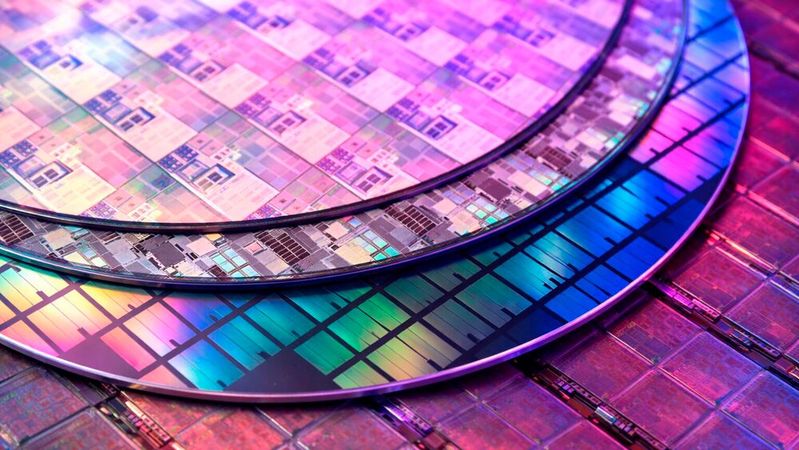
Multiple structured semiconductor wafers with reflective interference colors.
(Image: Dall-E / AI-generated)
The boundaries between front-end and back-end processes in semiconductor manufacturing are increasingly blurring. What were once two separate worlds are merging into a highly integrated manufacturing process with the advent of advanced semiconductor packaging. New architectures such as fan-out wafer-level packaging (FOWLP), 2.5D/3D IC stacks, heterogeneous integration, or system-in-package (SiP) demand a level of precision previously reserved exclusively for front-end lithography. For manufacturers, this means: only those who consistently automate their processes and master them down to the nanometer scale can compete in the next generation of chip manufacturing.
"These new methods and architectures require a level of precision previously reserved exclusively for the front-end," explains Justin Bressi, Business Development Manager at motion control specialist Aerotech. "The packaging process is now an integral part of system performance and functionality. To remain economically scalable, it requires advanced automation systems with precise motion control."
Advanced Packaging As A Response to New Integration Requirements
For a long time, packaging was considered merely a protective and connecting layer—a final, comparatively robust stage of chip production. This changed with the rise of data-intensive applications, high-performance computing (HPC), AI systems, IoT devices, and automotive electronics. Advanced semiconductor packaging makes it possible to integrate multiple dies—individual semiconductor chips cut from a silicon wafer—from different process nodes into a single, functionally coordinated package. This eliminates bottlenecks in electrical design, increases energy efficiency, and reduces manufacturing costs.
This shifts tolerances, which once lay in the micrometer range, into the nanometer range. Processes such as hybrid bonding or die-to-interposer assembly require six-dimensional alignment—in X, Y, Z, as well as the three rotational axes. Even the smallest deviations can impair electrical performance or render entire batches unusable.
"In many cases, simple, low-precision pick-and-place robots are no longer sufficient," says Justin Bressi. "Manufacturers need advanced systems that enable dynamic control and positional stability at the nanometer level." Only in this way can the balance between precision and throughput be achieved—a key requirement for aligning economic returns with process reliability.
Taiwan As the Epicenter of Change
Hardly any region represents the transformation of packaging as much as Taiwan. The world's largest foundry operator, TSMC, is significantly driving development with its Chip-on-Wafer-on-Substrate technology (CoWoS). For decades, the focus of Taiwanese manufacturers was on front-end production—packaging was outsourced to OSAT service providers (Outsourced Semiconductor Assembly & Test).
With the new architectures, this has changed: to better control quality, yield, and performance, leading producers are increasingly bringing packaging expertise in-house. "This growing level of vertical integration allows for better control over the entire supply chain," says Justin Bressi. "This is crucial to meet the demanding specifications of modern chips for HPC, AI, and highly integrated modules."
This shift also creates room for innovation. Since many emerging processes lack standardized equipment, foundries and local machine builders are working closely together to develop customized tools and subsystems. Aerotech is involved in this collaboration, providing precise motion control systems that operate reliably in cleanrooms and ultra-high vacuum (UHV) environments.
Precision, Dynamics, And Stability—Key Requirements for Motion Systems
The core requirement of advanced semiconductor packaging is positioning accuracy in the nanometer range, combined with high dynamics and mechanical stability. Hybrid bonding, for instance, requires precise control of forces in the range of just a few millinewtons to ensure a reliable connection without damaging delicate structures.
"These processes are simply not possible or scalable without devices that rely on state-of-the-art motion control systems for critical process steps," emphasizes Justin Bressi.
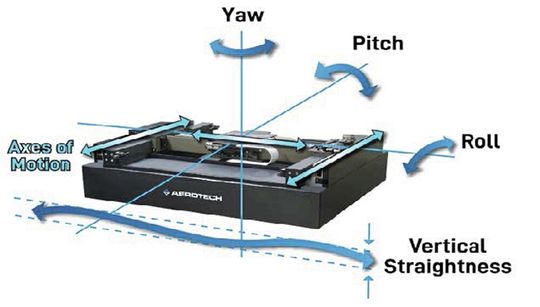
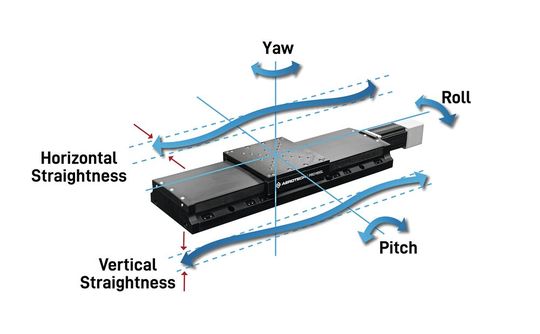
To achieve this level of precision, Aerotech relies on technologies such as air-bearing axes, vibration-optimized servo drives, and force-controlled feedback loops that virtually eliminate geometric error motions. Integrated sensors and active compensation enable position deviations of just a few nanometers (Fig. 1+2).
Date: 08.12.2025
Naturally, we always handle your personal data responsibly. Any personal data we receive from you is processed in accordance with applicable data protection legislation. For detailed information please see our privacy policy.
Consent to the use of data for promotional purposes
I hereby consent to Vogel Communications Group GmbH & Co. KG, Max-Planck-Str. 7-9, 97082 Würzburg including any affiliated companies according to §§ 15 et seq. AktG (hereafter: Vogel Communications Group) using my e-mail address to send editorial newsletters. A list of all affiliated companies can be found here
Newsletter content may include all products and services of any companies mentioned above, including for example specialist journals and books, events and fairs as well as event-related products and services, print and digital media offers and services such as additional (editorial) newsletters, raffles, lead campaigns, market research both online and offline, specialist webportals and e-learning offers. In case my personal telephone number has also been collected, it may be used for offers of aforementioned products, for services of the companies mentioned above, and market research purposes.
Additionally, my consent also includes the processing of my email address and telephone number for data matching for marketing purposes with select advertising partners such as LinkedIn, Google, and Meta. For this, Vogel Communications Group may transmit said data in hashed form to the advertising partners who then use said data to determine whether I am also a member of the mentioned advertising partner portals. Vogel Communications Group uses this feature for the purposes of re-targeting (up-selling, cross-selling, and customer loyalty), generating so-called look-alike audiences for acquisition of new customers, and as basis for exclusion for on-going advertising campaigns. Further information can be found in section “data matching for marketing purposes”.
In case I access protected data on Internet portals of Vogel Communications Group including any affiliated companies according to §§ 15 et seq. AktG, I need to provide further data in order to register for the access to such content. In return for this free access to editorial content, my data may be used in accordance with this consent for the purposes stated here. This does not apply to data matching for marketing purposes.
Right of revocation
I understand that I can revoke my consent at will. My revocation does not change the lawfulness of data processing that was conducted based on my consent leading up to my revocation. One option to declare my revocation is to use the contact form found at https://contact.vogel.de. In case I no longer wish to receive certain newsletters, I have subscribed to, I can also click on the unsubscribe link included at the end of a newsletter. Further information regarding my right of revocation and the implementation of it as well as the consequences of my revocation can be found in the data protection declaration, section editorial newsletter.
Figure 1
(Image: Aerotech)
Figure 2
(Image: Aerotech)
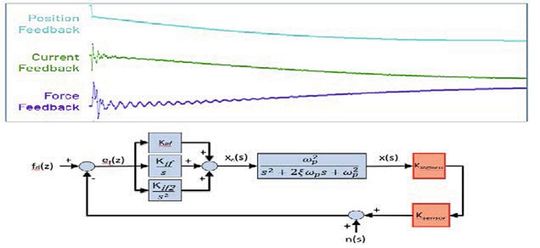
At the same time, motion dynamics play a critical role. In high-volume packaging lines, the system must execute rapid step-and-recovery movements without sacrificing precision. Advanced controllers—such as Aerotech's motion control platform Automation1—enable this through aggressive servo tuning and model-based feedforward controls, which minimize dynamic errors during high accelerations (Fig. 3).
Figure 3
(Image: Aerotech)
Another important criterion is force control. Especially during die stacking or wafer-to-wafer bonding, the exact adherence to the applied force determines the success of the connection. Through integrated force feedback, the defined force can be precisely maintained, reducing rejection rates and increasing process repeatability.
Robust Systems for Demanding Environments
In addition to precision and dynamics, the systems must withstand the specific conditions of semiconductor manufacturing. Cleanrooms and vacuum chambers require low-vibration, low-particle, and thermally stable components. To address this, Aerotech combines passive and active isolation systems with thermal compensation strategies. This reduces internal heat loads and compensates for undesirable drift movements.
This makes precision motion systems mission-critical subsystems within process tools—they directly contribute to yield, process reliability, and system availability. "Precision motion is no longer an auxiliary function," Justin Bressi is convinced. "It is a core technology that determines the performance of the entire production line."
Cooperation As An Innovation Driver
Since many packaging processes are new and non-standardized, strategic collaboration between chip manufacturers and equipment suppliers plays a key role. Bringing packaging capabilities in-house shortens the feedback loop between design, R&D, and manufacturing—a decisive advantage in an environment of constant technological change.
"Through close collaboration with equipment manufacturers, chip producers can jointly develop customized tools and processes needed for new technologies, for which no standard solutions currently exist," explains Justin Bressi. Aerotech is involved as a partner in such development projects, providing the motion platforms that make the process precisely controllable.
The benefits are mutual: manufacturers gain from specifically tailored systems, while Aerotech gains early insight into new process requirements—a knowledge advantage that flows back into product development.
Motion Control As An Enabler of the Next Semiconductor Generation
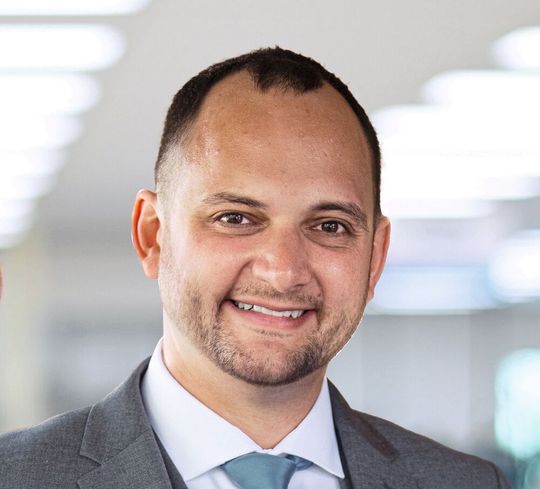
Justin Bressi, Business Development Manager at Aerotech Inc., explains the role of precise motion control systems in scaling modern packaging processes.
(Image: Aerotech)
Advanced semiconductor packaging is pushing the boundaries of what is possible in semiconductor manufacturing. In light of the slowing of Moore's Law, it is the key lever to further increase computing power, energy efficiency, and integration density. However, as chip complexity grows, so does the importance of precise, stable, and reproducible motion processes.
"Advanced packaging extends the boundaries of what is possible in semiconductor manufacturing," summarizes Justin Bressi. "To capitalize on these opportunities, chip manufacturers must work closely with their technology partners—and motion control is an indispensable component of success."
Glossary: Key Terms
2.5D/3D-IC: Multilayer chip architectures where semiconductor chips are either placed side by side on an interposer (2.5D) or stacked on top of each other (3D).
Advanced Semiconductor Packaging (ASP): Umbrella term for modern packaging technologies that integrate multiple chips into a single package to enhance performance, energy efficiency, and integration density.
CoWoS (Chip-on-Wafer-on-Substrate): Packaging technology developed by TSMC, where chips are placed on wafers and subsequently mounted onto a substrate.
Die / Dies: Individual semiconductor chips cut from a wafer. Multiple dies can be integrated together into a single package or stacked to enable complex system functions.
FOWLP (Fan-Out Wafer-Level Packaging): Packaging process in which a chip is expanded with additional I/O connections before wafer singulation.
Heterogeneous Integration: Combination of chips with different technologies, process nodes, or materials in a single package.
Hybrid Bonding: Precision process for directly connecting chips or dies to substrates with extremely high accuracy and controlled applied force.
SiP (System-in-Package): Integration of multiple electronic functions—such as processor, memory, and sensors—in a single package.
Wafer: Thin, disk-shaped silicon plate on which integrated circuits are manufactured. After processing, individual dies are separated from the wafer.
(sb)
Wolfram Wiese is a PR specialist editor at PRX Agency for Public Relations in Stuttgart, Germany.



:quality(80)/p7i.vogel.de/wcms/53/f7/53f7dadbe4d656a3fd4f4077445f29f6/0129828707v1.jpeg "Thanks to its compact design and drilling/unscrewing function, the Fire Birdie is suitable for applications with limited installation space and frequent tool changes. (Image:Marcel Kraibühler)")
:quality(80)/p7i.vogel.de/wcms/da/4d/da4da8d34671dc6bce80e496212de877/0129850788v1.jpeg "Mate-XT Go supports the arms and shoulders during overhead work and repetitive tasks and is designed to significantly reduce muscle strain in everyday working life. (Image:Comau)")
:quality(80)/p7i.vogel.de/wcms/95/97/95976dbaac68b249eb65e74c5aad5300/0129651893v1.jpeg "The C2.0 centric clamps, the S2 fixed jaw clamps and the \"gredoc\" zero-point clamping systems are used for machining the raw parts. Fastening is carried out with width across flats 27. (Image:Gressel)")
:quality(80)/p7i.vogel.de/wcms/57/1b/571b8895efb299d70846bbdbd7af2338/0130043886v1.jpeg "Servo hydraulics independent of the control system: The servo hydraulics software module is integrated directly into the b Maxx 5500 servo drive (pictured: Mehmet Sari, Export Sales Manager at Hürsan Pres (left), Özgür Deniz Demirbaş, Country Manager at Baumüller Turkey) (Image:Baumüller)")
:quality(80)/p7i.vogel.de/wcms/3b/27/3b27f6c5848be73acecb04054bf0a146/0130115209v1.jpeg "Spectroscopic glucose measurement with infrared spectroscopy enables more regular measurements without physical strain. (Image:Endrich)")
:quality(80)/p7i.vogel.de/wcms/3f/cc/3fccb748b0fe16f1f61249d94c72f126/0130149439v1.jpeg "Requirements for integrated power supply systems: Precise AC and DC power supply systems that not only provide energy, but also reliably combine measurement, analysis and system integration. (Image:Schulz Electronic)")
:quality(80)/p7i.vogel.de/wcms/fd/93/fd93e01c16f5a4709278499d981a459c/0130061090v1.jpeg "Revealed: These servo drives are assembled at Aerotech in Fürth. (Image:Aerotech)")
:quality(80)/p7i.vogel.de/wcms/cb/8a/cb8ae7f5205365efce3e7285154fc3cf/0130132198v1.jpeg "Markus Huber (left) and Nicolai Friis from TU Wien know how to make quantum computers multidimensional in order to perform computing operations even better. (Image:TU Vienna / A. Rommel)")
:quality(80)/p7i.vogel.de/wcms/63/21/6321beb732bf7d92640df46d7aa77573/0130125122v1.jpeg "As part of the Carbon Lab Factory Lausitz, a pilot plant for the production of sustainable, cost-effective and competitive carbon fibers will be built at the Guben site. (Image:Fraunhofer IAP / Kristin Stein)")
:quality(80)/p7i.vogel.de/wcms/53/4f/534fe0f168f6ee070ded4a48faca4cef/business-wire-main-image-1103x620v1.jpeg "The new UR AI Trainer, developed by Universal Robots and Scale AI, is the first direct lab-to-factory solution for AI model training.
(Source: Universal Robots)")
:quality(80)/p7i.vogel.de/wcms/08/70/087062e2e1a9b9add5777410dd746ee9/adobestock-1923991605-5607x3156v1v1.jpeg "A new type of tactile sensor, inspired by human skin, even recognizes grains of sand. (Image:Curioso.Photography - stock.adobe.com)")
:quality(80)/p7i.vogel.de/wcms/7f/08/7f087d7013424d123ab7275cd2e3fe55/adobestock-809456218--c2-a9-20degimages-20-e2-80-93-20stock-adobe-com-ki-generiert-4179x2351v1v1.jpeg "The digital upgrading of existing machines conserves resources, saves energy and reduces the need for new production. (Image:Degimages - stock.adobe.com/AI-generated)")
:quality(80)/p7i.vogel.de/wcms/90/db/90db3087d3af0560fcdb4dbc42443ce1/0130157448v1.jpeg "The switch to SDV is the most complex transformation the industry has ever had to master. The end consumer gets a vehicle that gains rather than loses value over its lifetime. (Image:Sonatus)")
:quality(80)/p7i.vogel.de/wcms/73/f0/73f00bb99a23197db05bb584fe78f20f/0130080581v1.jpeg "The \"China Speed\" analysis by Roland Berger shows that the speed of development has only a limited connection with labor costs. (Image:freely licensed at Pexels)")
:quality(80)/p7i.vogel.de/wcms/2f/5b/2f5ba6a150b52c2b8efada560c5cdafe/0130143442v1.jpeg "Automotive suppliers are facing a severe crisis, which is primarily due to a combination of structural change and economic problems. (Image:freely licensed at Pexels)")
:quality(80)/p7i.vogel.de/wcms/22/d0/22d03cd48e992435338b59464c428d41/0129739814v1.jpeg "More electric vehicles on the roads mean a higher demand for electricity - which should ideally be covered by renewable energies. (Image:BMW)")
:quality(80)/p7i.vogel.de/wcms/94/7a/947ac066b98cbcd3470e83ff9da3e25f/0130096114v1.jpeg "The use of amorphous steels in the stator enables a significant reduction in losses and increases the efficiency of modern electric motors in vehicle drives. (Image:Horse Powertrain)")
:quality(80)/p7i.vogel.de/wcms/e5/f1/e5f171d3d7ae021332cc0aeae4d6e299/0130127049v1.jpeg "In collaboration with Shanghai Jiao Tong University, Lenovo has presented a silicon anode battery under the name \"ED1000\" as a proof of concept for mobile workstations. (Image:Lenovo)")
:quality(80)/p7i.vogel.de/wcms/fa/69/fa696e59706b96fff02283dd74cc2398/0130129635v1.jpeg "Samsung Co-CEO Jun Young-hyun wants to respond to the AI-driven boom in demand in the memory market with contracts for up to five years. This should provide more planning security in the traditionally volatile storage business. At the same time, however, this is likely to increase the pressure on customers to secure precise long-term requirements, prices and supply chains. (Image:Samsung)")
:quality(80)/p7i.vogel.de/wcms/31/a8/31a883a47b86634c382923e78fd9a4c9/0130133225v1.jpeg "Figure 1: GMSL-capable point-to-point connection. (Image:ADI)")
:fill(fff,0)/images.vogel.de/vogelonline/companyimg/76800/76895/65.jpg "FAULHABER_120mm.jpg ()")
:fill(fff,0)/p7i.vogel.de/companies/67/eb/67eba621ef6ea/logo2.png "logo2 (Wuxi InfiMotion)")
:quality(80):fill(efefef,0)/p7i.vogel.de/wcms/67/af/67af6d7f2d755/skz-whitepaper-mission-additive-manufacturing-coverbild.png "SKZ Whitepaper_Mission Additive Manufacturing_Coverbild")
:quality(80)/p7i.vogel.de/wcms/cb/23/cb23acd8e9de969d52522692b62b1892/0129680605v1.jpeg "The Z22198 is an extremely compact, three-axis IEPE acceleration sensor for measuring oscillations (vibrations) and shocks in demanding applications. With an edge length of just 0.24 inches and a weight of 0.03 ounces, it is ideal for lightweight structures and confined spaces. (Image:Copyright 2020 ScROGERS,All Rights Reserved)")
:quality(80)/p7i.vogel.de/wcms/29/7a/297ad27ffd22f0ddd850b699fc3adec8/0124512500v1.jpeg "Bernd Waidhas, Principal Engineer - Silicon Packaging Architecture at Intel Germany, explained the importance of advanced packaging for the future of chiplets at the 'Chip Development' symposium. (Image:Manuel Christa)")