MEMS sensors are built into every smartphone but can also play a significant role in industrial technology. They have greatly expanded our ability to measure certain mechanical parameters and react to them very quickly. But what technology actually lies behind the acronym MEMS, and what currently untapped possibilities arise in professional applications through their use?
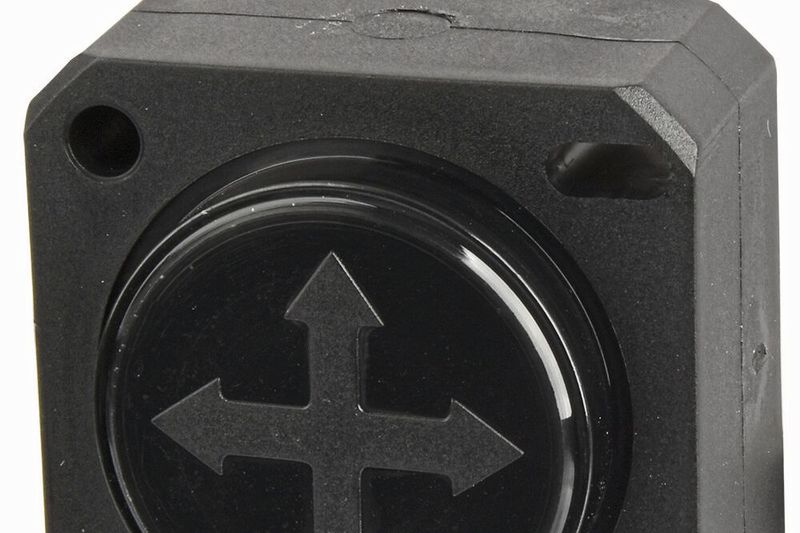
The three-axis acceleration sensor from DIS Sensors is explicitly based on MEMS technology
(Image: Reichelt Elektronik)
MEMS sensors make it possible to easily change the screen orientation of a smartphone by tilting it. There’s hardly anyone who doesn’t use this function daily and is therefore unfamiliar with this simple example. On the other hand, few know how this mechanism works and the diverse applications that MEMS technology offers beyond this.
Indispensable for Digitalization
Especially in industrial applications, MEMS technology can make a significant contribution to the digital transformation of the economy through data-driven manufacturing. To ensure production systems generate high value, they must process as many, sometimes very diverse, data as possible in a value-adding way. Sensors and measuring transducers serve as sources of information.
They provide the systems above them with information about physical parameters and plant conditions as a basis for decision-making in control, regulation, plant operation, and maintenance. In this way, MEMS sensors can help prevent machine downtime and quality problems, as well as increase sustainability by improving manufacturing and energy efficiency.
Sensor Technology With Growing Importance
Detecting and measuring physical parameters usually require converting the quantity to be measured into an electrical signal. In the past, this often required very complex precision engineering arrangements. These were frequently large and expensive, making them unsuitable for integration into compact mechatronic units.
Especially in mechanical and plant engineering, the integration of more sensors met with skepticism, as each additional complexity factor was seen as a potential source of failure. Moreover, the processing power of the control electronics was limited. These limitations are now a thing of the past.
Not only in mechanical and plant engineering but more generally, it has become clear that improvements in the efficiency and effectiveness of devices, machines, and systems are only possible based on a broader data foundation.
Revolution Through micro-electromechanics
The widespread use of sensors—particularly for three-dimensional measurements required in applications such as mechanical engineering, robotics, or aerospace—is made possible through their miniaturization. Here, MEMS technology plays a leading role. MEMS sensors are extremely small. They can be manufactured together with electronics for preprocessing the collected data and offered in a highly compact form.
But what exactly is MEMS? The English abbreviation "MEMS" stands for Microelectromechanical Systems, meaning very small mechatronic systems. They emerged as a result of a technological shift. When classical precision engineering reached the limits of physical possibilities around 40 years ago, the well-established manufacturing processes of the semiconductor industry were utilized to produce extremely small yet quite complex mechanical structures.
That was the birth of microsystems technology, which integrates electronic, mechanical, and optical components in the smallest of spaces. It made practically invisible hearing aids possible with extremely small microphones and speakers and produced tiny actuators that were used to develop pumps or motors that can be integrated into blood vessels for medical purposes. MEMS technology is also a significant branch of microsystems technology.
Monolithic Manufacturing—MEMS from A Single Mold
MEMS sensors are manufactured like semiconductor chips using etching processes from silicon wafers. In both cases, the process is repeated multiple times with different masks to achieve 3D structures. In this way, structures containing movable parts can be created through successive material removal.
The special aspect of this: These parts are no longer manufactured individually and then assembled, as was traditionally the case. Instead, they are created as a whole from a single block. This not only allows them to be significantly smaller, but also eliminates the need for connections, or simplifies and improves them through the subtractive process (removing everything that is not part of the sensor or a supporting auxiliary structure).
Reliable Conclusions
The basic principle is the same for all MEMS sensors. They measure the effect of the measured variable on the position or movement of their fixed and movable parts relative to each other. For this, these parts are shaped during the manufacturing process so that their surfaces form a capacitor. Since the capacitance is very small due to the microscopic dimensions, these surfaces are often arranged in multiples. This can essentially be imagined as two interlocking combs forming the electrodes.
Date: 08.12.2025
Naturally, we always handle your personal data responsibly. Any personal data we receive from you is processed in accordance with applicable data protection legislation. For detailed information please see our privacy policy.
Consent to the use of data for promotional purposes
I hereby consent to Vogel Communications Group GmbH & Co. KG, Max-Planck-Str. 7-9, 97082 Würzburg including any affiliated companies according to §§ 15 et seq. AktG (hereafter: Vogel Communications Group) using my e-mail address to send editorial newsletters. A list of all affiliated companies can be found here
Newsletter content may include all products and services of any companies mentioned above, including for example specialist journals and books, events and fairs as well as event-related products and services, print and digital media offers and services such as additional (editorial) newsletters, raffles, lead campaigns, market research both online and offline, specialist webportals and e-learning offers. In case my personal telephone number has also been collected, it may be used for offers of aforementioned products, for services of the companies mentioned above, and market research purposes.
Additionally, my consent also includes the processing of my email address and telephone number for data matching for marketing purposes with select advertising partners such as LinkedIn, Google, and Meta. For this, Vogel Communications Group may transmit said data in hashed form to the advertising partners who then use said data to determine whether I am also a member of the mentioned advertising partner portals. Vogel Communications Group uses this feature for the purposes of re-targeting (up-selling, cross-selling, and customer loyalty), generating so-called look-alike audiences for acquisition of new customers, and as basis for exclusion for on-going advertising campaigns. Further information can be found in section “data matching for marketing purposes”.
In case I access protected data on Internet portals of Vogel Communications Group including any affiliated companies according to §§ 15 et seq. AktG, I need to provide further data in order to register for the access to such content. In return for this free access to editorial content, my data may be used in accordance with this consent for the purposes stated here. This does not apply to data matching for marketing purposes.
Right of revocation
I understand that I can revoke my consent at will. My revocation does not change the lawfulness of data processing that was conducted based on my consent leading up to my revocation. One option to declare my revocation is to use the contact form found at https://contact.vogel.de. In case I no longer wish to receive certain newsletters, I have subscribed to, I can also click on the unsubscribe link included at the end of a newsletter. Further information regarding my right of revocation and the implementation of it as well as the consequences of my revocation can be found in the data protection declaration, section editorial newsletter.
The capacitance changes with the distance between the electrodes. This can be measured, and its deviation from the normal value allows conclusions about the relative position of the parts to each other. Through mass inertia, this enables, for example, determining the acceleration to which this arrangement is subjected.
Due to the material properties of the silicon crystals used and the applied exposure and etching processes, fluctuations and external influences play a minor role. This allows the production of sensors that deliver consistently high measurement quality over very long periods and enable reliable conclusions about the mechanical measurement variables.
The active structures in MEMS sensors can be designed to be highly sensitive for measurements. Nevertheless, MEMS sensors are available in extremely robust, industrial-grade designs. Since many of them have no freely movable parts or joints in between, they are also resistant to vibrations and temperature fluctuations.
MEMS sensors are now widely used and found in many applications. MEMS technology is primarily used in accelerometers and gyroscopes, but also in flow, pressure, tilt, and temperature sensors, as well as sensors for gas composition or air quality. It is not always obvious that they are MEMS sensors. They can be deeply integrated parts of more complex electronic modules or products, as well as industrial measurement transmitters.
Universal Applicability
MEMS sensors owe their lasting success to their extremely small dimensions. In addition, MEMS technology offers the possibility to combine sensors for various measurements into entire micro-mechatronic subsystems on a single chip. Their minimal space requirements, low costs, and ability to be processed into highly robust devices allow for the measurement of numerous variables in locations where the use of conventional sensors was previously impractical.
In most cases, MEMS technology is not specifically highlighted, as its use is already taken for granted in many fields. MEMS sensors play an important role not only in automotive engineering but also in medical technology. There, they are used in wearable and implantable medical devices, such as pacemakers, for continuous monitoring of vital functions like heart rate or blood sugar levels.
In applications such as mining or process engineering for the production of chemicals or pharmaceuticals, MEMS sensors enable real-time monitoring of process-critical and safety-relevant parameters, such as gas concentrations or pressure conditions. This allows simultaneous optimization of production processes, product quality, and occupational safety.
In mechanical engineering, the simultaneous use of MEMS sensors at numerous points on the same devices, machines, or systems can significantly improve plant efficiency by simultaneously determining the position, path, or relative positions of moving machine parts. For instance, software can significantly enhance their responsiveness to unexpected events, better maintain the quality of the manufactured product, and improve functional safety.
SEMINAR TIP
Our manufacturer-independent online seminar offers SMEs and craft businesses in particular a practical introduction to the use of cobots. From the theoretical basics and strategic planning of cobot deployments, it moves on to the practical part and the development of individual automation concepts based on concrete practical examples.
Here to Stay
At the same time, the measurements collected by MEMS sensors provide the ability to infer the effects of wear or insufficient maintenance from high-frequency vibrations, for example. Such information enables preventive inspections and interventions by maintenance personnel and the adjustment of processing parameters to prevent damage or downtime.
The development of MEMS sensors is far from complete. In addition to further miniaturization, reducing energy consumption, and increasing robustness, the focus is on deeper integration into IIoT networks. For instance, in the future, wireless MEMS sensors with Bluetooth Low Energy or 5G integration will enable energy-efficient, flexible networking of machines for continuous condition monitoring with exceptional density.
The direct integration of MEMS sensors into edge devices with artificial intelligence (AI) allows for more efficient data processing, not only through the preprocessing of sensor signals directly at the point of capture. This not only saves the costs and uncertainties of data transmission to the cloud for AI analyses but also enables efficiency and quality of production processes to be elevated to an unprecedented level through the automatic adjustment of production parameters to subtle changes.
MEMS sensors can make cars, machines, and systems much more sensitive and sustainably change the way we move and produce things. They are here to stay.
Christian Reinwald, Head of Product Management & Marketing, Reichelt Elektronik GmbH & Co. KG



:quality(80)/p7i.vogel.de/wcms/35/57/3557c819943c53acec41a0ccba87da4f/0130049064v1.jpeg "Researchers at the Fraunhofer IWU in Chemnitz have long known that many typical sheet metal parts can be manufactured more cost-effectively using hollow embossing rollers. Now there is news to report ... (Image:Fraunhofer IWU)")
:quality(80)/p7i.vogel.de/wcms/77/9b/779b0685d010dfe45c9c2cb1cfecd467/0128886425v1.jpeg "The BlueEye is the first \"real\" hyperspectral camera for the UV range and covers the wavelength range from 220 to 380nm. (Image:Inno-spec GmbH)")
:quality(80)/p7i.vogel.de/wcms/73/60/73608418789b1d9c393f5e2fa974eda2/0130209906v1.jpeg "The robots of the X6 generation from b+m enable very high painting quality and are also particularly compact and easy to maintain. (Image:Beckhoff)")
:quality(80)/p7i.vogel.de/wcms/82/90/8290dfe3595b6c6b33726ae8b76172c7/0130319587v1.jpeg "The concept image illustrates how the pattern of tiny protrusions and depressions created on the substrate (MgO, bottom) controls the arrangement of atoms in the superconducting material (YBCO, top). At the interface between the two layers, an electronic structure enables superconductivity to occur at higher temperatures than previously possible. (Image:Chalmers University of Technology / Riccardo Arpaia)")
:quality(80)/p7i.vogel.de/wcms/dd/08/dd086510d9ae7b50181f6070e4463b44/0129363730v1.jpeg "Typical application for ionizing devices: Wrapping films. (Picture: ©Adobe Stock/SMC)")
:quality(80)/p7i.vogel.de/wcms/78/e9/78e9188c25a8a94e67c34c9bf8ffe495/visual-agile-20robots-20and-20google-20deepmind-20partner-20to-20bring-20intelligence-20to-20robotics-2500x1406v1v1.jpeg "Together, the partners are developing adaptable, intelligent robots for a wide range of applications (Image:Agile Robots SE)")
:quality(80)/p7i.vogel.de/wcms/e7/66/e7669ecf0260ae8fc54c214e34e4902a/0130316817v1.jpeg "Siemens and Palo Alto Networks offer tested cybersecurity solution for industrial 5G. (Image:Siemens)")
:quality(80)/p7i.vogel.de/wcms/9f/55/9f55324832c4f426958031375124d9de/siemens-20ubtech-20hmnd-1920x1079v1v1.png "Ready for the factory floor: While Ubtech is planning mass production, Siemens is already testing humanoids in real factory applications in Erlangen. (Image:Siemens)")
:quality(80)/p7i.vogel.de/wcms/59/02/590246e3b3f415c65edbee377c14ca77/26-06-pi-fraunhofer-iws-41450-direktplattieren-pic-01-7771x4369v1v1.jpeg "The Fraunhofer IWS has developed the new \"direct laser cladding\" process, which creates a functional layer directly on the base body by applying a strip-shaped metal to rotationally symmetrical components in a spiral and bonding it locally by laser. (Image:Christoph Wilsnack/Fraunhofer IWS)")
:quality(80)/p7i.vogel.de/wcms/e4/51/e451d52ce0182fb0aaa46a5774f832ef/26-04-pi-fraunhofer-iws-21160-bioslide-pic-01-4128x2321v1v1.jpeg "With the BioSlide research project, the Fraunhofer IWS is investigating how sliding systems can be designed to be more sustainable and energy-efficient. New materials can be tested in a particularly application-oriented manner on this plain bearing test stand. (Image:Fraunhofer IWS)")
![Thanks to advanced 3D printing technology, a more efficient use of resources should contribute to lower-emission aviation—this is the goal of ['skai]-lab. (Image:Oleksandr Pashchenko - stock.adobe.com / AI-generated)](https://cdn1.vogel.de/nghHNSbySccfOjG3n1qCA-FVOjQ=/288x162/smart/filters:format(jpg):quality(80)/p7i.vogel.de/wcms/62/64/626424c97a16e69f871bf216c9629c2a/adobestock-1927043193--c2-a9-20oleksandr-20pashchenko-20-e2-80-93-20stock-adobe-com-ki-generiertv1v1.jpeg "Thanks to advanced 3D printing technology, a more efficient use of resources should contribute to lower-emission aviation—this is the goal of ['skai]-lab. (Image:Oleksandr Pashchenko - stock.adobe.com / AI-generated)")
:quality(80)/p7i.vogel.de/wcms/78/28/7828775af76773458b4d1409ceb1cf0c/368945-20dam-20imagery-digital-transformation-pc-1920x1079v1v1.jpeg "Complex development projects with high regulatory requirements, such as in the aerospace industry, benefit in particular from the Intelligent Product Lifecycle. (Image:PTC)")
:quality(80)/p7i.vogel.de/wcms/c1/79/c179ce9acd000e7cf48318e03e3fe4da/0130333964v1.jpeg "Magna is expanding its hybrid portfolio with the DHD REX, a dedicated hybrid drive for REEVs. (Image:Magna)")
:quality(80)/p7i.vogel.de/wcms/62/5f/625f41e87ebfef156a98c8e6393e32fd/0130211654v1.jpeg "Axial flux motors have some advantages over radial flux motor—but their production is currently still expensive. (Image:RWTH Aachen University)")
:quality(80)/p7i.vogel.de/wcms/80/c2/80c2ea3fbe2df808a263d99adad93f66/0130160344v1.jpeg "Francois Provost has been CEO of Renault since summer 2025. (Image:Renault)")
:quality(80)/p7i.vogel.de/wcms/8d/f8/8df87aa10e28419e1869acb641b4c4dd/0130324805v1.jpeg "With the Affela 1 in the Signature Edition, the Sony Honda Mobility joint project was to be launched in a few months' time. (Image:SHM)")
:quality(80)/p7i.vogel.de/wcms/4d/dd/4dddf438e91f394c04a095dbfd109d1c/0130236430v1.jpeg "Measurement modules: The 720301 module in combination with the SL2000 enables RMS and power calculations, among other things. (Image:Yokogawa)")
:quality(80)/p7i.vogel.de/wcms/61/fc/61fcf95f5cca15494ad18343901ae585/0130317237v1.jpeg "With the AGI CPU, Arm says it is taking a \"historic step\": With the processor aimed at AI in data centers, the company is presenting itself for the first time as a provider of its own chips, not just as a pure IP licensor. (Image:Arm)")
:quality(80)/p7i.vogel.de/wcms/11/36/113695ed260e29c8c2d9d39dc5f9d869/0130213768v1.jpeg "AI can work cheaply in China and deliver the results rapidly all over the world. (Image:Dall-E / AI-generated)")
:quality(80)/p7i.vogel.de/wcms/22/08/22085b4997a696887dd5a712a30b262b/0130211045v1.jpeg "Imec has announced that the world's most advanced high numerical aperture (High NA) EUV lithography system, the ASML EXE:5200, has arrived at its 300mm cleanroom in Leuven. (Image:Imec)")
:fill(fff,0)/images.vogel.de/vogelonline/companyimg/76800/76895/65.jpg "FAULHABER_120mm.jpg ()")
:fill(fff,0)/p7i.vogel.de/companies/67/eb/67eba621ef6ea/logo2.png "logo2 (Wuxi InfiMotion)")
:quality(80)/p7i.vogel.de/wcms/37/8f/378f38b1ee4ff39af46906a5629da178/0127960109v1.jpeg "The solution from Igus improves process stability and workplace ergonomics in everyday manufacturing. (Image:Igus)")
:quality(80)/p7i.vogel.de/wcms/d0/54/d054b81b30573b74716cf3882bf28ff8/0127982623v1.jpeg "The three-axis accelerometer from DIS Sensors is explicitly based on MEMS technology (Image:Reichelt Elektronik)")
:quality(80)/p7i.vogel.de/wcms/db/68/db689490e348201603dd30447711ea2b/0129578734v1.jpeg "With three-axis vibration measurement (X, Y and Z axes) and temperature detection, the CMSVT38 condition monitoring sensor provides detailed status information that helps to detect machine damage at an early stage. (Image:Kübler)")