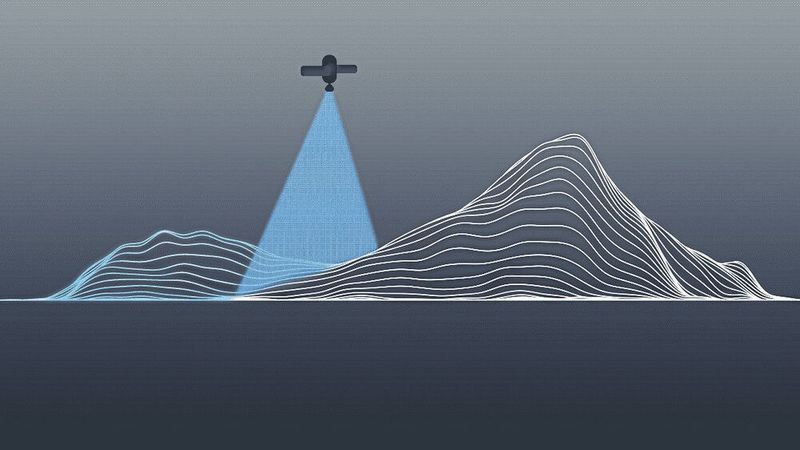
The origins of Lidar technology date back to the Apollo-15 mission. Lidar uses laser pulses to measure distances and gather three-dimensional information. Today, it is indispensable for autonomous driving.
With Lidar technology, surfaces can be scanned and precisely recorded. Today, 3D-Lidar is one of the indispensable techniques in the industry.
(Image: Blickfeld)
Dr. Mathias Müller is founder and Chief Executive Officer (CEO) of Blickfeld.
Originally developed in the early 1960s and first used effectively in the Apollo-15 mission in 1971, Lidar (Light Detection and Ranging) uses laser pulses for optical distance measurement and provides precise three-dimensional information that creates added value in numerous application fields—from geography to logistics to the security industry.
In industrial applications that require high range and accuracy, solid-state 3D Lidar sensors are often used. These work according to the Time-of-Flight (ToF) principle: A diode emits laser pulses, which are picked up again by a detector after reflecting off objects. The light's time of flight is used for distance measurement by proprietary software. The sensor emits several hundred thousand laser pulses per second, which are deflected over a large field of view via MEMS mirrors (MEMS: Micro-Electro-Mechanical System), thus creating precise 3D images of the environment, so-called point clouds.
This technology captures the spatial location and shape of objects regardless of surface material and environmental conditions, enabling detailed reconstruction. The term 'Solid State' refers to the fact that the technology is semiconductor-based and does not require moving parts. Therefore, Lidar sensors are robust, compact, and cost-effective, making them ideal for many commercial applications.
How Lidar technology has evolved
The development of laser technology in the 1960s laid the foundation for Lidar. Lidar's first application was in terrain mapping for air and space travel, especially for the topographic mapping of forests, ice surfaces, oceans, and the atmosphere. Lidar's first major public appearance was in 1971 when NASA used the technology on the Apollo 15 mission to measure the surface of the moon. About ten years later, Lidar was also used in the surveying of Mars.
Until the 1980s, there were no major advancements in Lidar in air and space travel, mainly due to insufficient navigation and positioning accuracy because of the lack of commercial GPS systems at the time. When GPS applications and efficient satellite communication for data transmission emerged in the 1990s, they paved the way for widespread use of Lidar, such as in airborne photogrammetry, which takes pictures of the Earth's surface from the air and creates three-dimensional models and maps from them. Now the technical conditions had been created allowing Lidar to quickly play a crucial role in the precise capture of geodata and in its use in meteorology and atmospheric research. The short wavelength of the laser, which enables the detection of the smallest objects such as cloud particles and aerosols, is crucial for air and terrain mapping.
Lidar becomes indispensable in security technology
Lidar experienced a huge development and popularity boost among a wider audience in the early 2000s, which intensified even further in the 2010s. The main reason for the growing interest is that Lidar sensors are considered indispensable safety technology for driverless mobility, reliably scanning the surrounding environment in real-time, for example in automobiles, drones, and logistical transport systems. The early Lidar devices were generally large and bulky and required intensive maintenance due to the mechanical rotors needed for the all-round view. Many companies invested in research and development to make Lidar sensor technology suitable for lucrative practical use.
When Lidar made its entrance in the industry
Today, Lidar technology is more powerful, less prone to maintenance, and more affordable. On the one hand, the automotive industry benefits from this development, having already brought series models such as the Mercedes EQS with Lidar to market. On the other hand, additional fields of application in business and industry have emerged. Recently, for example, the following uses have been added:
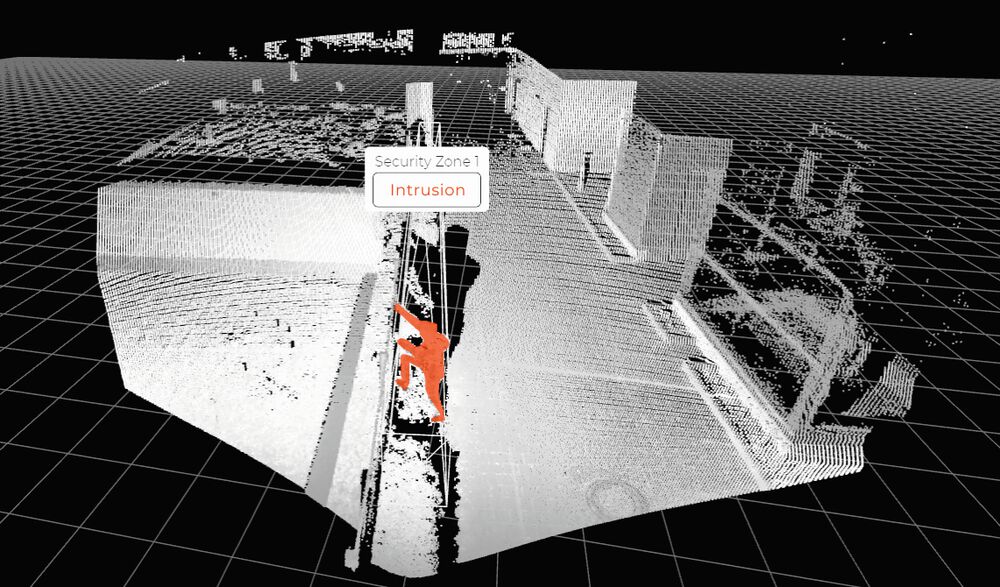
Image 1: The point cloud shows how the Field of View Smart Lidar for the security industry, QbProtect, triggers an alarm due to unauthorized entry into a security zone.
(Image:Blickfeld)
Object detection in security systems: The detection of unauthorized intruding objects or persons in the security zones of company premises, power plants, or aircraft parking lots, independent of weather and light conditions, represents one of the most important factors for the reliability of security and alarm systems. But there is a conflict of interest: on the one hand, an alarm system must be set sensitive enough to reliably detect any intrusion into security zones. On the other hand, systems set so sensitively, if they cannot distinguish between the types of intruding objects, produce many false alarms. 3D Lidar technology identifies the type of intruders based on their size, thus reducing the number of false alarms significantly. Therefore, such Lidar sensors are ideally suited for the protection of critical infrastructure.
Date: 08.12.2025
Naturally, we always handle your personal data responsibly. Any personal data we receive from you is processed in accordance with applicable data protection legislation. For detailed information please see our privacy policy.
Consent to the use of data for promotional purposes
I hereby consent to Vogel Communications Group GmbH & Co. KG, Max-Planck-Str. 7-9, 97082 Würzburg including any affiliated companies according to §§ 15 et seq. AktG (hereafter: Vogel Communications Group) using my e-mail address to send editorial newsletters. A list of all affiliated companies can be found here
Newsletter content may include all products and services of any companies mentioned above, including for example specialist journals and books, events and fairs as well as event-related products and services, print and digital media offers and services such as additional (editorial) newsletters, raffles, lead campaigns, market research both online and offline, specialist webportals and e-learning offers. In case my personal telephone number has also been collected, it may be used for offers of aforementioned products, for services of the companies mentioned above, and market research purposes.
Additionally, my consent also includes the processing of my email address and telephone number for data matching for marketing purposes with select advertising partners such as LinkedIn, Google, and Meta. For this, Vogel Communications Group may transmit said data in hashed form to the advertising partners who then use said data to determine whether I am also a member of the mentioned advertising partner portals. Vogel Communications Group uses this feature for the purposes of re-targeting (up-selling, cross-selling, and customer loyalty), generating so-called look-alike audiences for acquisition of new customers, and as basis for exclusion for on-going advertising campaigns. Further information can be found in section “data matching for marketing purposes”.
In case I access protected data on Internet portals of Vogel Communications Group including any affiliated companies according to §§ 15 et seq. AktG, I need to provide further data in order to register for the access to such content. In return for this free access to editorial content, my data may be used in accordance with this consent for the purposes stated here. This does not apply to data matching for marketing purposes.
Right of revocation
I understand that I can revoke my consent at will. My revocation does not change the lawfulness of data processing that was conducted based on my consent leading up to my revocation. One option to declare my revocation is to use the contact form found at https://contact.vogel.de. In case I no longer wish to receive certain newsletters, I have subscribed to, I can also click on the unsubscribe link included at the end of a newsletter. Further information regarding my right of revocation and the implementation of it as well as the consequences of my revocation can be found in the data protection declaration, section editorial newsletter.
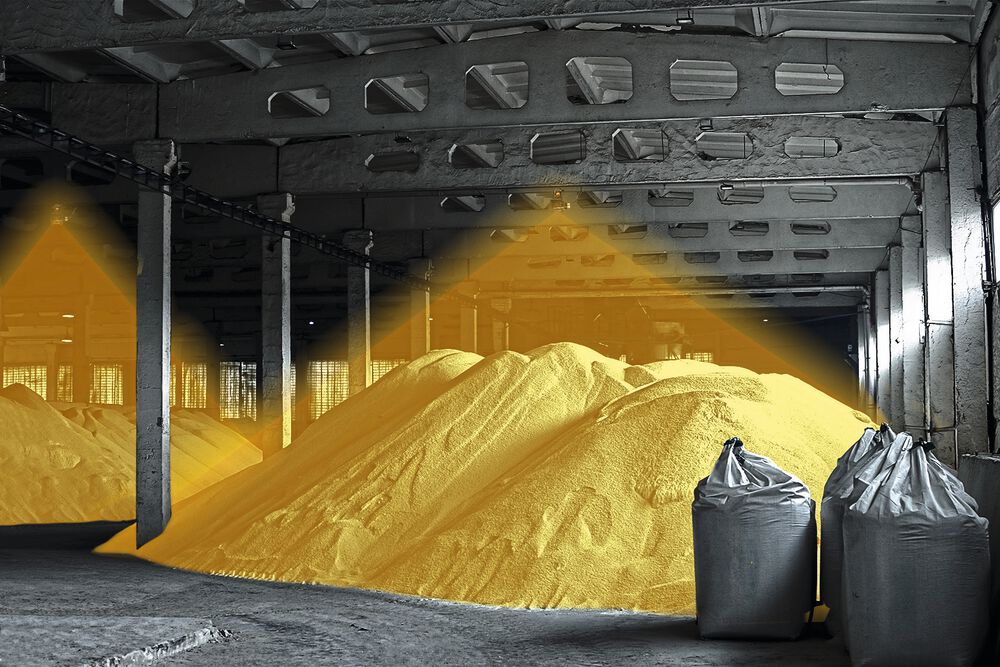
Image 2: Visualization of the in reality invisible laser pulses of a 3D-Lidar sensor, which scan the surface of bulk material piles.
(Image:Blickfeld)
Volume capture of bulk materials: The ability to automate logistical processes depends heavily on the availability of digital data on material quantities and movements. A particular challenge is the digital representation of storage stock of bulk materials, which are used in large quantities in the chemical and pharmaceutical industry or the construction and agricultural sector. The stock of bulk goods can currently only be measured in real-time with a reasonable effort using 3D Lidar technology. By automatically transmitting the data into the logistics software, Lidar contributes to the creation of automated and overall more efficient material flow processes.
Optimization of pedestrian flows: Lidar-based applications offer significant advantages in the analysis of crowds (Crowd Analytics) to capture, understand, and make predictions about the spatial distribution of people over time, for example, at airports, in gastronomy, in retail, at transport hubs, in stadiums, and at music events. They enable the tracking of movement patterns in large and complex spaces, the accurate counting of individuals and objects, and the recording of dwell times. This data provides valuable insights, for example, for queue management, optimizing staff deployment, and improving customer satisfaction. Especially important is that Lidar data does not allow conclusions about individuals, making the technology ideally suited for use in public spaces.
The role software plays in Lidar applications
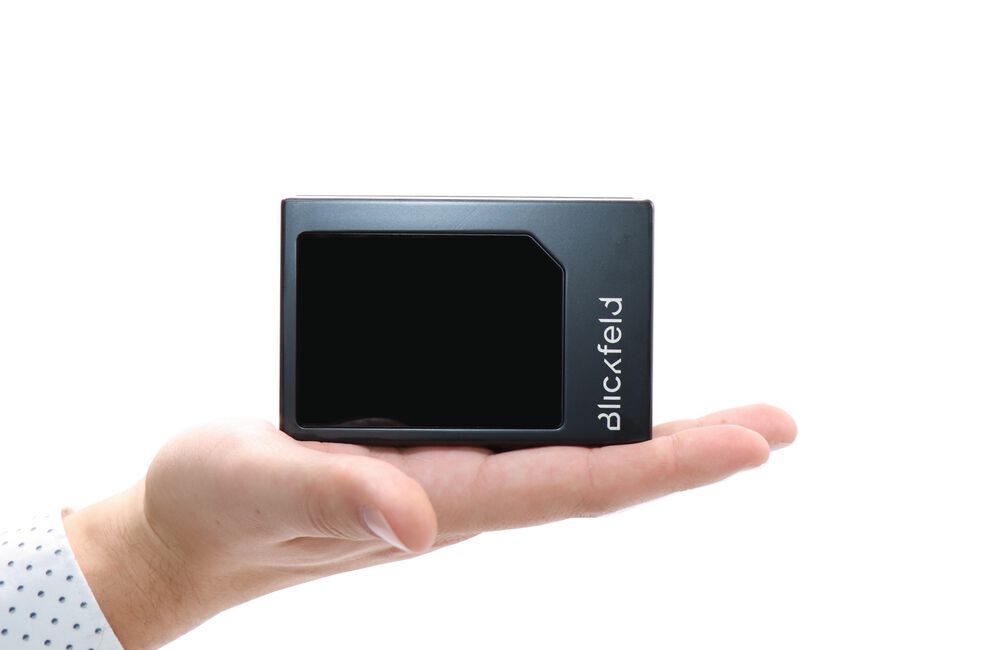
The Lidar sensor Qb2 with integrated data analysis software on the device. The compact sensor weighs 500 grams.
(Image:Blickfeld)
3D Lidar requires powerful hardware, but the software for interpreting the data is equally important. Up to now, Lidar sensors have transmitted the collected 3D data to an external computer, which analyses them using specialized software and maps the environment three-dimensionally. This process is greatly simplified with the Smart Sensor Qb2 from Blickfeld, as for the first time, the entire analysis software runs on the device.
In figurative terms, the eyes and brain are now in the same device, so the Qb2 outputs immediately usable data without further investments in computing hardware, additional wiring, and 3D analysis expertise. With the Qb2, companies can seamlessly transmit data using standard communication protocols like MQTT and programming interfaces into an IoT ecosystem or the cloud. There, they are immediately available for planning and controlling. Installation and operation are simple and cost-effective. This leads to advantages when multiple sensors are used in combination, such as on large areas, typically for volume capture of materials in mining or for the protection of solar parks.
New perspectives through 3D-Lidar data
Even though buzzwords like Internet of Things and Industry 4.0 have been on everyone's lips for many years, there are still many deficits in concrete implementation. For many techniques, high costs have to be faced, even though the concrete added value is not always immediately recognizable. The case is different with 3D-Lidar: users immediately feel a tangible benefit.
To pick up the examples from the beginning again:
In the security area, the false alarm rate is significantly reduced by the use of 3D-Lidar sensors. This relieves the security staff and prevents the so-called "alarm fatigue". This occurs when so many false alarms are triggered that the staff no longer takes the alarms seriously and poses a fatal security threat.
When companies capture their material stocks with 3D Lidar, they always have a reliable overview of their stocks, even with bulk goods, which are difficult to measure using other methods. High efficiency gains are possible, for example, by optimizing processes, reducing errors and failures, and more accurate inventory estimation. Blickfeld's customers appreciate the fact that they value their inventories without Lidar with an average error rate of 20%. That means, for example, they ordered ten trucks for a load, even though eight would have been sufficient.
For the first time, 3D-Lidar provides detailed and simultaneously anonymised real-time data for the analysis of people flows, which can be evaluated immediately. This allows those responsible to intervene immediately, for example, before long queues at airports or dangerous traffic jams at music festivals occur.
3D Lidar has the potential to increase the level of digitization in companies and contribute to solving tasks with novel data that cannot be managed with other techniques. The advanced, robust, and cost-effective solid-state technology, combined with integrated analysis software, opens up a wide range of new applications in various industries and offers companies crucial efficiency and safety advantages. (heh)



:quality(80)/p7i.vogel.de/wcms/31/84/3184f9ac736d8df7c2e934593684bc74/0130024314v1.jpeg "Here, the Bavarian car manufacturer BMW looks ahead to 2025: business was sluggish due to US tariffs and weakening sales in China ... (Image:BMW)")
:quality(80)/p7i.vogel.de/wcms/49/09/49095c6192a6c46d47b567e1def31ea6/0130024626v1.jpeg "The new TUM \"RoboGym\" (powered by Neura) is Europe's largest training center for next-generation humanoid robots. It focuses on the implementation of artificial intelligence in robotic systems. At the same time, it is a forge for AI experts ... (Image:Neura Robotics)")
:quality(80)/p7i.vogel.de/wcms/fe/8a/fe8af1b829b085210fef4c1fa8abddb5/0129784389v1.jpeg "As an integral part of Koch Pac-Systeme's Predictive Pack digital service product, the gearboxes with Cynapse and Wittenstein's Smart Services make it possible to detect damage risks in the packaging specialist's machines at an early stage. (Image:Koch Pac systems)")
:quality(80)/p7i.vogel.de/wcms/9f/7b/9f7be35880605811e045acd3af8b571b/0129558586v1.jpeg "An example of the V210 processing machine, which, according to Voortman, supplements the laser cutting of the V353 with drilling, thread cutting and milling. (Image:Voortman)")
:quality(80)/p7i.vogel.de/wcms/db/68/db689490e348201603dd30447711ea2b/0129578734v1.jpeg "With three-axis vibration measurement (X, Y and Z axes) and temperature detection, the CMSVT38 condition monitoring sensor provides detailed status information that helps to detect machine damage at an early stage. (Image:Kübler)")
:quality(80)/p7i.vogel.de/wcms/92/5e/925ee98ea36ad9bd574fa1cea11d0e53/0129964352v1.jpeg "The production of hardware components for humanoid robots offers great market potential. (Image:Fraunhofer IPA)")
:quality(80)/p7i.vogel.de/wcms/08/72/0872dd2dd119a54824c41e0e580e45a8/0129576591v1.jpeg "The Rose enclosure systems can be customized on request. (Image:Rose Systemtechnik GmbH)")
:quality(80)/p7i.vogel.de/wcms/73/17/7317794432521bf911711b91287cfc28/0129961259v1.jpeg "ABB Robotics and Nvidia are enabling the widespread use of physical AI in the world of robotics. This means that systems can be created virtually and with high precision and optimized much more cost-effectively. In the large image the virtual system, next to it the real robot cell ... (Image:ABB)")
:quality(80)/p7i.vogel.de/wcms/cb/fe/cbfe2741917274bbbf93d5b93e47a4f5/contact-software-launcht-fourier-20aiv1v1.png "Fourier AI combines AI models with AI applications developed for demanding engineering tasks. (Image:Contact Software)")
:quality(80)/p7i.vogel.de/wcms/bc/f7/bcf7a56980850be13ed37d220cd514bc/elchinator-security-5042249-1280-1280x720v1v1.jpeg "The HP Wolf Security Report shows: Attackers use AI for speed, modularity and automation, while the quality of campaigns is low. (Image:Picture: Pixabay)")
:quality(80)/p7i.vogel.de/wcms/68/89/688937087188b77da95b2079399ca862/0130009534v1.jpeg "Here you can see the Dualis layout configurator in use at Montratec. (Picture: ©Gorodenkoff - stock.adobe.com)")
:quality(80)/p7i.vogel.de/wcms/9e/98/9e984afbf9c6f2bcc8963bd13465b180/26-02-pi-fraunhofer-iws-41300-ultragrain-project-closing-pic-02-1562x878v1v1.png "The process of laser wire build-up welding (DED-LB) with pulse laser-induced plasma, which contributed to the success of the Ultra Grain project, is shown at high speed. (Image:Fraunhofer IWS)")
:quality(80)/p7i.vogel.de/wcms/69/f5/69f516f07a0ba999c5ba8763891853f1/0130030553v1.jpeg "Can be reloaded in 210 seconds for a return trip on the Greenford branch line: the GWR's 230001. (Image:Jack Boskett Media | GWR)")
:quality(80)/p7i.vogel.de/wcms/f0/5e/f05e720c52f757660ddbf7c410074f64/adobestock-222131875-5616x3157v1.jpeg "(Source: © jeson - stock.adobe.com)")
:quality(80)/p7i.vogel.de/wcms/b2/64/b2641254fef5afa15645cefc37089c88/0130021093v1.jpeg "Daimler Truck and Quantum Systems are jointly developing unmanned military vehicles. (Image:Quantum Systems)")
:quality(80)/p7i.vogel.de/wcms/30/7e/307e71ec64f7c52c29458544ca29adf1/org-blobs-user-response-file-output-799034cb-2ad7-4031-859a-15013f5b78e3-plugin-output-toolu-01vwfuenhw3cadvud7pddgyq-1536x864v1v1.png "China's government is debating the contents of the 15th five-year plan. The focus will change for the automotive industry. (Image:AI-generated)")
:quality(80)/p7i.vogel.de/wcms/61/8f/618f16f8fa95ec6cc838ca9bfb5dbaf1/0130027046v1.jpeg "The Belgian Research Institute has set up a European university consortium on the subject of CMOS 2.0. It brings together 26 university groups to research chip technologies that go beyond conventional transistor scaling. (Image:Imec)")
:quality(80)/p7i.vogel.de/wcms/db/a2/dba29322d0934dea1bbc4b31df80e392/0129953760v1.jpeg "SEM image: High-density electrode array with 128 nm dots. (Image:imec)")
:quality(80)/p7i.vogel.de/wcms/c2/a8/c2a8a93f306c1475489dff074ad59731/0129967672v1.jpeg "Figure 1: Imec's logic technology roadmap showing the extension of the nanosheet era from 2nm to the A10 node with the outer-wall forksheet, before the transition to CFET for A7 and beyond. (Image:imec)")
:quality(80)/p7i.vogel.de/wcms/07/79/0779a3ba2b38d583fc9b515900be2add/0129957428v1.jpeg "If the Chinese government has its way, domestic data centers full of Nvidia hardware will be a thing of the past. (Image:Nvidia)")
:fill(fff,0)/images.vogel.de/vogelonline/companyimg/76800/76895/65.jpg "FAULHABER_120mm.jpg ()")
:fill(fff,0)/p7i.vogel.de/companies/67/eb/67eba621ef6ea/logo2.png "logo2 (Wuxi InfiMotion)")
:quality(80)/p7i.vogel.de/wcms/0a/83/0a832e8c11faa3d271324598eb2dd0b2/0126351342v1.jpeg "More precision, fewer costs: New sensors support areas such as robotics. (Image:Christopher White)")
:quality(80)/p7i.vogel.de/wcms/dd/4e/dd4e6ce73e0e700dcc0f0584813ef47f/0128875162v1.jpeg "Thanks to their high precision, robustness and integration capability, Micro-Epsilon's measurement technology solutions are not only suitable for new systems, but also ideal for retrofit applications. (Image:Micro-Epsilon Messtechnik GmbH & Co. KG)")