The minimum efficiencies for motors in new installations are becoming stricter, and at the same time, industrial companies need to achieve their sustainability goals and save on energy costs. Therefore, we present some new developments in drive technology that users can rely on in the future.
In pump applications, in particular, highly efficient motors save a lot of energy and thus reduce CO2 emissions.
Politics demands ever more efficient engines and drive systems—worldwide. Therefore, the issue of energy efficiency is far from old news, as the EU regulations and directives are dense and confusing! The EU Regulation 2019/2021/341, which originates from the European Ecodesign Directive 2009/125/EC, still regulates the minimum efficiency levels for electric motors and frequency converters in new installations.
The European Ecodesign Regulation 2024/1781 (ESPR), adopted in 2024, considers the bigger picture, including supply chains and materials. This is where companies come into play that rely on synchronous reluctance motors (SynRM), which are manufactured without the use of rare earths. Additionally, the guidelines will continue to tighten, and the requirements for energy efficiency will rise. With SynRM, users are preparing themselves for the future.
Gallery
Future-proofing with IE6
ABB is the first manufacturer to offer the expected efficiency class IE6 in a magnet-free SynRM design. This is the latest development in SynRM technology, which ABB initially pioneered in 2011. The motors are aimed at customers who want to future-proof their equipment with the highest energy efficiency class available on the market.
"Motor-driven systems in industrial plants are large energy consumers, so efficiency improvements here can significantly contribute to emission reductions and the achievement of climate protection goals. Additionally, significant energy savings can be achieved with the use of our new magnet-free SynRM," says Stefan Flöck, Head of the IEC Low Voltage Motors Division at ABB Motion. "Since the IE6 SynRM has the same size as the corresponding IE3 asynchronous motor, existing motors can be replaced quickly and easily. This allows customers to upgrade to modern, highly efficient products to future-proof their operations in a world of fluctuating energy costs."
ABB offers a comprehensive magnet-free SynRM portfolio, with efficiency advancing from class IE4 to the IE5 variants introduced in 2019. IE6 is likely the next logical step, underscoring the performance and technical superiority of SynRM technology. Although IE6 has not yet been specified in an official industry standard, each new IE efficiency class has so far shown 20 percent less energy loss than the previous level. ABB has followed this approach with the IE6 SynRM.
The SynRMs are part of ABB's Eco-Solutions portfolio, offering customers and partners sustainable products. The portfolio provides more transparency regarding the circular economy value and the environmental impacts of individual products, which aims to enable informed and responsible decision-making. Portfolio products meet a range of performance indicators defined in the ABB circularity framework. Additionally, they come with an environmental product declaration (ISO 14025 Type III) verified by independent parties.
ABB can achieve the expected level of the future IE6 efficiency class not only with a SynRM but also with permanent magnet (PM) and PMaSynRM technology – a hybrid technology that combines the SynRM design with the performance of permanent magnet motors.
Optimize SynRM performance
A SynRM must be operated with a frequency converter. The combination with Mitsubishi Electric frequency converters already meets the requirements of efficiency classes IE1-5.
The frequency converters of the FR-F800 and FR-A800 series from Mitsubishi Electric optimize the performance of SynRMs, which operate on the same principle as permanent magnet synchronous motors. This results in higher efficiency, especially in the partial load range. This eliminates costly retrofitting in the coming years.
This drive technology particularly shows its potential for savings in fan and pump applications with variable speeds. Synchronous reluctance motors operate without permanent magnets and offer additional advantages: high efficiency due to low heat losses, cost-effective manufacturing, and low maintenance requirements. Moreover, they provide excellent speed control behavior, which is optimized by modern control techniques.
It doesn't always have to be a SynRM
However, energy-saving potentials are not limited to the operation of pumps and fans. Lenze demonstrates that there is still room for improvement in drive technology for conveyor systems—and all without SynRM. The automation specialist presented its new, compact motor-drive system at the SPS trade fair in Nuremberg, consisting of the m550 three-phase motor, the g500 gears, and the i500 and i650 frequency converters. This combination achieves efficiency classes IE5 and IE7. Test customers from the intralogistics sector have already shown that the new drive system can reduce motor losses by up to 62 percent, thereby lowering energy consumption and CO2 emissions.
Date: 08.12.2025
Naturally, we always handle your personal data responsibly. Any personal data we receive from you is processed in accordance with applicable data protection legislation. For detailed information please see our privacy policy.
Consent to the use of data for promotional purposes
I hereby consent to Vogel Communications Group GmbH & Co. KG, Max-Planck-Str. 7-9, 97082 Würzburg including any affiliated companies according to §§ 15 et seq. AktG (hereafter: Vogel Communications Group) using my e-mail address to send editorial newsletters. A list of all affiliated companies can be found here
Newsletter content may include all products and services of any companies mentioned above, including for example specialist journals and books, events and fairs as well as event-related products and services, print and digital media offers and services such as additional (editorial) newsletters, raffles, lead campaigns, market research both online and offline, specialist webportals and e-learning offers. In case my personal telephone number has also been collected, it may be used for offers of aforementioned products, for services of the companies mentioned above, and market research purposes.
Additionally, my consent also includes the processing of my email address and telephone number for data matching for marketing purposes with select advertising partners such as LinkedIn, Google, and Meta. For this, Vogel Communications Group may transmit said data in hashed form to the advertising partners who then use said data to determine whether I am also a member of the mentioned advertising partner portals. Vogel Communications Group uses this feature for the purposes of re-targeting (up-selling, cross-selling, and customer loyalty), generating so-called look-alike audiences for acquisition of new customers, and as basis for exclusion for on-going advertising campaigns. Further information can be found in section “data matching for marketing purposes”.
In case I access protected data on Internet portals of Vogel Communications Group including any affiliated companies according to §§ 15 et seq. AktG, I need to provide further data in order to register for the access to such content. In return for this free access to editorial content, my data may be used in accordance with this consent for the purposes stated here. This does not apply to data matching for marketing purposes.
Right of revocation
I understand that I can revoke my consent at will. My revocation does not change the lawfulness of data processing that was conducted based on my consent leading up to my revocation. One option to declare my revocation is to use the contact form found at https://contact.vogel.de. In case I no longer wish to receive certain newsletters, I have subscribed to, I can also click on the unsubscribe link included at the end of a newsletter. Further information regarding my right of revocation and the implementation of it as well as the consequences of my revocation can be found in the data protection declaration, section editorial newsletter.
Another innovation in this area was presented by WEG at the SPS: With the W23 Sync+Ultra, the company aims to set new standards in energy efficiency for conventional designs. The hybrid technology combines the advantages of permanent magnet and synchronous reluctance motors, achieving exceptionally high energy efficiency according to the company. Its advanced design significantly reduces magnetic losses and increases efficiency well beyond conventional standards such as IE4 and IE5—across a wide operating range. This can lower operating costs while simultaneously helping companies achieve their sustainability goals. (mi)
"Efficient by Design"
Synchronous reluctance motors combine the performance of permanent magnet motors with the simplicity and maintainability of asynchronous motors to achieve high energy efficiency.
The rotor operates without magnets and windings and virtually no power losses. Additionally, no rare earths are needed.



:quality(80)/p7i.vogel.de/wcms/dd/08/dd086510d9ae7b50181f6070e4463b44/0129363730v1.jpeg "Typical application for ionizing devices: Wrapping films. (Picture: ©Adobe Stock/SMC)")
:quality(80)/p7i.vogel.de/wcms/35/57/3557c819943c53acec41a0ccba87da4f/0130049064v1.jpeg "Researchers at the Fraunhofer IWU in Chemnitz have long known that many typical sheet metal parts can be manufactured more cost-effectively using hollow embossing rollers. Now there is news to report ... (Image:Fraunhofer IWU)")
:quality(80)/p7i.vogel.de/wcms/59/02/590246e3b3f415c65edbee377c14ca77/26-06-pi-fraunhofer-iws-41450-direktplattieren-pic-01-7771x4369v1v1.jpeg "The Fraunhofer IWS has developed the new \"direct laser cladding\" process, which creates a functional layer directly on the base body by applying a strip-shaped metal to rotationally symmetrical components in a spiral and bonding it locally by laser. (Image:Christoph Wilsnack/Fraunhofer IWS)")
:quality(80)/p7i.vogel.de/wcms/73/60/73608418789b1d9c393f5e2fa974eda2/0130209906v1.jpeg "The robots of the X6 generation from b+m enable very high painting quality and are also particularly compact and easy to maintain. (Image:Beckhoff)")
:quality(80)/p7i.vogel.de/wcms/78/e9/78e9188c25a8a94e67c34c9bf8ffe495/visual-agile-20robots-20and-20google-20deepmind-20partner-20to-20bring-20intelligence-20to-20robotics-2500x1406v1v1.jpeg "Together, the partners are developing adaptable, intelligent robots for a wide range of applications (Image:Agile Robots SE)")
:quality(80)/p7i.vogel.de/wcms/e7/66/e7669ecf0260ae8fc54c214e34e4902a/0130316817v1.jpeg "Siemens and Palo Alto Networks offer tested cybersecurity solution for industrial 5G. (Image:Siemens)")
:quality(80)/p7i.vogel.de/wcms/9f/55/9f55324832c4f426958031375124d9de/siemens-20ubtech-20hmnd-1920x1079v1v1.png "Ready for the factory floor: While Ubtech is planning mass production, Siemens is already testing humanoids in real factory applications in Erlangen. (Image:Siemens)")
:quality(80)/p7i.vogel.de/wcms/11/36/113695ed260e29c8c2d9d39dc5f9d869/0130213768v1.jpeg "AI can work cheaply in China and deliver the results rapidly all over the world. (Image:Dall-E / AI-generated)")
:quality(80)/p7i.vogel.de/wcms/62/5f/625f41e87ebfef156a98c8e6393e32fd/0130211654v1.jpeg "Axial flux motors have some advantages over radial flux motor—but their production is currently still expensive. (Image:RWTH Aachen University)")
:quality(80)/p7i.vogel.de/wcms/77/9b/779b0685d010dfe45c9c2cb1cfecd467/0128886425v1.jpeg "The BlueEye is the first \"real\" hyperspectral camera for the UV range and covers the wavelength range from 220 to 380nm. (Image:Inno-spec GmbH)")
:quality(80)/p7i.vogel.de/wcms/e4/51/e451d52ce0182fb0aaa46a5774f832ef/26-04-pi-fraunhofer-iws-21160-bioslide-pic-01-4128x2321v1v1.jpeg "With the BioSlide research project, the Fraunhofer IWS is investigating how sliding systems can be designed to be more sustainable and energy-efficient. New materials can be tested in a particularly application-oriented manner on this plain bearing test stand. (Image:Fraunhofer IWS)")
![Thanks to advanced 3D printing technology, a more efficient use of resources should contribute to lower-emission aviation—this is the goal of ['skai]-lab. (Image:Oleksandr Pashchenko - stock.adobe.com / AI-generated)](https://cdn1.vogel.de/nghHNSbySccfOjG3n1qCA-FVOjQ=/288x162/smart/filters:format(jpg):quality(80)/p7i.vogel.de/wcms/62/64/626424c97a16e69f871bf216c9629c2a/adobestock-1927043193--c2-a9-20oleksandr-20pashchenko-20-e2-80-93-20stock-adobe-com-ki-generiertv1v1.jpeg "Thanks to advanced 3D printing technology, a more efficient use of resources should contribute to lower-emission aviation—this is the goal of ['skai]-lab. (Image:Oleksandr Pashchenko - stock.adobe.com / AI-generated)")
:quality(80)/p7i.vogel.de/wcms/c3/c4/c3c4ce270b083eeac55654148611f064/0130237945v1.jpeg "China is not giving up on hydrogen, but is intensifying its efforts. (Image:freely licensed from Pixabay)")
:quality(80)/p7i.vogel.de/wcms/4e/c0/4ec0bd19390b169edfa23677373dcdf1/0130260089v1.jpeg "Renewable fuels can supply European road traffic, according to a study. (Image:Aral)")
:quality(80)/p7i.vogel.de/wcms/6f/c9/6fc9050301d745cad25585c6780f8f51/0130197341v1.jpeg "Production facilities are a worthwhile target and are therefore at risk. (Image:ABB Robotics)")
:quality(80)/p7i.vogel.de/wcms/b6/62/b662adc2cec8227d8172509bbfb6ee42/25c0207-107-4961x2789v1v1.jpeg "The GLB is the second model based on Mercedes' new MMA platform. Apparently, Geely's platform is better and cheaper, which is why the two companies are negotiating a partnership. (Image:Mercedes-Benz)")
:quality(80)/p7i.vogel.de/wcms/4d/dd/4dddf438e91f394c04a095dbfd109d1c/0130236430v1.jpeg "Measurement modules: The 720301 module in combination with the SL2000 enables RMS and power calculations, among other things. (Image:Yokogawa)")
:quality(80)/p7i.vogel.de/wcms/61/fc/61fcf95f5cca15494ad18343901ae585/0130317237v1.jpeg "With the AGI CPU, Arm says it is taking a \"historic step\": With the processor aimed at AI in data centers, the company is presenting itself for the first time as a provider of its own chips, not just as a pure IP licensor. (Image:Arm)")
:quality(80)/p7i.vogel.de/wcms/82/90/8290dfe3595b6c6b33726ae8b76172c7/0130319587v1.jpeg "The concept image illustrates how the pattern of tiny protrusions and depressions created on the substrate (MgO, bottom) controls the arrangement of atoms in the superconducting material (YBCO, top). At the interface between the two layers, an electronic structure enables superconductivity to occur at higher temperatures than previously possible. (Image:Chalmers University of Technology / Riccardo Arpaia)")
:fill(fff,0)/images.vogel.de/vogelonline/companyimg/76800/76895/65.jpg "FAULHABER_120mm.jpg ()")
:fill(fff,0)/p7i.vogel.de/companies/69/88/69882c428938e/tmts2026-ticec-banner-en-2000px.png "tmts2026-ticec-banner-en-2000px (https://www.tmts.tw/en)")
:fill(fff,0)/p7i.vogel.de/companies/67/eb/67eba621ef6ea/logo2.png "logo2 (Wuxi InfiMotion)")
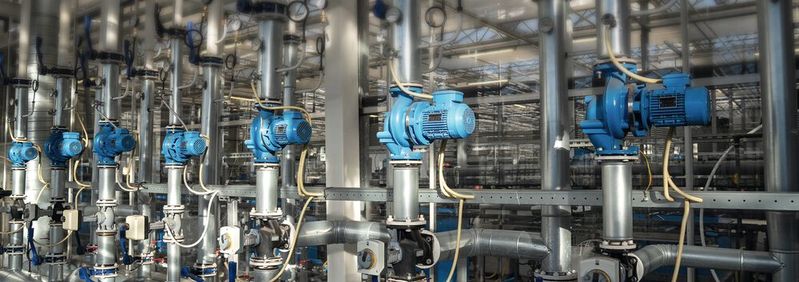
:quality(80)/p7i.vogel.de/wcms/58/91/58912c236166890595d6c41a9111221c/0122042358v1.jpeg "In pump applications, in particular, highly efficient motors save a lot of energy and thus reduce CO2 emissions.(Image: © DimaBerlin - stock.adobe.com)")
:quality(80)/p7i.vogel.de/wcms/0f/f7/0ff77f91cc62c402d39cd1c62a40ddd2/0122002477v1.jpeg "With frequency converters and synchronous reluctance motors, you are already fit for IE5 and the Eco-Design Directive 2009/125/EC.(Image: Mitsubishi Electric)")
:quality(80)/p7i.vogel.de/wcms/7c/fd/7cfdc8f67ccc95e6b9d988eb8d15a03f/0122002597v1.jpeg "The WEG hybrid motor(Image: WEG)")
:quality(80)/p7i.vogel.de/wcms/73/ce/73ceafa03c902c888180121fcb8cf8ae/0122009831v1.jpeg "Synchronous reluctance motor technology achieves IE6 as the first magnet-free design – an efficiency level that, according to ABB's definition, has 20 percent less energy loss than comparable IE5 motors.(Image: ABB)")
:quality(80)/p7i.vogel.de/wcms/57/d9/57d9a9d2e55fbad4588644454b18eb64/0127577006v1.jpeg "\"A key to high savings is synchronous reluctance motors,\" says Stefan Flöck, Division President IEC Low Voltage Motors at ABB. (Image:ABB)")
:quality(80)/p7i.vogel.de/wcms/6c/3b/6c3b348d3d8b50900dd5df06d55869dd/0128845456v1.jpeg "The combination of magnets without rare earths and synchronous reluctance motors for main and auxiliary drives enables a wide performance range. (Image:Astemo)")