Containerization is a software deployment method that packages an application's code together with all the necessary files, database libraries and dependencies required to run seamlessly across any infrastructure. The technical advancements enabled by this approach not only drive cost efficiencies in the medium and long term but also pave the way for entirely new business models over time.
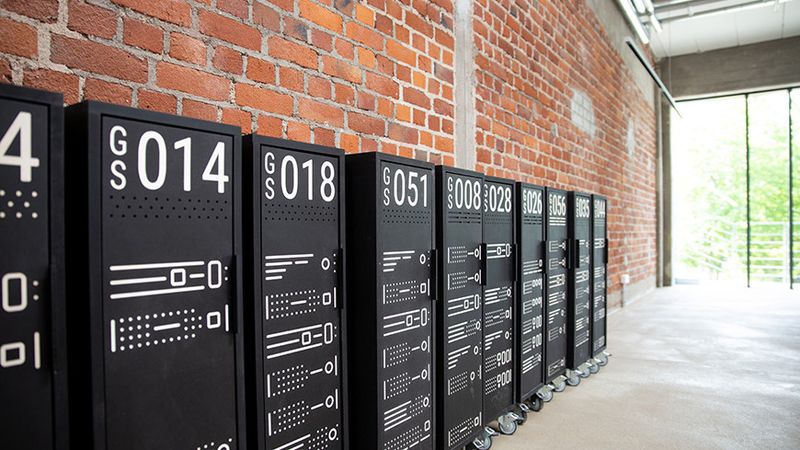
(Image: gridscale)
Resource Optimization through Containerization
Compared to traditional virtualization, containers deliver substantial resource efficiency. Rather than running multiple virtual machines, each with its own operating system, containers share the same infrastructure, ensuring maximum utilization of available hardware. This approach significantly reduces operational costs while maintaining high performance.
Furthermore, smaller, regional cloud providers enhance flexibility by offering scalable IT resources on demand. With pay-per-use pricing models, businesses are charged only for the capacity they actually consume, eliminating the need for costly over-provisioning.
Automation: The Invisible Assistant
One of the key benefits of containerization is the ability to leverage automation. Tools like Kubernetes efficiently orchestrate container environments by automatically scaling containers, self-healing in case of failures, and significantly reducing the workload on IT teams. This not only saves time but also lowers personnel costs.
In addition, AI also plays an increasingly important role in this space. AI-powered systems can take over many automation tasks in container management, optimizing resource allocation and accelerating development cycles. This ultimately helps businesses bring products to market faster.
Edge Computing and IoT: The Future is Local
The rise of Edge Computing and the Internet of Things (IoT) underscores the importance of containers in modern IT infrastructures. Latency-sensitive applications, particularly in IoT environments, benefit greatly from the flexibility and scalability offered by containerized solutions. Kubernetes-based edge platforms enable organizations to process data closer to its source, reducing bandwidth usage while improving data control.
A recent study by gridscale revealed that 87 percent of IT decision-makers in the DACH region view unified management of edge and cloud infrastructures as a critical success factor.
Security as a Key Factor
As container adoption continues to grow, addressing security concerns has become increasingly critical. Security incidents with containerized environments can result in significant financial losses, especially as these systems are deployed in ever more complex infrastructures. Consequently, companies are investing heavily in security solutions specifically designed for containerized systems.
This focus on security has become even more pressing with regulations like the NIS-2 directive, which imposes stricter IT security requirements. Businesses are now mandated to secure their container infrastructures to avoid financial penalties and operational disruptions. Investing in robust container-specific security measures is a necessity for substantial operations.
Sustainability as a Business Advantage
Beyond cost savings and efficiency gains, sustainability has become a pivotal factor for businesses. By optimizing resource utilization, containerization reduces energy consumption, benefiting both the environment and operational budgets.
A prime example is Kubernetes, which minimizes idle resources and enhances the efficiency of cloud environments. For companies aiming to thrive in an increasingly eco-conscious market, containerization offers a dual advantage: improving financial performance while strengthening their corporate image.
Microservices and Agility
Containers are the backbone of microservices architecture, enabling the development of smaller, modular applications that can be deployed and updated more independently. This modularity allows businesses to respond quickly to market demands and deliver innovative solutions to customers. In essence, containers are driving the agility required for modern software development.
Skills Shortage: Containerization Reshapes the Job Market
As container technologies like Kubernetes gain traction, the demand for skilled professionals in DevOps and cloud architecture continues to rise. However, the availability of such professionals remains limited, posing a significant challenge for many organizations.
To address this, companies are increasingly investing in re-skilling and upskilling existing IT teams. Training programs focused on containerization and orchestration tools are essential for equipping staff with the skills needed to manage these technologies effectively. The traditional role of IT administrators is evolving into that of platform architects, where expertise in containers is indispensable.
Date: 08.12.2025
Naturally, we always handle your personal data responsibly. Any personal data we receive from you is processed in accordance with applicable data protection legislation. For detailed information please see our privacy policy.
Consent to the use of data for promotional purposes
I hereby consent to Vogel Communications Group GmbH & Co. KG, Max-Planck-Str. 7-9, 97082 Würzburg including any affiliated companies according to §§ 15 et seq. AktG (hereafter: Vogel Communications Group) using my e-mail address to send editorial newsletters. A list of all affiliated companies can be found here
Newsletter content may include all products and services of any companies mentioned above, including for example specialist journals and books, events and fairs as well as event-related products and services, print and digital media offers and services such as additional (editorial) newsletters, raffles, lead campaigns, market research both online and offline, specialist webportals and e-learning offers. In case my personal telephone number has also been collected, it may be used for offers of aforementioned products, for services of the companies mentioned above, and market research purposes.
Additionally, my consent also includes the processing of my email address and telephone number for data matching for marketing purposes with select advertising partners such as LinkedIn, Google, and Meta. For this, Vogel Communications Group may transmit said data in hashed form to the advertising partners who then use said data to determine whether I am also a member of the mentioned advertising partner portals. Vogel Communications Group uses this feature for the purposes of re-targeting (up-selling, cross-selling, and customer loyalty), generating so-called look-alike audiences for acquisition of new customers, and as basis for exclusion for on-going advertising campaigns. Further information can be found in section “data matching for marketing purposes”.
In case I access protected data on Internet portals of Vogel Communications Group including any affiliated companies according to §§ 15 et seq. AktG, I need to provide further data in order to register for the access to such content. In return for this free access to editorial content, my data may be used in accordance with this consent for the purposes stated here. This does not apply to data matching for marketing purposes.
Right of revocation
I understand that I can revoke my consent at will. My revocation does not change the lawfulness of data processing that was conducted based on my consent leading up to my revocation. One option to declare my revocation is to use the contact form found at https://contact.vogel.de. In case I no longer wish to receive certain newsletters, I have subscribed to, I can also click on the unsubscribe link included at the end of a newsletter. Further information regarding my right of revocation and the implementation of it as well as the consequences of my revocation can be found in the data protection declaration, section editorial newsletter.
Economic Benefits: Beyond Just Technology
The economic impact of containerization extends beyond its technical advantages. A study by gridscale, Techconsult and Eco—the Association of the Internet Industry, found that53 percent of companies in the DACH region see significant potential of organizing their business solutions through containers.
By leveraging technologies like edge computing, data processing can occur closer to its source, reducing latency. A Forrester analysis commissioned by Capgemini and Red Hat revealed that 42 percent of companies achieved high security in hybrid IT environments through containerization. Additionally, 30 percent reported accelerated innovation cycles, while 26 percent improved their scalability to meet evolving business requirements.
Containerization also necessitates new management approaches across organizational levels, from IT departments to executive leadership. Companies that adopt these practices early can reduce costs while developing innovative digital services tailored to customer needs.
Challenges in a Cloud-Native World
Integrating container technologies into existing IT infrastructures presents significant challenges for many organizations. Legacy systems, in particular, are often ill-suited for cloud-native technologies, which can slow down adoption and complicate modernization efforts.To address these complexities, managed Kubernetes services have emerged as a widely adopted solution. These services simplify the deployment, configuration, and management of Kubernetes clusters, significantly reducing internal effort. Additionally, managed Kubernetes systems automate many processes that older systems would otherwise require manual configuration for, where resources are regularly limited.
Henrik Hasenkamp is the CEO of gridscale, a Cologne (Germany)-based tech company that provides a seamless plug-and-play platform for the quick and easy setup of cloud and edge computing services.
(Image: gridscale)
In summary, containerization is not merely a technological evolution—it represents a fundamental shift in IT infrastructure management. By driving efficiency, reducing costs, and fostering innovation, containerization empowers organizations to remain competitive in an increasingly digital and cloud-driven world.



:quality(80)/p7i.vogel.de/wcms/af/1e/af1ec4fca4636f521f780ba0ae009c8e/bild3-werkst-c3-bcck-20und-20werkzeug-5204x2928v1v1.jpeg "The main area of application for the new axial gear cutting machine is the production of rotor shafts for electric vehicles. (Image:Profiroll Technologies)")
:quality(80)/p7i.vogel.de/wcms/d1/ab/d1ab452217529e5c29a81add9aca7c22/0128871322v1.jpeg "Only one year to go: the new EU Machinery Regulation makes cybersecurity mandatory. Companies should act now. (Picture: ©Pisit - stock.adobe.com)")
:quality(80)/p7i.vogel.de/wcms/88/53/8853f7df2fe47a3d2c6f1879f6ac38e6/newsimage417073-1500x843v1v1.jpeg "Measuring setup for friction stir welding: Modular acoustic measuring system with flexibly positioned microphones for recording tool wear and process deviations in real time. (Image:Fraunhofer IDMT)")
:quality(80)/p7i.vogel.de/wcms/28/75/28751a17e2bcca46e53a1e7b8a84c433/schmersal-tiepner-029-6749x3796v1v1.jpeg "Tiepner's compact system produces ID cards made of laminated plastic, which are used as customer cards, ID cards or cheque cards, among other things. Left in the picture: Christian Höltge, Managing Director of Tiepner GmbH. (Image:Tiepner GmbH)")
:quality(80)/p7i.vogel.de/wcms/cd/fe/cdfe212a3b3206e2ff09dcdf71c11240/0129219561v1.jpeg "Extended S-series: The new Cobot models from Omron lift up to 30 kilograms and are now also protected against dust and water thanks to protection class IP65. (Image:Omron)")
:quality(80)/p7i.vogel.de/wcms/c3/6d/c36d161e7709095fd1de4cb9de27d927/0129133682v1.jpeg "Nanjing is Siemens' largest research and production center for CNC systems, drives and electric motors outside Germany. (Image:Siemens)")
:quality(80)/p7i.vogel.de/wcms/70/dc/70dc2fbc09e6958a72c63bd15e986e14/0129206156v1.jpeg "The global shoe machine manufacturer Desma relies on automation and has been revolutionizing shoe production—together with ABB Robotics for over 40 years. (Image:ABB Robotics)")
:quality(80)/p7i.vogel.de/wcms/60/fd/60fd12ddfe1fb623568736f27d1cfe61/0128606899v1.jpeg "The future of supply chains: AI and dashboards to ensure optimal OTIF values (Picture: ©immimagery - stock.adobe.com)")
:quality(80)/p7i.vogel.de/wcms/39/38/393873c2ed943bb715a6419d94049b63/geralt-entrepreneur-1340649-1280-1280x720v1v1.jpeg "Visual Components presents its forecast for production simulation in 2026. (Image:Pixabay)")
:quality(80)/p7i.vogel.de/wcms/60/4e/604e2a1ce26f177c5f28c2bff94c2f7d/der-20rotor-20mit-20aktiv-20verwindbaren-20rotorbl-c3-a4ttern-20im-20windkanal-1920x1079v1v1.jpeg "The rotor with actively twistable rotor blades in the wind tunnel: The open measuring section and sound-absorbing wall and model fuselage cladding enable high-quality acoustic measurements. (Image:DLR)")
:quality(80)/p7i.vogel.de/wcms/a8/9a/a89aef1cba3843fa06a1ec1f07cf659b/adobestock-95634179--c2-a9-20crazyforanimeart-20-e2-80-93-20stock-adobe-com-4762x2678v1v1.jpeg "Copied from the octopus: Researchers have developed a film-like thin-film platform that can dynamically change not only its color but also its surface structure. (Image:AdobeStock_95634179_ CrazyForAnimeArt)")
:quality(80)/p7i.vogel.de/wcms/2b/fb/2bfbb9fa26274cb8f6e8979c24a3d08e/0129243542v1.jpeg "In some cases, the new additively manufactured lightweight bearings only reach
11 percent of the weight of comparable steel bearings. (Image:Rosswag Engineering)")
:quality(80)/p7i.vogel.de/wcms/25/11/25111828d56b46dc0dc3b717ac2dfcfa/0129276081v1.jpeg "According to media reports, Ford is negotiating with Geely about cooperation in production and technology. (Image:Ford)")
:quality(80)/p7i.vogel.de/wcms/b7/2d/b72dfd1458e86652491018914478cb00/0129259253v1.jpeg "The green belt of VW Palmela - including two geothermal fields and a new paint shop. (Image:VW Group)")
:quality(80)/p7i.vogel.de/wcms/cb/76/cb76d0c686e8dbc8b0e0b6961e3849c7/0129249515v1.jpeg "The Chinese Ministry of Industry and Information Technology has developed binding standards for retractable vehicle door handles. (Image:BYD)")
:quality(80)/p7i.vogel.de/wcms/42/0a/420a796e6b9d9e3bf27d89d4fe425d84/0129264331v1.jpeg "Polestar presented the new Model 5 live. (Image:Polestar)")
:quality(80)/p7i.vogel.de/wcms/6f/8f/6f8ff5bf9b81829ef22736bc790cecca/0129224894v1.jpeg "View of the quantum optics laboratory at the University of Stuttgart: here, researchers are experimenting with new photon sources for quantum computing and quantum networks. (Image:Barz Group, University of Stuttgart)")
:quality(80)/p7i.vogel.de/wcms/52/3a/523ac3157ae4b4f596c7241c89127061/0129260553v1.jpeg "This artistic illustration shows a thermal analog calculator that performs calculations using excess heat and is embedded in a microelectronic system. (Image:Jose-Luis Olivares, MIT)")
:quality(80)/p7i.vogel.de/wcms/d1/f4/d1f4508c6b79ec2f0432b34a6fa33a98/0114966184v1.jpeg "The Infineon headquarters Campeon in Neubiberg, Munich. (Image:Infineon)")
:quality(80)/p7i.vogel.de/wcms/fa/d3/fad3872cf3f110f43411f2dce9e8f23a/0129265762v1.jpeg "Siemens Energy has discovered the USA as a prosperous growth market for network technology and gas turbines! In order to be able to meet demand at some point, the company is already digging deeper into its pockets ... (Image:Siemens Energy)")
:fill(fff,0)/images.vogel.de/vogelonline/companyimg/76800/76895/65.jpg "FAULHABER_120mm.jpg ()")
:fill(fff,0)/p7i.vogel.de/companies/67/eb/67eba621ef6ea/logo2.png "logo2 (Wuxi InfiMotion)")

:quality(80)/p7i.vogel.de/wcms/19/69/1969222ac24fcc11934d3e4848b46156/henrik-hasenkamp-1-1200x675v1.jpeg "Henrik Hasenkamp, CEO gridscale (Image:© gridscale 2025)")
:quality(80)/p7i.vogel.de/wcms/67/12/671273ca56533181fec664ea2df23cee/manuela-kohlhas-ptc-240x135v1.jpeg "Manuela Kohlhas from PTC is an experienced marketing expert with over a decade of experience, specialising in B2B technology companies. She has held senior positions in various organisations, driving strategic marketing initiatives. (Image:PTC)")