Containerization is a software deployment method that packages an application's code together with all the necessary files, database libraries and dependencies required to run seamlessly across any infrastructure. The technical advancements enabled by this approach not only drive cost efficiencies in the medium and long term but also pave the way for entirely new business models over time.
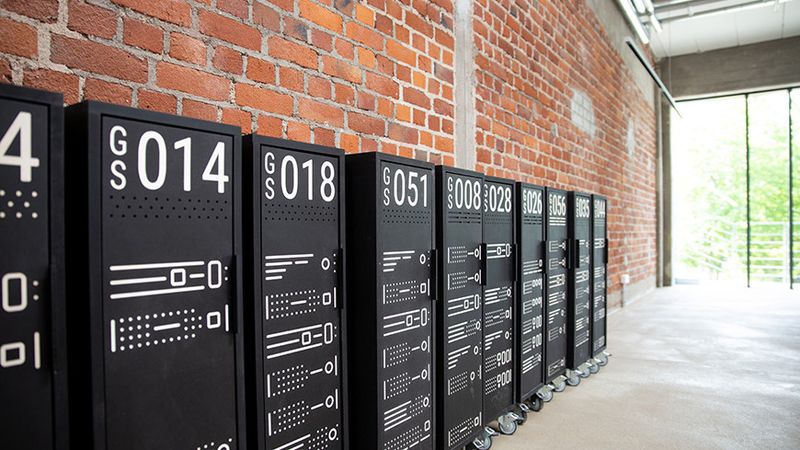
(Image: gridscale)
Resource Optimization through Containerization
Compared to traditional virtualization, containers deliver substantial resource efficiency. Rather than running multiple virtual machines, each with its own operating system, containers share the same infrastructure, ensuring maximum utilization of available hardware. This approach significantly reduces operational costs while maintaining high performance.
Furthermore, smaller, regional cloud providers enhance flexibility by offering scalable IT resources on demand. With pay-per-use pricing models, businesses are charged only for the capacity they actually consume, eliminating the need for costly over-provisioning.
Automation: The Invisible Assistant
One of the key benefits of containerization is the ability to leverage automation. Tools like Kubernetes efficiently orchestrate container environments by automatically scaling containers, self-healing in case of failures, and significantly reducing the workload on IT teams. This not only saves time but also lowers personnel costs.
In addition, AI also plays an increasingly important role in this space. AI-powered systems can take over many automation tasks in container management, optimizing resource allocation and accelerating development cycles. This ultimately helps businesses bring products to market faster.
Edge Computing and IoT: The Future is Local
The rise of Edge Computing and the Internet of Things (IoT) underscores the importance of containers in modern IT infrastructures. Latency-sensitive applications, particularly in IoT environments, benefit greatly from the flexibility and scalability offered by containerized solutions. Kubernetes-based edge platforms enable organizations to process data closer to its source, reducing bandwidth usage while improving data control.
A recent study by gridscale revealed that 87 percent of IT decision-makers in the DACH region view unified management of edge and cloud infrastructures as a critical success factor.
Security as a Key Factor
As container adoption continues to grow, addressing security concerns has become increasingly critical. Security incidents with containerized environments can result in significant financial losses, especially as these systems are deployed in ever more complex infrastructures. Consequently, companies are investing heavily in security solutions specifically designed for containerized systems.
This focus on security has become even more pressing with regulations like the NIS-2 directive, which imposes stricter IT security requirements. Businesses are now mandated to secure their container infrastructures to avoid financial penalties and operational disruptions. Investing in robust container-specific security measures is a necessity for substantial operations.
Sustainability as a Business Advantage
Beyond cost savings and efficiency gains, sustainability has become a pivotal factor for businesses. By optimizing resource utilization, containerization reduces energy consumption, benefiting both the environment and operational budgets.
A prime example is Kubernetes, which minimizes idle resources and enhances the efficiency of cloud environments. For companies aiming to thrive in an increasingly eco-conscious market, containerization offers a dual advantage: improving financial performance while strengthening their corporate image.
Microservices and Agility
Containers are the backbone of microservices architecture, enabling the development of smaller, modular applications that can be deployed and updated more independently. This modularity allows businesses to respond quickly to market demands and deliver innovative solutions to customers. In essence, containers are driving the agility required for modern software development.
Skills Shortage: Containerization Reshapes the Job Market
As container technologies like Kubernetes gain traction, the demand for skilled professionals in DevOps and cloud architecture continues to rise. However, the availability of such professionals remains limited, posing a significant challenge for many organizations.
To address this, companies are increasingly investing in re-skilling and upskilling existing IT teams. Training programs focused on containerization and orchestration tools are essential for equipping staff with the skills needed to manage these technologies effectively. The traditional role of IT administrators is evolving into that of platform architects, where expertise in containers is indispensable.
Date: 08.12.2025
Naturally, we always handle your personal data responsibly. Any personal data we receive from you is processed in accordance with applicable data protection legislation. For detailed information please see our privacy policy.
Consent to the use of data for promotional purposes
I hereby consent to Vogel Communications Group GmbH & Co. KG, Max-Planck-Str. 7-9, 97082 Würzburg including any affiliated companies according to §§ 15 et seq. AktG (hereafter: Vogel Communications Group) using my e-mail address to send editorial newsletters. A list of all affiliated companies can be found here
Newsletter content may include all products and services of any companies mentioned above, including for example specialist journals and books, events and fairs as well as event-related products and services, print and digital media offers and services such as additional (editorial) newsletters, raffles, lead campaigns, market research both online and offline, specialist webportals and e-learning offers. In case my personal telephone number has also been collected, it may be used for offers of aforementioned products, for services of the companies mentioned above, and market research purposes.
Additionally, my consent also includes the processing of my email address and telephone number for data matching for marketing purposes with select advertising partners such as LinkedIn, Google, and Meta. For this, Vogel Communications Group may transmit said data in hashed form to the advertising partners who then use said data to determine whether I am also a member of the mentioned advertising partner portals. Vogel Communications Group uses this feature for the purposes of re-targeting (up-selling, cross-selling, and customer loyalty), generating so-called look-alike audiences for acquisition of new customers, and as basis for exclusion for on-going advertising campaigns. Further information can be found in section “data matching for marketing purposes”.
In case I access protected data on Internet portals of Vogel Communications Group including any affiliated companies according to §§ 15 et seq. AktG, I need to provide further data in order to register for the access to such content. In return for this free access to editorial content, my data may be used in accordance with this consent for the purposes stated here. This does not apply to data matching for marketing purposes.
Right of revocation
I understand that I can revoke my consent at will. My revocation does not change the lawfulness of data processing that was conducted based on my consent leading up to my revocation. One option to declare my revocation is to use the contact form found at https://contact.vogel.de. In case I no longer wish to receive certain newsletters, I have subscribed to, I can also click on the unsubscribe link included at the end of a newsletter. Further information regarding my right of revocation and the implementation of it as well as the consequences of my revocation can be found in the data protection declaration, section editorial newsletter.
Economic Benefits: Beyond Just Technology
The economic impact of containerization extends beyond its technical advantages. A study by gridscale, Techconsult and Eco—the Association of the Internet Industry, found that53 percent of companies in the DACH region see significant potential of organizing their business solutions through containers.
By leveraging technologies like edge computing, data processing can occur closer to its source, reducing latency. A Forrester analysis commissioned by Capgemini and Red Hat revealed that 42 percent of companies achieved high security in hybrid IT environments through containerization. Additionally, 30 percent reported accelerated innovation cycles, while 26 percent improved their scalability to meet evolving business requirements.
Containerization also necessitates new management approaches across organizational levels, from IT departments to executive leadership. Companies that adopt these practices early can reduce costs while developing innovative digital services tailored to customer needs.
Challenges in a Cloud-Native World
Integrating container technologies into existing IT infrastructures presents significant challenges for many organizations. Legacy systems, in particular, are often ill-suited for cloud-native technologies, which can slow down adoption and complicate modernization efforts.To address these complexities, managed Kubernetes services have emerged as a widely adopted solution. These services simplify the deployment, configuration, and management of Kubernetes clusters, significantly reducing internal effort. Additionally, managed Kubernetes systems automate many processes that older systems would otherwise require manual configuration for, where resources are regularly limited.
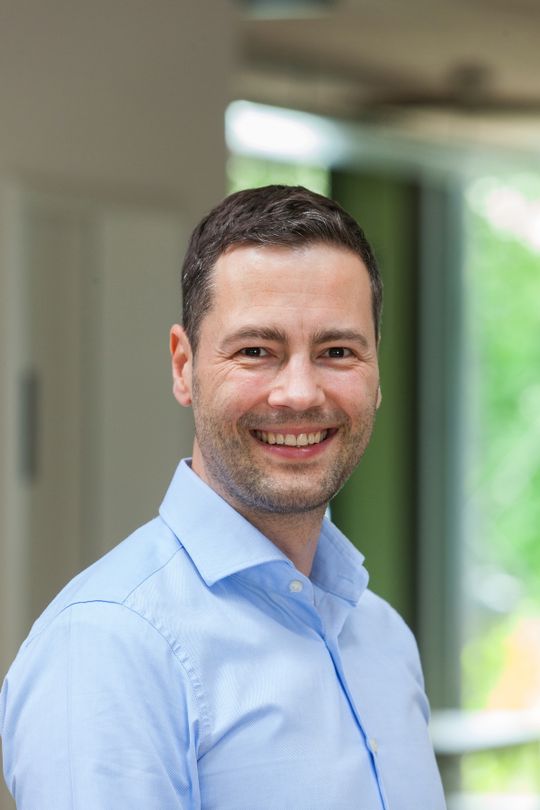
Henrik Hasenkamp is the CEO of gridscale, a Cologne (Germany)-based tech company that provides a seamless plug-and-play platform for the quick and easy setup of cloud and edge computing services.
(Image: gridscale)
In summary, containerization is not merely a technological evolution—it represents a fundamental shift in IT infrastructure management. By driving efficiency, reducing costs, and fostering innovation, containerization empowers organizations to remain competitive in an increasingly digital and cloud-driven world.



:quality(80)/p7i.vogel.de/wcms/dd/08/dd086510d9ae7b50181f6070e4463b44/0129363730v1.jpeg "Typical application for ionizing devices: Wrapping films. (Picture: ©Adobe Stock/SMC)")
:quality(80)/p7i.vogel.de/wcms/35/57/3557c819943c53acec41a0ccba87da4f/0130049064v1.jpeg "Researchers at the Fraunhofer IWU in Chemnitz have long known that many typical sheet metal parts can be manufactured more cost-effectively using hollow embossing rollers. Now there is news to report ... (Image:Fraunhofer IWU)")
:quality(80)/p7i.vogel.de/wcms/59/02/590246e3b3f415c65edbee377c14ca77/26-06-pi-fraunhofer-iws-41450-direktplattieren-pic-01-7771x4369v1v1.jpeg "The Fraunhofer IWS has developed the new \"direct laser cladding\" process, which creates a functional layer directly on the base body by applying a strip-shaped metal to rotationally symmetrical components in a spiral and bonding it locally by laser. (Image:Christoph Wilsnack/Fraunhofer IWS)")
:quality(80)/p7i.vogel.de/wcms/73/60/73608418789b1d9c393f5e2fa974eda2/0130209906v1.jpeg "The robots of the X6 generation from b+m enable very high painting quality and are also particularly compact and easy to maintain. (Image:Beckhoff)")
:quality(80)/p7i.vogel.de/wcms/78/e9/78e9188c25a8a94e67c34c9bf8ffe495/visual-agile-20robots-20and-20google-20deepmind-20partner-20to-20bring-20intelligence-20to-20robotics-2500x1406v1v1.jpeg "Together, the partners are developing adaptable, intelligent robots for a wide range of applications (Image:Agile Robots SE)")
:quality(80)/p7i.vogel.de/wcms/e7/66/e7669ecf0260ae8fc54c214e34e4902a/0130316817v1.jpeg "Siemens and Palo Alto Networks offer tested cybersecurity solution for industrial 5G. (Image:Siemens)")
:quality(80)/p7i.vogel.de/wcms/9f/55/9f55324832c4f426958031375124d9de/siemens-20ubtech-20hmnd-1920x1079v1v1.png "Ready for the factory floor: While Ubtech is planning mass production, Siemens is already testing humanoids in real factory applications in Erlangen. (Image:Siemens)")
:quality(80)/p7i.vogel.de/wcms/11/36/113695ed260e29c8c2d9d39dc5f9d869/0130213768v1.jpeg "AI can work cheaply in China and deliver the results rapidly all over the world. (Image:Dall-E / AI-generated)")
:quality(80)/p7i.vogel.de/wcms/62/5f/625f41e87ebfef156a98c8e6393e32fd/0130211654v1.jpeg "Axial flux motors have some advantages over radial flux motor—but their production is currently still expensive. (Image:RWTH Aachen University)")
:quality(80)/p7i.vogel.de/wcms/77/9b/779b0685d010dfe45c9c2cb1cfecd467/0128886425v1.jpeg "The BlueEye is the first \"real\" hyperspectral camera for the UV range and covers the wavelength range from 220 to 380nm. (Image:Inno-spec GmbH)")
:quality(80)/p7i.vogel.de/wcms/e4/51/e451d52ce0182fb0aaa46a5774f832ef/26-04-pi-fraunhofer-iws-21160-bioslide-pic-01-4128x2321v1v1.jpeg "With the BioSlide research project, the Fraunhofer IWS is investigating how sliding systems can be designed to be more sustainable and energy-efficient. New materials can be tested in a particularly application-oriented manner on this plain bearing test stand. (Image:Fraunhofer IWS)")
![Thanks to advanced 3D printing technology, a more efficient use of resources should contribute to lower-emission aviation—this is the goal of ['skai]-lab. (Image:Oleksandr Pashchenko - stock.adobe.com / AI-generated)](https://cdn1.vogel.de/nghHNSbySccfOjG3n1qCA-FVOjQ=/288x162/smart/filters:format(jpg):quality(80)/p7i.vogel.de/wcms/62/64/626424c97a16e69f871bf216c9629c2a/adobestock-1927043193--c2-a9-20oleksandr-20pashchenko-20-e2-80-93-20stock-adobe-com-ki-generiertv1v1.jpeg "Thanks to advanced 3D printing technology, a more efficient use of resources should contribute to lower-emission aviation—this is the goal of ['skai]-lab. (Image:Oleksandr Pashchenko - stock.adobe.com / AI-generated)")
:quality(80)/p7i.vogel.de/wcms/c3/c4/c3c4ce270b083eeac55654148611f064/0130237945v1.jpeg "China is not giving up on hydrogen, but is intensifying its efforts. (Image:freely licensed from Pixabay)")
:quality(80)/p7i.vogel.de/wcms/4e/c0/4ec0bd19390b169edfa23677373dcdf1/0130260089v1.jpeg "Renewable fuels can supply European road traffic, according to a study. (Image:Aral)")
:quality(80)/p7i.vogel.de/wcms/6f/c9/6fc9050301d745cad25585c6780f8f51/0130197341v1.jpeg "Production facilities are a worthwhile target and are therefore at risk. (Image:ABB Robotics)")
:quality(80)/p7i.vogel.de/wcms/b6/62/b662adc2cec8227d8172509bbfb6ee42/25c0207-107-4961x2789v1v1.jpeg "The GLB is the second model based on Mercedes' new MMA platform. Apparently, Geely's platform is better and cheaper, which is why the two companies are negotiating a partnership. (Image:Mercedes-Benz)")
:quality(80)/p7i.vogel.de/wcms/4d/dd/4dddf438e91f394c04a095dbfd109d1c/0130236430v1.jpeg "Measurement modules: The 720301 module in combination with the SL2000 enables RMS and power calculations, among other things. (Image:Yokogawa)")
:quality(80)/p7i.vogel.de/wcms/61/fc/61fcf95f5cca15494ad18343901ae585/0130317237v1.jpeg "With the AGI CPU, Arm says it is taking a \"historic step\": With the processor aimed at AI in data centers, the company is presenting itself for the first time as a provider of its own chips, not just as a pure IP licensor. (Image:Arm)")
:quality(80)/p7i.vogel.de/wcms/82/90/8290dfe3595b6c6b33726ae8b76172c7/0130319587v1.jpeg "The concept image illustrates how the pattern of tiny protrusions and depressions created on the substrate (MgO, bottom) controls the arrangement of atoms in the superconducting material (YBCO, top). At the interface between the two layers, an electronic structure enables superconductivity to occur at higher temperatures than previously possible. (Image:Chalmers University of Technology / Riccardo Arpaia)")
:fill(fff,0)/images.vogel.de/vogelonline/companyimg/76800/76895/65.jpg "FAULHABER_120mm.jpg ()")
:fill(fff,0)/p7i.vogel.de/companies/67/eb/67eba621ef6ea/logo2.png "logo2 (Wuxi InfiMotion)")
:quality(80)/p7i.vogel.de/wcms/4d/ca/4dca7f2394b1d48d31238a00d10478e7/0123157773v1.jpeg "0123157773v1 (Image:freely licensed)")
:quality(80)/p7i.vogel.de/wcms/c2/c1/c2c1ee9e92113eb45140e8f868420219/0124272206v1.jpeg "Dracula Technologies aims to shed light, literally, on the sustainable energy supply of IoT sensors and make conventional batteries obsolete. (Image:freely licensed)")