AI-based manufacturing platforms restructure the path from CAD to prototype: with real-time feedback, calculable costs, and transparent processes. This allows design teams to gain speed and clarity, turning procurement from a bottleneck into a competitive advantage.
AI-based systems are restructuring traditional process flows in the interaction between design, prototyping, and manufacturing.
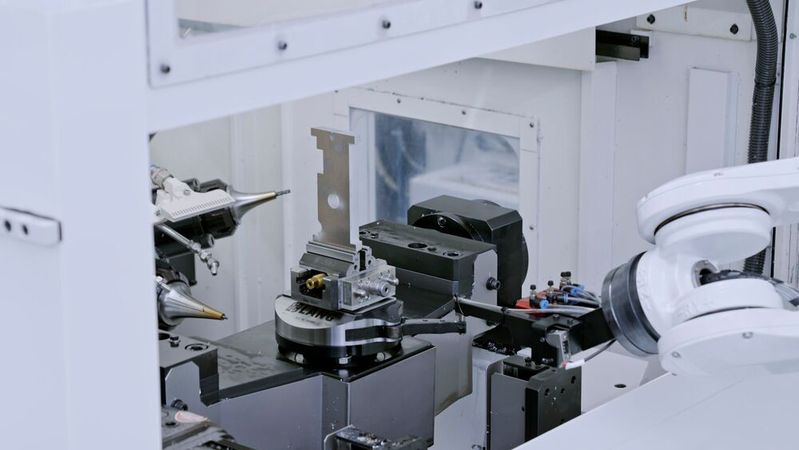
(Image: Meviy)
The prototype is in the final design stage, and the first functional test of the physical prototype is planned for the coming days. However, shortly before completing the design, it becomes apparent that a geometric adjustment is necessary. The change in the CAD model is quickly made—but now the real time pressure emerges: new quotes need to be obtained, feasibility must be clarified, and delivery times coordinated for the adjusted component.
This procurement effort often becomes a bottleneck because each request must be manually created, sent to various suppliers, and tracked. It can take weeks for all responses to come in—and even the planned functional test of the prototype is jeopardized. In many development departments, this is the moment when the procurement process derails the entire schedule—especially in project phases where every hour counts and teams are pushed to their limits due to labor shortages.
Restructuring Traditional Procurement Processes
Such scenarios are not exceptions but reflect the everyday reality of many design teams. They highlight how sensitive traditional interfaces between design, prototyping, and manufacturing can be. At the same time, they reveal why a transformation is taking place here: digital manufacturing platforms and AI-based systems are increasingly becoming tools that restructure this process. They are evolving procurement from an administrative procedure into a data-driven, highly traceable, and largely automated component of engineering. Many systems use artificial intelligence to directly analyze 3D models, check geometries, and calculate prices almost in real-time. Speed is just one aspect: information and feedback that are closer to the design process, making development more predictable, are often even more critical.
The traditional path from the CAD model to the finished prototype was long considered unchangeable. It consisted of a series of steps prone to delays—from creating a technical drawing, through coordination rounds with suppliers, to variant comparisons that often occurred only late in the process. Every minor uncertainty triggered additional queries, and every extra iteration cost time. Especially in the early development phases, where models are adjusted more frequently, such delays could disrupt entire project schedules.
AI-based systems break through this logic. They analyze geometries directly from the 3D model, detect potential manufacturing issues early, and promptly provide assessments of costs and lead times. Digital manufacturing platforms like Meviy demonstrate that procurement can evolve into a data-driven process—quick, transparent, and with standardized quality structures. This shifts decisions to the beginning of the process: parameters such as wall thicknesses, machining accessibility, or material costs become visible not at the end of a quoting phase but at the moment of design. Engineers can create multiple variants, evaluate them immediately, and quickly discard or refine them—without the usual time delays.
How Digital Manufacturing Platforms Implement These Principles
A system that exemplifies this functionality is the digital manufacturing platform Meviy. The platform automatically analyzes 3D models and does not require additional drawings, which ensures speed and clarity, especially in early development phases. At the same time, it combines custom components with standardized parts from a defined portfolio, allowing designers to consider both within a single system.
Particularly defining is the workflow within a closed production network. Here, orders are not assigned to changing suppliers but are manufactured in a consistent environment with standardized specifications. This creates reproducible processes and ensures that quality, lead time, and manufacturing steps remain clearly traceable. Traceability is not an added benefit but an integral part of the system: models, evaluations, quality controls, and manufacturing steps are transparently documented, forming a process chain that establishes reliable conditions, especially for function-critical prototypes and small series.
Such platforms represent a development where AI not only helps to generate quotes faster but also creates the structural foundation to integrate design and manufacturing more closely. They are tools that simplify complex processes without lowering technical standards.
New Workflows in Engineering
With these capabilities, the tasks of engineers are also changing. Instead of spending time on quote cycles and supplier communication, the focus shifts more toward technical evaluation and interaction with AI-based feedback. Suggestions on manufacturability or potential cost drivers are no longer abstract but directly relate to the specific model and the current version of the design.
Date: 08.12.2025
Naturally, we always handle your personal data responsibly. Any personal data we receive from you is processed in accordance with applicable data protection legislation. For detailed information please see our privacy policy.
Consent to the use of data for promotional purposes
I hereby consent to Vogel Communications Group GmbH & Co. KG, Max-Planck-Str. 7-9, 97082 Würzburg including any affiliated companies according to §§ 15 et seq. AktG (hereafter: Vogel Communications Group) using my e-mail address to send editorial newsletters. A list of all affiliated companies can be found here
Newsletter content may include all products and services of any companies mentioned above, including for example specialist journals and books, events and fairs as well as event-related products and services, print and digital media offers and services such as additional (editorial) newsletters, raffles, lead campaigns, market research both online and offline, specialist webportals and e-learning offers. In case my personal telephone number has also been collected, it may be used for offers of aforementioned products, for services of the companies mentioned above, and market research purposes.
Additionally, my consent also includes the processing of my email address and telephone number for data matching for marketing purposes with select advertising partners such as LinkedIn, Google, and Meta. For this, Vogel Communications Group may transmit said data in hashed form to the advertising partners who then use said data to determine whether I am also a member of the mentioned advertising partner portals. Vogel Communications Group uses this feature for the purposes of re-targeting (up-selling, cross-selling, and customer loyalty), generating so-called look-alike audiences for acquisition of new customers, and as basis for exclusion for on-going advertising campaigns. Further information can be found in section “data matching for marketing purposes”.
In case I access protected data on Internet portals of Vogel Communications Group including any affiliated companies according to §§ 15 et seq. AktG, I need to provide further data in order to register for the access to such content. In return for this free access to editorial content, my data may be used in accordance with this consent for the purposes stated here. This does not apply to data matching for marketing purposes.
Right of revocation
I understand that I can revoke my consent at will. My revocation does not change the lawfulness of data processing that was conducted based on my consent leading up to my revocation. One option to declare my revocation is to use the contact form found at https://contact.vogel.de. In case I no longer wish to receive certain newsletters, I have subscribed to, I can also click on the unsubscribe link included at the end of a newsletter. Further information regarding my right of revocation and the implementation of it as well as the consequences of my revocation can be found in the data protection declaration, section editorial newsletter.
Teams must find ways to integrate this information—such as making AI feedback a regular part of design reviews or enabling closer collaboration between design, procurement, and manufacturing based on the same data. The goal is not to automate decisions but to make them more informed. A typical everyday scenario makes this tangible: a designer uploads their model in the late afternoon, receives a feasibility analysis and a reliable price indication within minutes, and can place an order immediately. The result is not just a gain in time but, above all, clarity.
Back to the Prototype—Why AI Makes the Difference Here
This brings us full circle to the situation described at the beginning. When changes are needed shortly before a planned functional test of the prototype, success depends not only on the designer's expertise but also on the responsiveness of the entire process chain. AI-driven procurement tools alleviate the pressure in such moments by reducing delays, accelerating decisions, and simultaneously creating transparency that traditional workflows often could not provide.
Digital manufacturing platforms—Meviy powered by Misumi as an example—demonstrate that procurement no longer has to be the bottleneck it once was. They make it possible to structure prototype phases more controlled and to make design decisions more data-driven. For engineers, this creates a working environment that matches the pace of modern product development: more reliable, traceable, and significantly closer to the moment of design.



:quality(80)/p7i.vogel.de/wcms/31/1f/311fb5b8aa1683b31cca284c8d33f443/0130073373v1.jpeg "Ceratizit has forged a very stable supply chain through a sophisticated and comprehensive recycling concept as well as through its holdings in tungsten mines. Here are some details ... (Image:Ceratite)")
:quality(80)/p7i.vogel.de/wcms/4c/49/4c49ab206af08de47d42c35bacc89c1d/0129539746v1.jpeg "With CPQ software, sales staff can create quotes for complex heavy-duty vehicles in minutes. (Image:TII Scheuerle)")
:quality(80)/p7i.vogel.de/wcms/bc/29/bc29ee18ce776b1915e10e07c1525f3a/0129766196v1.jpeg "The control cabinet is integrated into the rear of the press frame and offers accessibility with a small overhang thanks to the variable door opening. (Image:Tox)")
:quality(80)/p7i.vogel.de/wcms/fe/8a/fe8af1b829b085210fef4c1fa8abddb5/0129784389v1.jpeg "As an integral part of Koch Pac-Systeme's Predictive Pack digital service product, the gearboxes with Cynapse and Wittenstein's Smart Services make it possible to detect damage risks in the packaging specialist's machines at an early stage. (Image:Koch Pac systems)")
:quality(80)/p7i.vogel.de/wcms/b5/34/b534e64b2db218cdb5ad938898cbed56/0130044810v1.jpeg "The magnet of the torus-shaped tokamak reactor will generate magnetic pulses lasting up to 500 seconds and heat the enclosed plasma to a temperature of 150 million degrees. (Image:Iter)")
:quality(80)/p7i.vogel.de/wcms/97/28/9728e560d751dd54acd8b88a82ff7330/0129610882v1.jpeg "Temperature measuring devices are essential for monitoring industrial processes and thus ensuring high product quality. (Image:Micro-Epsilon)")
:quality(80)/p7i.vogel.de/wcms/6b/0d/6b0d694b060190016a4db18401fa55eb/0129937458v1.jpeg "(Picture: ©AI-generated)")
:quality(80)/p7i.vogel.de/wcms/db/68/db689490e348201603dd30447711ea2b/0129578734v1.jpeg "With three-axis vibration measurement (X, Y and Z axes) and temperature detection, the CMSVT38 condition monitoring sensor provides detailed status information that helps to detect machine damage at an early stage. (Image:Kübler)")
:quality(80)/p7i.vogel.de/wcms/48/8a/488afa7c9416394023a5ea1095f4ee4b/rfc4800-1-787x443v1v1.jpeg "Precise, intelligent and robust sensors will play a key role in an increasingly automated and data-driven world. (Image:Novotechnology)")
:quality(80)/p7i.vogel.de/wcms/08/70/087062e2e1a9b9add5777410dd746ee9/adobestock-1923991605-5607x3156v1v1.jpeg "A new type of tactile sensor, inspired by human skin, even recognizes grains of sand. (Image:Curioso.Photography - stock.adobe.com)")
:quality(80)/p7i.vogel.de/wcms/7f/08/7f087d7013424d123ab7275cd2e3fe55/adobestock-809456218--c2-a9-20degimages-20-e2-80-93-20stock-adobe-com-ki-generiert-4179x2351v1v1.jpeg "The digital upgrading of existing machines conserves resources, saves energy and reduces the need for new production. (Image:Degimages - stock.adobe.com/AI-generated)")
:quality(80)/p7i.vogel.de/wcms/dd/ce/ddcef80b290218276bf857cdb64a45e1/finkel-stephan-4162x2341v1.jpeg "Stephan Finkel, Partner and Industry Lead Defence & Security at 3DSE (Source: 3DSE)")
:quality(80)/p7i.vogel.de/wcms/34/e2/34e2a9e46e59eb28f09f9a5fdf41ff9a/0130091813v1.jpeg "Electrical drive trains require a multidimensional concept of performance characterization. Rohde & Schwarz has developed the MXO 3 oscilloscope series for this purpose. (Image:Rohde & Schwarz)")
:quality(80)/p7i.vogel.de/wcms/c9/2a/c92af18e41b077a518994a2ba60eb09f/0130037726v1.jpeg "The Renault subsidiary has presented a new brand strategy (Image:Alpine)")
:quality(80)/p7i.vogel.de/wcms/d8/fc/d8fc13ba0ae6e2180b3954cb1f1bd34c/0130060162v1.jpeg "Volkswagen has started series production of the ID Unyx 08. The model was developed in collaboration with Xpeng. (Image:Volkswagen)")
:quality(80)/p7i.vogel.de/wcms/f5/80/f5809e877017e40b413b48fcd8452246/cefmof-hydrogen-station-29-2048x1366-2048x1152v1v1.jpeg "The hydrogen filling station in Jyväskylä. The electrolyzer is installed in the fenced area at the top right. (Image:Cefmof Hydrogen)")
:quality(80)/p7i.vogel.de/wcms/3d/f2/3df286b8c62e72218e4ea42dcd959ee1/0130050208v1.jpeg "The Heracles chip from Intel calculates fully encrypted data without decrypting it. According to the company, the chip is 1,074 to 1,547 times faster than an Intel Xeon with 24 cores in FHE (Fully Homomorphic Encryption) computing operations. (Image:Intel)")
:quality(80)/p7i.vogel.de/wcms/f6/a5/f6a587801c676040f1e6413a7d305e33/0130062380v1.jpeg "Nvidia is investing 4 billion US dollars in silicon photonics. The aim is to avoid an impending bottleneck in the AI infrastructure. (Image:freely licensed)")
:quality(80)/p7i.vogel.de/wcms/02/36/02364f083b3023cee3b3f0893ea3f859/0129857003v1.jpeg "AI will continue to drive growth in the semiconductor market in 2026. (Image:Dall-E / AI-generated)")
:quality(80)/p7i.vogel.de/wcms/61/8f/618f16f8fa95ec6cc838ca9bfb5dbaf1/0130027046v1.jpeg "The Belgian Research Institute has set up a European university consortium on the subject of CMOS 2.0. It brings together 26 university groups to research chip technologies that go beyond conventional transistor scaling. (Image:Imec)")
:fill(fff,0)/images.vogel.de/vogelonline/companyimg/76800/76895/65.jpg "FAULHABER_120mm.jpg ()")
:fill(fff,0)/p7i.vogel.de/companies/69/88/69882c428938e/tmts2026-ticec-banner-en-2000px.png "tmts2026-ticec-banner-en-2000px (https://www.tmts.tw/en)")
:fill(fff,0)/p7i.vogel.de/companies/67/eb/67eba621ef6ea/logo2.png "logo2 (Wuxi InfiMotion)")
:quality(80)/p7i.vogel.de/wcms/01/e7/01e7291168b9766bc7cc3fe60c3dde16/0128026251v1.jpeg "One result of the study: The future of engineering lies in agentic AI, i.e., systems capable of autonomous reasoning and orchestrating workflows across various disciplines and tools. (Image: ©Boonyapawn - stock.adobe.com)")
:quality(80)/p7i.vogel.de/wcms/3a/e0/3ae01e9e6fca6843c7ad459f38c55d8b/0124988464v1.jpeg "With digital procurement, companies accelerate development cycles and increase efficiency in the production of customized components. (Image:Xometry)")
:quality(80)/p7i.vogel.de/wcms/4f/5c/4f5cdf06ae225e142ce36a7b011e9808/0127990300v1.jpeg "Atlas Copco uses Matlab: Data from 250,000 machines feed the twin (Image:AI-generated)")