


:quality(80)/p7i.vogel.de/wcms/81/c6/81c6f01476cd66350d1a6467efede21d/screenshot-202026-01-28-20174921-783x440v1v1.png "Vacuum-brazed probes. (Image:iew inductive heating systems)")
:quality(80)/p7i.vogel.de/wcms/40/c5/40c5051cebdb10fdee9a283303434d9d/0129881741v1.jpeg "3D-printed tools and other components contribute to energy-saving, precise processes. (Image:Gerhard Schubert GmbH)")
:quality(80)/p7i.vogel.de/wcms/ae/bd/aebda515c684825e97579175874ea6bd/0129920231v1.jpeg "Hensoldt, a sensor specialist for critical defense applications among other things, now has a strategic milestone ahead of it. The company is planning to acquire Nedinsco, an optronics company from Venlo in the Netherlands. Here's what's to come ... (Image:Hensoldt)")
:quality(80)/p7i.vogel.de/wcms/c3/6f/c36f031df46d22615d941d077d32313c/0129800025v1.jpeg "The laser-assisted process is intended to make wafer cutting significantly more productive. (Image:Trumpf)")
:quality(80)/p7i.vogel.de/wcms/73/17/7317794432521bf911711b91287cfc28/0129961259v1.jpeg "ABB Robotics and Nvidia are enabling the widespread use of physical AI in the world of robotics. This means that systems can be created virtually and with high precision and optimized much more cost-effectively. In the large image the virtual system, next to it the real robot cell ... (Image:ABB)")
:quality(80)/p7i.vogel.de/wcms/09/a2/09a2e832b1c0271d299fc130201e5717/adobestock-1767409934-4191x2360v1.jpeg "(Source: © ImageFlow - stock.adobe.com)")
:quality(80)/p7i.vogel.de/wcms/3e/1c/3e1c58be6be95c1f511fc6fd6812cf20/0129887455v1.jpeg "The picture shows an aerial view of the existing site, supplemented by a visualization of the Smart Factory. The new production facility is to be built on the current parking lot. (Image:Siemens AG)")
:quality(80)/p7i.vogel.de/wcms/ee/2e/ee2ed86ee6920e691aaab10cc7d2dec6/0128979319v1.jpeg "Humanoid robots can support people without adapting the environment. (Picture: ©Gorodenkoff - stock.adobe.com)")
:quality(80)/p7i.vogel.de/wcms/28/00/28008d9477bb07daa3b28ce4ac0ae907/newsimage418436-1536x864v1v1.jpeg "Researchers have produced elastic ear cartilage from human cells in the laboratory, which remains dimensionally stable in animal models. (Image:ETH Zurich)")
:quality(80)/p7i.vogel.de/wcms/1e/7d/1e7d6a316cdd7a7ba5e84d7c9a3efb80/newsimage418837-3000x1687v1v1.jpeg "Driverless shuttles can strengthen public transport, especially in rural areas. (Image:ZF Friedrichshafen)")
:quality(80)/p7i.vogel.de/wcms/85/e8/85e89606edeeec55feac9ab5617e2440/newsimage418885-3500x1969v1v1.jpeg "Flexible: The solid electrolyte based on silicone is expandable and thus compensates for the cavities that form in solid-state batteries during charging and discharging. (Image:Empa)")
:quality(80)/p7i.vogel.de/wcms/e8/dc/e8dc27a8d9fba8fbd081987400bf6848/0127426198v1.jpeg "3D FEM models are detailed, large and computationally intensive. Thanks to ROM and the support of Cadfem, Wago has succeeded in setting up an e-shop for thermal simulation. (Image:WAGO)")
:quality(80)/p7i.vogel.de/wcms/a7/22/a722a06c823b5d7405eb9fb15a0b4e7d/0129931201v1.jpeg "The company offers access to its charging network, which now has more than 1,000,000 charging points across Europe, via the Elli app. (Image:Elli | Volkswagen)")
:quality(80)/p7i.vogel.de/wcms/89/5d/895dfb4fb9a90c33ddd287c7d09c9ffd/0129938355v1.jpeg "Ganfeng Lithium has developed semi-solid batteries for eVTOLs together with Geely subsidiary Aerofugia. (Image:Aerofugia)")
:quality(80)/p7i.vogel.de/wcms/7c/b5/7cb53f75b7254936bca07deea6df4ed7/0129926273v1.jpeg "Windrose and Hubjekt cooperate on Plug&Charge authentication. (Image:Wind rose)")
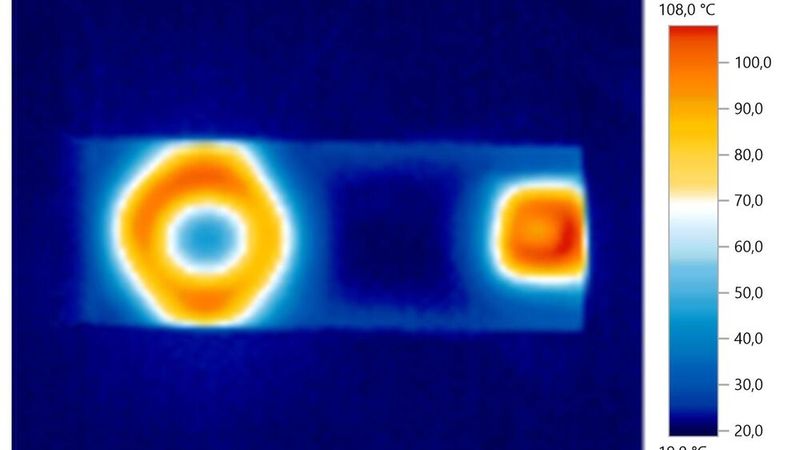
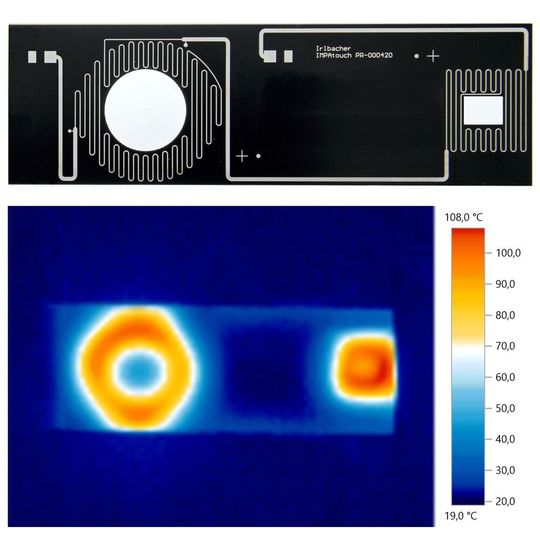
:quality(80)/p7i.vogel.de/wcms/09/5a/095a3ffb6f8fa4c4ccdd40e99ad4eb57/0129947820v1.jpeg "The developers at Irlbacher prevent the glass surface from falling below the dew point with 3D printing in the form of filigree conductor tracks on flat glass. (Image:Irlbacher)")
:quality(80)/p7i.vogel.de/wcms/64/97/6497d264fcf62cf4325443498b3826f3/0129930890v1.jpeg "Switching without mechanical contacts (Image:Endrich)")
:quality(80)/p7i.vogel.de/wcms/f3/c0/f3c0040f2b655e91b80158029c65b0cc/0127314142v1.jpeg "Nexperia's assembly and testing fab in Guangdong, China. (Image:Nexperia)")
:quality(80)/p7i.vogel.de/wcms/eb/06/eb069fcd5423295876bad3277dbea0bf/0129955418v1.jpeg "The Iran war and the supply chains: Electronic components are currently hardly affected by bottlenecks. (Image:Markus Kammermann)")
:quality(80)/p7i.vogel.de/wcms/ee/75/ee7566bf98b05455703bb7521fcb98a4/0129937679v1.jpeg "The search for new semiconductor materials is progressing. (Image:Dall-E / AI-generated)")
:fill(fff,0)/p7i.vogel.de/companies/67/eb/67eba621ef6ea/logo2.png "logo2 (Wuxi InfiMotion)")
:quality(80):fill(efefef,0)/p7i.vogel.de/wcms/67/09/67094781dd403/dossier-additive-manufacturing.png "Dossier Additive Manufacturing")
Date: 08.12.2025
Naturally, we always handle your personal data responsibly. Any personal data we receive from you is processed in accordance with applicable data protection legislation. For detailed information please see our privacy policy.
Consent to the use of data for promotional purposes
I hereby consent to Vogel Communications Group GmbH & Co. KG, Max-Planck-Str. 7-9, 97082 Würzburg including any affiliated companies according to §§ 15 et seq. AktG (hereafter: Vogel Communications Group) using my e-mail address to send editorial newsletters. A list of all affiliated companies can be found here
Newsletter content may include all products and services of any companies mentioned above, including for example specialist journals and books, events and fairs as well as event-related products and services, print and digital media offers and services such as additional (editorial) newsletters, raffles, lead campaigns, market research both online and offline, specialist webportals and e-learning offers. In case my personal telephone number has also been collected, it may be used for offers of aforementioned products, for services of the companies mentioned above, and market research purposes.
Additionally, my consent also includes the processing of my email address and telephone number for data matching for marketing purposes with select advertising partners such as LinkedIn, Google, and Meta. For this, Vogel Communications Group may transmit said data in hashed form to the advertising partners who then use said data to determine whether I am also a member of the mentioned advertising partner portals. Vogel Communications Group uses this feature for the purposes of re-targeting (up-selling, cross-selling, and customer loyalty), generating so-called look-alike audiences for acquisition of new customers, and as basis for exclusion for on-going advertising campaigns. Further information can be found in section “data matching for marketing purposes”.
In case I access protected data on Internet portals of Vogel Communications Group including any affiliated companies according to §§ 15 et seq. AktG, I need to provide further data in order to register for the access to such content. In return for this free access to editorial content, my data may be used in accordance with this consent for the purposes stated here. This does not apply to data matching for marketing purposes.
Right of revocation
I understand that I can revoke my consent at will. My revocation does not change the lawfulness of data processing that was conducted based on my consent leading up to my revocation. One option to declare my revocation is to use the contact form found at https://contact.vogel.de. In case I no longer wish to receive certain newsletters, I have subscribed to, I can also click on the unsubscribe link included at the end of a newsletter. Further information regarding my right of revocation and the implementation of it as well as the consequences of my revocation can be found in the data protection declaration, section editorial newsletter.
:quality(80)/p7i.vogel.de/wcms/ec/69/ec69eeae41109e5e9849e397685b26e1/0129310204v1.jpeg "The surroundings in view at all times: Thanks to the very thin heating element, which is integrated directly into the internal lens design, this is possible. The advantages are the smaller space requirement with higher efficiency. (Image:VIA optronics)")
:quality(80)/p7i.vogel.de/wcms/1a/d3/1ad3b385cbe9d8695351970614137c9a/0125117571v1.jpeg "Infrared light passes through the metalens and is converted into violet light due to the material and special surface structures (magnified in the lens), and is bundled at a focal point. (Image:Ü.Talts / ETH Zurich)")