


:quality(80)/p7i.vogel.de/wcms/a4/4c/a44ce96743685179c9e0fc31f35b1686/0132816576v1.jpeg "Laser Dicing: From the recoil force of the laser pulse upon impact on the semiconductor, a reproducible process signal can be derived in real time, enabling automated control of wafer dicing. (Image:Ciba University / CC BY-SA 4.0 / sciencedirect.com)")
:quality(80)/p7i.vogel.de/wcms/fe/c1/fec12ad4ec9ef66b02eb90f93c9b39f8/0113143253v1.jpeg "In our China Market Insider, we regularly provide you with relevant information directly from China. (Image:© Eisenhans - stock.adobe.com)")
:quality(80)/p7i.vogel.de/wcms/1f/59/1f5902056602846c4594d929d43a70a3/rose-tragarmsystem-gt-hd-print-20-28002-29v1.jpeg "The GT-HD support arm system from Rose was developed for use in particularly hygiene-critical areas (Source: Rose Systemtechnik)")
:quality(80)/p7i.vogel.de/wcms/25/51/2551b61097c77bc1001804d51b3b3adb/0132795572v1.jpeg "A five-axis milling machine no longer necessarily has to be located in a production hall. If it fits through a standard door and can be operated without specialized training, numerous possibilities open up. (Image:Gemini / LBR Manufacturing / AI-generated)")
:quality(80)/p7i.vogel.de/wcms/f8/f1/f8f1c458e77657803454f0a7c7b45ec9/0131615052v1.jpeg "The R-C2 automation from Gressel enables fully automatic complete machining of components with dimensions up to 217 millimeters x 217 millimeters x 217 millimeters. (Image:Spinner automation)")
:quality(80)/p7i.vogel.de/wcms/15/32/153251dffcb464d900d3cb0901ce9345/zimmer--cbps--sall--apr--v1v1.jpeg "Braking pneumatic cylinders: With safety certification according to DIN EN ISO 13849-1/-2, the clamping and braking elements of the CBPS series from Zimmer are suitable for safety-critical applications. (Source: Zimmer)")
:quality(80)/p7i.vogel.de/wcms/c7/8a/c78a9436a949192db665cbb6023ea27f/0132539338v1.jpeg "Many manufacturers meet all compliance requirements—yet remain vulnerable to cyberattacks. The problem does not lie in a lack of tools but in fragmented security strategies. (Image: ©solom - stock.adobe.com)")
:quality(80)/p7i.vogel.de/wcms/6b/70/6b70cd2fc515dee01219b578d82eb419/0132755946v1.jpeg "Artificial intelligence can help detect quality issues earlier and turn the 8D report into an efficiency booster. (Image:AI-generated)")
:quality(80)/p7i.vogel.de/wcms/b4/9a/b49aaad0500e06e253f7d75ecb77338a/adobestock-4840668--dani-kreienb-hl-stock-adobe-comv1.jpeg "Metal processing in 2026 will be more digital, automated, and data-driven – but not automatically easier. (Image:© Dani Kreienbühl - stock.adobe.com)")
:quality(80)/p7i.vogel.de/wcms/1a/59/1a59392a5924d433a9bf21e34ecad8ce/ed2456-ferry-boat-123059v1.jpeg "New project brings hydrogen to passenger ships. (Source: Meyer Werft)")
:quality(80)/p7i.vogel.de/wcms/dc/0b/dc0bb45fae3c250a7e75c1d9a1f5e041/thyssenkrupp-profile-aus-zm-beschichteten-bandstahlv1.jpeg "With ZM Ecoprotect Solar, thyssenkrupp Steel offers a variant developed for PV mounting systems. The coating is applied to the steel strip before forming, allowing profiles to be produced without the disadvantages of subsequent batch galvanizing. (Source: Thyssenkrupp Steel)")
:quality(80)/p7i.vogel.de/wcms/ca/90/ca90a13919cdade100d393bb3d2f4b3a/0132724138v1.jpeg "Improved cooling concept: Thanks to the cavity microstructure, known as vascular metamaterials, not only are volume and weight reduced, but the cooling capacity is also increased. (Image:Automoteam)")
:quality(80)/p7i.vogel.de/wcms/01/6a/016a20552c41084d80300e5eb073d192/0132817472v1.jpeg "The Chinese government plans to ban the so-called \"Automated Driving System Marker Lamps\" on new vehicles. They are distracting and can, among other things, dazzle other drivers. (Image:created with AI)")
:quality(80)/p7i.vogel.de/wcms/e4/ed/e4ed2843e0cfab50eb97a6d51601fc8f/org-blobs-user-response-file-output-a0911f41-dcc8-463c-a199-cab8094308fe-file-1786616125332-jpgv1.jpeg "In a survey by Capgemini, two-thirds of respondents from car manufacturers stated that they had already significantly accelerated their concept phases using AI. (Image:KI-generiert)")
:quality(80)/p7i.vogel.de/wcms/05/3a/053adcaaed4cfcb63fc47e6a484a7c22/porsche-911-reimagined-by-singer---classic--classic-turbo-02v1.jpeg "Louis Vuitton has given two Porsche 911 conversions by Singer a more luxurious touch. (Source: Singer)")
:quality(80)/p7i.vogel.de/wcms/18/26/18267dfa557eb442ee4450f505f82537/0132817699v1.jpeg "In Europe, Honda is significantly reducing its EV lineup in multiple ways: the Super-N is now the only electric vehicle, competing in the kei car class and, for the time being, only in the UK. (Image:Honda)")
:quality(80)/p7i.vogel.de/wcms/90/dc/90dc332e30a3e4bd3ff77646ed0633b7/0132833369v1.jpeg "Through a compromised repository of the widely used open-source tool LiteLLM, attackers were able to capture several terabytes of data and login credentials. Security company CloudSEK concludes, after analyzing the data, that the attack conducted in March of this year affected more than 2,000 companies, including major players like Microsoft, Nvidia, AWS, and Deutsche Bahn. (Image:freely licensed)")
:quality(80)/p7i.vogel.de/wcms/93/40/9340a3a1088dd79fce6bda5c73b7dd2f/0132818390v1.jpeg "Already in 1980, Intel exited the production of DRAM chips, and in 2022, the Optane series, manufactured using the 3D XPoint process, marked the company's last commercial venture in the field of memory technologies. However, in light of the memory crisis and the growing demand for fast memory chips, Intel CEO Lip-Bu Tan now appears to be considering a possible return to the memory business. (Image: Intel)")
:quality(80)/p7i.vogel.de/wcms/b5/2a/b52a740bb2b6e48b2e530a9bb03fcd3b/0132819357v1.jpeg "Industrial high-speed communication: The CAN XL transceiver TCAN6062 transfers more data at higher speeds, making it suitable for applications such as humanoid robots, industrial robots, and HMI systems. (Image:Texas Instruments)")
:quality(80)/p7i.vogel.de/wcms/e6/2b/e62bcec6fb21127dd59cb4d79c04381e/0132806622v1.jpeg "Next-generation packaging and testing solutions for high-density 3D power modules by JCET. (Image:JCET)")
:fill(fff,0)/p7i.vogel.de/companies/69/de/69de1b7403b0d/simtos-logo.jpeg "simtos-logo (SIMTOS)")
Date: 08.12.2025
Naturally, we always handle your personal data responsibly. Any personal data we receive from you is processed in accordance with applicable data protection legislation. For detailed information please see our privacy policy.
Consent to the use of data for promotional purposes
I hereby consent to Vogel Communications Group GmbH & Co. KG, Max-Planck-Str. 7-9, 97082 Würzburg including any affiliated companies according to §§ 15 et seq. AktG (hereafter: Vogel Communications Group) using my e-mail address to send editorial newsletters. A list of all affiliated companies can be found here
Newsletter content may include all products and services of any companies mentioned above, including for example specialist journals and books, events and fairs as well as event-related products and services, print and digital media offers and services such as additional (editorial) newsletters, raffles, lead campaigns, market research both online and offline, specialist webportals and e-learning offers. In case my personal telephone number has also been collected, it may be used for offers of aforementioned products, for services of the companies mentioned above, and market research purposes.
Additionally, my consent also includes the processing of my email address and telephone number for data matching for marketing purposes with select advertising partners such as LinkedIn, Google, and Meta. For this, Vogel Communications Group may transmit said data in hashed form to the advertising partners who then use said data to determine whether I am also a member of the mentioned advertising partner portals. Vogel Communications Group uses this feature for the purposes of re-targeting (up-selling, cross-selling, and customer loyalty), generating so-called look-alike audiences for acquisition of new customers, and as basis for exclusion for on-going advertising campaigns. Further information can be found in section “data matching for marketing purposes”.
In case I access protected data on Internet portals of Vogel Communications Group including any affiliated companies according to §§ 15 et seq. AktG, I need to provide further data in order to register for the access to such content. In return for this free access to editorial content, my data may be used in accordance with this consent for the purposes stated here. This does not apply to data matching for marketing purposes.
Right of revocation
I understand that I can revoke my consent at will. My revocation does not change the lawfulness of data processing that was conducted based on my consent leading up to my revocation. One option to declare my revocation is to use the contact form found at https://contact.vogel.de. In case I no longer wish to receive certain newsletters, I have subscribed to, I can also click on the unsubscribe link included at the end of a newsletter. Further information regarding my right of revocation and the implementation of it as well as the consequences of my revocation can be found in the data protection declaration, section editorial newsletter.
:quality(80)/p7i.vogel.de/wcms/4d/ba/4dba830f2985a506fc9b3c6b108addf6/0129112067v1.jpeg "Attractive decors with sustainable materials, easy-to-read displays, integration of light and touch functions - these are just some of the trends for plastics in car interiors. (Image:Short)")
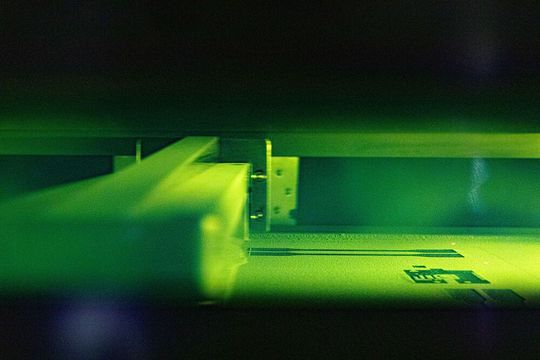
:quality(80)/p7i.vogel.de/wcms/fd/5e/fd5e22f13f804834f8a4536e5aff7f9a/0125422988v1.jpeg "With the new process developed by Dr. Oliver Maurer, smaller metal components can be printed significantly finer and with higher quality using a 3D printer. (Image:Claudia Ehrlich/Saarland University)")