The EU taxonomy creates clear rules for evaluation and reporting. Therefore, a comprehensive concept for efficient reporting is necessary.
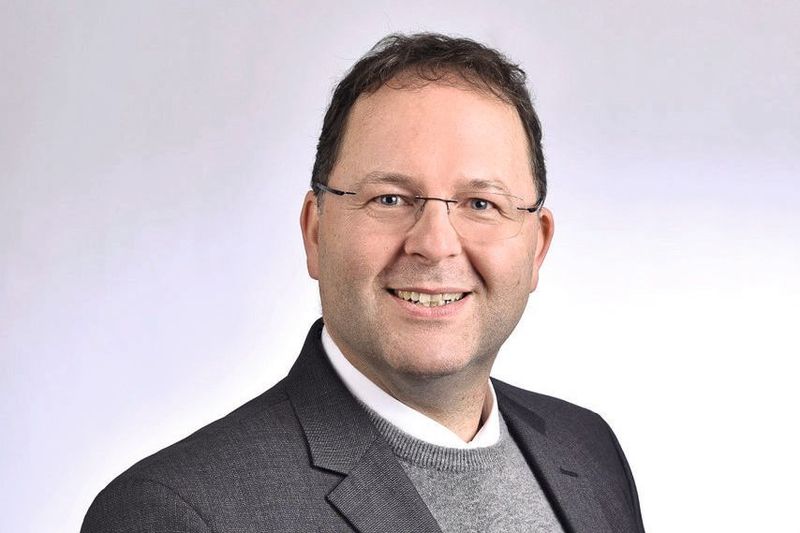
Auditor and tax consultant Bernhard M. Kinzinger, from RTG Dr. Böhmer and Partner in Ludwigshafen.
(Image: Backofen Photo Studio)
The European Union, with the signing of the Paris Climate Agreement and the Green Deal, has set ambitious climate and environmental targets that are putting increasing pressure on companies in the metal industry. With the EU taxonomy, clear rules and framework conditions for sustainable business practices have been created, informs the Ludwigshafen auditing and tax consulting firm RTG Dr. Böhmer and Partner, member of the international HLB network. Companies in mechanical engineering and industry, which are rated well in this sense, stand out positively from their competitors and can thus benefit from higher investment subsidies and faster loan approvals. "The legislation wants to reward environmentally friendly actions through a focus on investment," says auditor and tax consultant Bernhard M. Kinzinger. The long-term goal is to finance the economic transformation process towards sustainability by redirecting financial flows into sustainable activities.
The six environmental goals represent the evaluation standard for the EU taxonomy:
Climate protection
Adaptation to climate change
Sustainable use and protection of water and marine resources
Transition to a circular economy
Prevention and reduction of environmental pollution
Protection and restoration of biodiversity and ecosystems
The classification is based on four criteria that build on the six environmental goals.
The economic activity...
... contributes to at least one of the environmental objectives.
... does not significantly harm any of the environmental objectives.
... meets a minimum of safety standards, such as the UN Guiding Principles on Business and Human Rights, to avoid a negative social impact.
... meets the technical screening criteria developed by the EU Technical Expert Group.
Kinzinger explains: "To be classified as sustainable according to the EU taxonomy regulation, industrial companies must not only contribute to at least one of these environmental goals, they must also not violate the others." An activity aimed at protecting the climate but at the same time negatively affecting biodiversity therefore cannot be rated as sustainable.
Reporting obligation for sustainability
"It is clear that there is a lot of work ahead for companies in the industry and production sectors," says Kinzinger. The EU taxonomy creates reporting obligations for companies on their sustainability. Large, capital-market-oriented companies with more than 500 employees that are not financial companies have been required to indicate in their non-financial statement since January 1, 2022, the proportion of the three key indicators of revenue, capital expenditure, and operating expenses that is associated with environmentally sustainable economic activities in the sense of the EU taxonomy. In addition, further explanatory statements on the three key figures are expected.
"From 2025, further companies will have to meet the requirements of the EU taxonomy - those that will be obliged to report on sustainability for the first time due to the Corporate Sustainability Reporting Directive (CSRD)," says Kinzinger. In addition, under the new accounting directive, companies must disclose their sustainability reporting and their taxonomy-related key figures in a clearly marked section of their management report.
What does the EU taxonomy mean for companies?
The EU taxonomy, together with the CSRD, creates the prerequisites for standardized sustainability reporting. In order for the data on climate, air pollution, biodiversity, and water use - but also for example on occupational safety - to be usable for investors and other stakeholders across sectors, they must be comparable. The affected companies must record the impact of sustainability aspects on their economic situation and at the same time disclose how their economic activities affect various aspects of sustainability.
By 2024, corporations that already comply with the NFRD (Non-Financial Reporting Directive) requirements must submit a sustainability report in accordance with CSRD regulations.
From 2026, the CSRD reporting obligation and thus the EU taxonomy applies to the following companies:
Companies with more than 250 employees, a balance sheet total of more than 25 million euros and net sales revenues of more than 50 million euros, if at least two of these three criteria are met.
Banks, insurers and other companies classified as relevant to the public interest by national authorities.
Date: 08.12.2025
Naturally, we always handle your personal data responsibly. Any personal data we receive from you is processed in accordance with applicable data protection legislation. For detailed information please see our privacy policy.
Consent to the use of data for promotional purposes
I hereby consent to Vogel Communications Group GmbH & Co. KG, Max-Planck-Str. 7-9, 97082 Würzburg including any affiliated companies according to §§ 15 et seq. AktG (hereafter: Vogel Communications Group) using my e-mail address to send editorial newsletters. A list of all affiliated companies can be found here
Newsletter content may include all products and services of any companies mentioned above, including for example specialist journals and books, events and fairs as well as event-related products and services, print and digital media offers and services such as additional (editorial) newsletters, raffles, lead campaigns, market research both online and offline, specialist webportals and e-learning offers. In case my personal telephone number has also been collected, it may be used for offers of aforementioned products, for services of the companies mentioned above, and market research purposes.
Additionally, my consent also includes the processing of my email address and telephone number for data matching for marketing purposes with select advertising partners such as LinkedIn, Google, and Meta. For this, Vogel Communications Group may transmit said data in hashed form to the advertising partners who then use said data to determine whether I am also a member of the mentioned advertising partner portals. Vogel Communications Group uses this feature for the purposes of re-targeting (up-selling, cross-selling, and customer loyalty), generating so-called look-alike audiences for acquisition of new customers, and as basis for exclusion for on-going advertising campaigns. Further information can be found in section “data matching for marketing purposes”.
In case I access protected data on Internet portals of Vogel Communications Group including any affiliated companies according to §§ 15 et seq. AktG, I need to provide further data in order to register for the access to such content. In return for this free access to editorial content, my data may be used in accordance with this consent for the purposes stated here. This does not apply to data matching for marketing purposes.
Right of revocation
I understand that I can revoke my consent at will. My revocation does not change the lawfulness of data processing that was conducted based on my consent leading up to my revocation. One option to declare my revocation is to use the contact form found at https://contact.vogel.de. In case I no longer wish to receive certain newsletters, I have subscribed to, I can also click on the unsubscribe link included at the end of a newsletter. Further information regarding my right of revocation and the implementation of it as well as the consequences of my revocation can be found in the data protection declaration, section editorial newsletter.
When the CSRD reporting obligation comes into effect, more than 10,000 companies across Europe will have to detail their sustainable business practices. In perspective, the regulations of the EU taxonomy are to be extended to social goals in addition to environmental goals. Regardless of this, laws and regulations relevant to sustainability enacted by the EU or its member states will in future be based on the EU taxonomy and CSRD as a common understanding of sustainability.
Kinzinger advises the affected companies to deal with the concept of the EU taxonomy early on. Next, as a first step, an analysis of the individual economic activities in terms of their taxonomy capability and the taxonomy conformity based on the key figures Cap Ex, Op Ex and turnover should be reviewed. In addition, for the later reporting of financial key figures, other areas such as systems, processes and control environment should be taken into account in the analysis.
"Sustainability is causing a lot of movement in the future, so companies constantly have to adapt to changes," Kinzinger emphasizes. "The EU taxonomy will sharpen the ecological awareness in companies. At the same time, it leads to the merging of sustainability reporting and financial reporting, and many companies have to adjust their internal processes accordingly."



:quality(80)/p7i.vogel.de/wcms/46/af/46afee96b1fdae5653adcbd82b187e06/0130522052v1.jpeg "What you see here is the successful combination of the Lars UPS system from Kraken Robotics and the RD-22 from Sefine. Added to this is the Katfish towed sonar system from Kraken. All in all, this robotic mix is intended to strengthen mine defense. Initial demonstrations have been successful. (Image:Octopus Robotics)")
:quality(80)/p7i.vogel.de/wcms/61/44/61443e99b250115b515e7d9dc7163818/0130460078v1.jpeg "Full halls at TMTS 2026. (Image:VCG/Sonnenberg)")
:quality(80)/p7i.vogel.de/wcms/fb/89/fb890ec01dc3b288d85c3e560dbc6e53/0130440360v1.jpeg "All-in-one machines for the production of long screws: this is what Amba is known for. The company now wants to make even more of this expertise. (Image:Aachen mechanical engineering)")
:quality(80)/p7i.vogel.de/wcms/a0/47/a04725ef9bd09fb6c9341a1bea1b5d93/0130443083v1.jpeg "Here, a type of plastic pallet is produced by thermoforming (vacuum forming or deep drawing) at the corresponding division of New England Plastics in the USA. This division, which specializes in so-called liners, is now part of Ringmetall ... (Image:New England Plastics)")
:quality(80)/p7i.vogel.de/wcms/44/47/44472248cfbd4dc1301fa8fdff3616a5/0130443860v1.jpeg "Siemens has entered into a partnership with the European Space Agency (ESA). It has joined the 'Partnership Initiative for Commercialization' (EPIC) programme, which opens up new opportunities for start-ups from ESA's Business Incubation Centres (ESA BICs). (Image:ESA/NASA/Cities at Night)")
:quality(80)/p7i.vogel.de/wcms/fa/8f/fa8f69dfc822db4f3cf051d12d36b020/0130499198v1.jpeg "(Image:Sensirion)")
:quality(80)/p7i.vogel.de/wcms/1c/03/1c03f177c3f718060fca6b0b8a462813/0130301009v1.jpeg "Dr. Matthias Wick, CTO of Cisco Systems (Switzerland) during his presentation at the asut Lunch Forum on AgenticOps. (Image:Anne Richter, VCG)")
:quality(80)/p7i.vogel.de/wcms/8b/2a/8b2aa1706944495814db6ec30efd5cb2/0129190693v1.jpeg "With sensors for thickness, position, temperature and 3D geometry, Micro-Epsilon enables precise automation. (Picture:Micro-Epsilon)")
:quality(80)/p7i.vogel.de/wcms/14/27/142774c1c27785d56d8ab10131fb648d/adobestock-844361487--c2-a9-20jk-kyoto-20-e2-80-93-20stock-adobe-com-ki-generiertv1.jpeg "Large-scale or rapidly growing IoT scenarios in factory automation can often only be implemented using conventional cabling with considerable infrastructure costs. Wireless technologies can offer great added value when used in a complementary and sensible way. (Source: © JK_kyoto - stock.adobe.com / AI-generated)")
:quality(80)/p7i.vogel.de/wcms/3d/bf/3dbfb672adb0446d40669e6403baf3b6/adobestock-1421003638--c2-a9-20tenpixels-20--20stock-adobe-comv1.jpeg "Many processes in design and development are undergoing change. PLM solutions ensure greater efficiency thanks to transparency and data consistency. (Source: © TenPixels - stock.adobe.com)")
:quality(80)/p7i.vogel.de/wcms/b7/36/b736dfebc16c42d6901d0d0e1f390493/3d-druck-20factory-20--20ki-20generiert-1920x1079v1.png "(Source: AI-generated)")
:quality(80)/p7i.vogel.de/wcms/79/b2/79b21aad663f4a7bd4472afc1c1afc62/0130433994v1.jpeg "Mission Joyride: The free-flying robot (shown here in the rendering) will relieve the ISS crew of logistics tasks from 2027 with its two mechanical arms. (Image:Icarus Robotics)")
:quality(80)/p7i.vogel.de/wcms/42/19/4219735a4602950073b3f8492fd20a4c/0130476518v1.jpeg "An e-paper screen is invisibly integrated into the interior door trim. Marquardt, Covestro and E Ink worked together on the concept. (Image:Covestro)")
:quality(80)/p7i.vogel.de/wcms/13/23/1323ce113841ece5e51dd055f9e1f088/0130524198v1.jpeg "Thanks to invisible sensors installed behind the display, it is possible to detect whether the driver is tired or distracted while driving, for example. (Image:Aumovio)")
:quality(80)/p7i.vogel.de/wcms/9c/fc/9cfcfad5d96b849179e39c2999f2ff2f/0130534276v1.jpeg "More recycling for sustainable cell-to-pack battery systems is the aim of the Difference research project. (Image:Fraunhofer IPA)")
:quality(80)/p7i.vogel.de/wcms/9f/1d/9f1d995e45e9e661df981aad09789842/0130489199v1.jpeg "The BMW plant in Irlbach-Straßkirchen is considered a showcase project for \"Bavarian Speed\": short distances, close cooperation with regional partners and a digital toolbox that accelerates planning and implementation. (Image:BMW Group)")
:quality(80)/p7i.vogel.de/wcms/c0/37/c0372a27e362d2108e114ea045fdb2e8/0130532716v1.jpeg "Robot density: South Korea leads by a wide margin. Germany in third place. (Image:IFR)")
:quality(80)/p7i.vogel.de/wcms/aa/0d/aa0df5652cc37cfd8b6c3601c92c1f4c/0130519149v1.jpeg "The GQA2W024A050V-007-R converter is available in multiple housing configurations to give developers maximum flexibility for their overall housing design and converter cooling. (Image:TDK Lambda)")
:quality(80)/p7i.vogel.de/wcms/34/b4/34b4fe3e34f655aa3b0e3e6bfb83fde4/0130526171v1.jpeg "Private networks: Siemens expands its private 5G infrastructure to the USA and seven other countries (Image:Siemens AG)")
:quality(80)/p7i.vogel.de/wcms/8d/fe/8dfe4efea68edaaa40058dfea8f3da2f/0130519880v1.jpeg "Chip giant Intel has made gains on the US stock market, according to reports today. This is actually unusual for the current state of affairs. There is also news that Intel wants to get involved in Elon Musk's Terafab project ... (Image:Chipcheck)")
:fill(fff,0)/p7i.vogel.de/companies/69/88/69882c428938e/tmts2026-ticec-banner-en-2000px.png "tmts2026-ticec-banner-en-2000px (https://www.tmts.tw/en)")
:quality(80)/p7i.vogel.de/wcms/05/6b/056bed473edbd5c2da33aa2e6d273af3/0127598551v1.jpeg "EMW Scale is already SAP-compatible today and thus seamlessly integrable into modern ERP environments. (Image:EMW Steel Service Center)")
:quality(80)/p7i.vogel.de/wcms/10/bf/10bf2d1076f91a8a24252bdbfcf4c8d5/0128567429v1.jpeg "From 2026, digital product passports will be mandatory in the EU. (Image: ©Media Stock - stock.adobe.com / AI-generated)")