To respond flexibly and quickly to different clamping situations and part sizes with little effort, contract manufacturer FMB Maschinenbau relies on automated workpiece handling from Gressel.
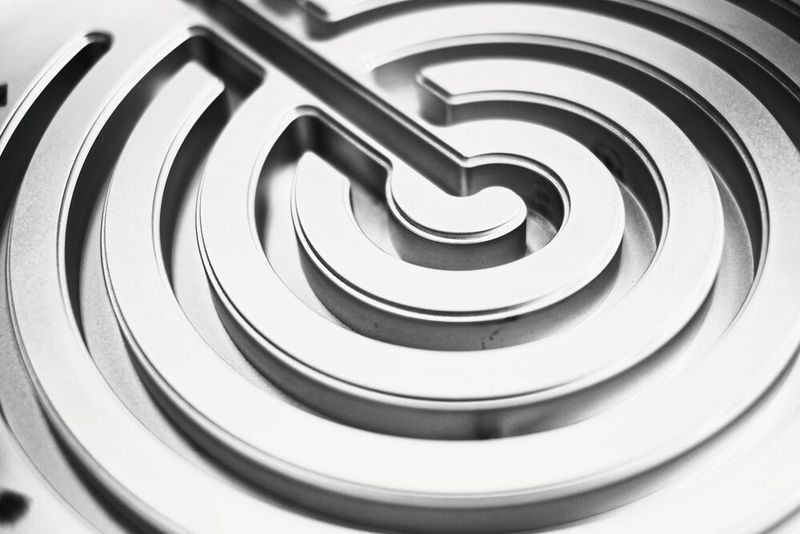
Detail of a cooling plate. Made of 99.99 percent copper, FMV manufactures the plates in several versions, mainly for the semiconductor industry.
(Image: FMV)
Michael Hobohm is a freelance author
Inconspicuously, after the visit of Andreas Brunhofer, Automation Product Specialist at Gressel, a small flyer lay in the production area of FMV from Keltern-Dietlingen. For Till Würtemberger, one of the managing directors of the contract manufacturer, skimming through it became the impetus for a massively runtime-extending automation solution.
Machines in manufacturing operations must keep running. This becomes even more urgent with higher investments. Manufacturing cells belong to this high-end category, especially since they often integrate robots, handling and storage systems, clamping system depots, and parts trolleys. At FMV, a dip tank and a dryer for parts cleaning are also added. This made the manufacturing cell from FMB Maschinenbau in Faulbach tailored to machining cooling plates for the semiconductor market. A business that knows booms and busts. But what if there was a downturn again? Would the system then stand idle? At this point, Gressel's flyer came into play, describing automation for arbitrarily shaped parts in small and medium batch sizes—alternating with the part-specific, serial handling in the cell.
Since 2009, FMV has been manufacturing cooling plates for the semiconductor market. In 2016, these became the company's first product group to reach a volume that made automation economically viable. What amounts to up to 10,000 pieces per year today was less back then, when the decision for automation was made, but it already showed that the planned facility would be utilized for the next few years. Until then, the cooling plates had been produced with a 5-axis and a 3-axis machine, which ran around the clock.
It was clear to us that we couldn't simply upscale the existing processes and operate twice as many machines for twice as many parts. This was not possible due to space constraints, and also from a personnel perspective, as we couldn't easily introduce a two-shift model.
Till Würtemberger, Managing Director at FMV
However, with the decision for automation, it was also clear that the facility should not stand idle once the cooling plate orders were completed. Instead, it should be possible to process other parts as an alternative to the cooling plates. This was the challenge FMV faced during Brunhofer's visit. "When I then looked at the small brochure, I knew immediately: That's what we need," said Würtemberger.
FMV, founded in 1976 as a toolmaking company for the stamping industry around Pforzheim, today stands on three pillars: Besides manufacturing cooling plates including machining, welding, soldering, and final pressure and leak testing, the second pillar is contract manufacturing of milled parts for mechanical engineering, where services such as hardening, grinding, eroding, or surface finishing are also provided. FMV's core competence lies in the machining of non-ferrous metals like aluminum and copper, as well as plastics, which includes the prototyping phase with quantities from 1 to 10 and small series production.
Our third pillar is the manufacturing of sensor housings, which represents a wide range of products with high quantities. For example, we manufacture aluminum housings for light barriers for a sensor manufacturer. The quantities here amount to several thousand per year, with dozens of different types.
Till Würtemberger, Managing Director at FMV
Part-specific automation
For the automation of cooling plate production, a parts handling system was the only option from the beginning due to the size of the parts, the clamping situation, and the initial investment. The workpiece-specific approach is also based on the fact that FMV works with vacuum clamping fixtures here, which cannot be palletized. While the handling was thus tailored to the cooling plates, the exact dimensions and clamping situation for the alternative parts were not known.
We needed a system that would allow us to respond to different clamping situations and part sizes with minimal effort. Somehow, quantities between 10 and 50 had to be economically managed during handling, teaching, and setup.
Till Würtemberger, Managing Director at FMV
"The solution was shown to us by the R-C2 flyer. It was clear: With this vise automation via robot and R-C2 module, we can cover 50 percent plus of our work because everything on the machine side is always the same. I just have to handle the loading but already need a solution for only half of the parts. The solution we then developed with FMB and Gressel requires hardly any setup effort."
Workpiece-related processes
The handling of the different part groups is clearly separated today in Keltern-Dietlingen. For the cooling plates, it begins with provisioning on a cart located in the cell. From here, a pneumatic gripper picks up a component and loads it into the machine. After processing, the plate is removed and cleaned. The robot dips it into a cleaning tank integrated into the cell to remove adhering chips, preventing damage in the subsequent flipping station. In this station, the part is first parked, then reinserted and processed again. Once this step is completed, removal, cleaning, flipping, and reloading follow once more. Finally, the already machined side is finished. While the robot equips the machine with the next component and the part undergoes the first processing step, the finished component is extensively cleaned and dried and then placed on the cart.
Date: 08.12.2025
Naturally, we always handle your personal data responsibly. Any personal data we receive from you is processed in accordance with applicable data protection legislation. For detailed information please see our privacy policy.
Consent to the use of data for promotional purposes
I hereby consent to Vogel Communications Group GmbH & Co. KG, Max-Planck-Str. 7-9, 97082 Würzburg including any affiliated companies according to §§ 15 et seq. AktG (hereafter: Vogel Communications Group) using my e-mail address to send editorial newsletters. A list of all affiliated companies can be found here
Newsletter content may include all products and services of any companies mentioned above, including for example specialist journals and books, events and fairs as well as event-related products and services, print and digital media offers and services such as additional (editorial) newsletters, raffles, lead campaigns, market research both online and offline, specialist webportals and e-learning offers. In case my personal telephone number has also been collected, it may be used for offers of aforementioned products, for services of the companies mentioned above, and market research purposes.
Additionally, my consent also includes the processing of my email address and telephone number for data matching for marketing purposes with select advertising partners such as LinkedIn, Google, and Meta. For this, Vogel Communications Group may transmit said data in hashed form to the advertising partners who then use said data to determine whether I am also a member of the mentioned advertising partner portals. Vogel Communications Group uses this feature for the purposes of re-targeting (up-selling, cross-selling, and customer loyalty), generating so-called look-alike audiences for acquisition of new customers, and as basis for exclusion for on-going advertising campaigns. Further information can be found in section “data matching for marketing purposes”.
In case I access protected data on Internet portals of Vogel Communications Group including any affiliated companies according to §§ 15 et seq. AktG, I need to provide further data in order to register for the access to such content. In return for this free access to editorial content, my data may be used in accordance with this consent for the purposes stated here. This does not apply to data matching for marketing purposes.
Right of revocation
I understand that I can revoke my consent at will. My revocation does not change the lawfulness of data processing that was conducted based on my consent leading up to my revocation. One option to declare my revocation is to use the contact form found at https://contact.vogel.de. In case I no longer wish to receive certain newsletters, I have subscribed to, I can also click on the unsubscribe link included at the end of a newsletter. Further information regarding my right of revocation and the implementation of it as well as the consequences of my revocation can be found in the data protection declaration, section editorial newsletter.
"In working with the R-C2, we use a vise garage where we can store six centric clamps," Würtemberger reports. "These can be six of the same or three pairs of two of the same each. We use the R-C2 80 L-140 and the R-C2 125 L-160, with the centric clamp 80 L-140 covering 80 percent of our part range. The parts we typically machine have dimensions of 40 millimeters × 40 millimeters × 80 millimeters (approx. 1,6 inches × 1,6 inches × 3,1 inches )." The system itself is designed for geometries from 12 millimeters × 20 millimeters at any length up to 220 millimeters × 150 millimeters × 400 millimeters (approx. from 0,4 inches × 1,6 inches at any length up to 8,7 inches × 5,9 inches × 15,7 inches) . The robot can handle up to 70 kilograms, but this depends on the distance to the sixth axis. The R-C2 system is designed for vise handling with 30 kilograms and for pallets with 50 kilograms.
Prepare production in 15 minutes
The system operation is conducted through two interfaces. "On the first screen, I define everything related to the part: Which base body of the vise do I want to use? What kind of vise jaws do I have on it? How high is the part? What dimension does the vise need to grip?" Würtemberger explains. With these four pieces of information, everything related to the part is already defined. "On the second screen, I enter the information about the parts cart. Here, I only need to define in which grid size X and Y the parts are located and at which position I want to pick them up. Then I press start, and off we go. With a little practice, this takes about a quarter of an hour. If a jaw change is necessary, it takes a bit longer. However, due to the large gripping range compared to a pneumatic gripper, manual interventions are significantly less frequently required."
As soon as the part-specific and cart-specific information is entered and start is pressed, the robot moves to the vise garage and scans to ensure the correct base body is in the correct place. Once it is ensured that no collision can occur, it retrieves the base body, equips it, and waits outside the machine until it can be placed. Then the robot exits the machine room. "With us, the machine is the master; it controls the cell and signals the robot to prepare the next part. While the first part is being processed, the robot retrieves the second vise and the second part to place them in the loading station. This results in a continuous changeover from this station."
"The crucial effect of R-C2 automation today is the intended one: We thereby prevent machine downtimes," Würtemberger summarizes.
We bridge a downturn, which in the semiconductor market can last for half or three-quarters of a year, because the system perfectly matches our other customers and their range of parts.
Till Würtemberger, Managing Director at FMV
At the same time, the vise automation allows for the economical production of variously sized series. "We can optimize right up to the last second for specific parts, which keeps us competitive, especially with larger batches." Naturally, the robot needs to be programmed with a certain level of effort. However, because FMV has invested a lot of work into the user interface with FMB, this additional effort is worthwhile even for small quantities. It is economical to run similar parts automatically into the evening or night. "We can't process different parts overnight, which is not due to the R-C2 but to our facility," Würtemberger explains. "We don't have an overarching job shop manager to handle changing parts. But that's only sensible for a facility that works exclusively with R-C2 automation to cover everything and maximize runtime."
Completely unmanned machining
With this, the managing director is already looking ahead, as a 6-side station is a central point of further collaboration between FMV and Gressel. Currently, FMV is examining two fundamental approaches here: The first is the automation of a next machine exclusively with the R-C2 system and a 6-side station, allowing for unmanned 6-side machining. "This is the more likely step because the existing facilities will probably be primarily occupied with the cooling plates in the coming years," Würtemberger estimates. "Alternatively, we could commission the 6-side station at an existing facility. For example, at the end of a product life cycle, when it is clear that the parts for which the cell was designed are no longer coming or not in the same volume." Once a cell operates 70 percent of the time with the R-C2, a 6-side station becomes sensible. If the cell is repurposed this way, it can also be further optimized for the R-C2, for example, concerning the provisioning of different parts. How exactly the solution will look will be revealed. "In any case, the R-C2 is perfect for us," the managing director concludes. Due to the impressive quality, product durability, and a spare parts supply that matches the longevity, FMV has been working with Gressel since the 1980s. However, this was the first joint project in automation.



:quality(80)/p7i.vogel.de/wcms/60/eb/60ebe43de41f833157b476b2e1641811/0130090160v1.jpeg "The Surface Control Automotive measuring system from Micro-Epsilon automatically detects dents, scratches and other surface defects on body shells. (Image:Micro-Epsilon)")
:quality(80)/p7i.vogel.de/wcms/26/8a/268aba929d72bd089234bd512aab9b08/0130487474v1.jpeg "The works meeting at Volkswagen is over! Here is a brief overview of the most important aspects ... (Image:VW)")
:quality(80)/p7i.vogel.de/wcms/50/63/5063e5b91e7897c13b882440c7f106d4/0128575929v1.jpeg "How is Edge AI changing the industry? Local data processing meets distributed intelligence to promote sustainability and efficiency. (Picture: ©tippapatt - stock.adobe.com)")
:quality(80)/p7i.vogel.de/wcms/a0/47/a04725ef9bd09fb6c9341a1bea1b5d93/0130443083v1.jpeg "Here, a type of plastic pallet is produced by thermoforming (vacuum forming or deep drawing) at the corresponding division of New England Plastics in the USA. This division, which specializes in so-called liners, is now part of Ringmetall ... (Image:New England Plastics)")
:quality(80)/p7i.vogel.de/wcms/29/d8/29d83fa92093c7f247429e060be46c7b/0130378625v1.jpeg "Secures and monitors circuits directly in the field: Turck's IP67 TBIF fuse with IO-Link (Image:Turck GmbH)")
:quality(80)/p7i.vogel.de/wcms/d3/3d/d33d26b35aa1e64f5c41d19d22c5c5dc/0130496518v1.jpeg "(Image:Speedbot)")
:quality(80)/p7i.vogel.de/wcms/f0/ca/f0caaaa9fc2347a5221760a94f92e831/0129880873v1.jpeg "Human-machine collaboration takes on a new quality. This is because the automation task is formulated in natural language and the AI takes over its implementation directly in the project. This allows users to implement Codesys projects more quickly. (Image:Codesys)")
:quality(80)/p7i.vogel.de/wcms/b7/36/b736dfebc16c42d6901d0d0e1f390493/3d-druck-20factory-20--20ki-20generiert-1920x1079v1.png "(Source: AI-generated)")
:quality(80)/p7i.vogel.de/wcms/79/b2/79b21aad663f4a7bd4472afc1c1afc62/0130433994v1.jpeg "Mission Joyride: The free-flying robot (shown here in the rendering) will relieve the ISS crew of logistics tasks from 2027 with its two mechanical arms. (Image:Icarus Robotics)")
:quality(80)/p7i.vogel.de/wcms/59/a2/59a2b11f0aa1b700eff02addd5de8703/adobestock-1788280853--c2-a9-20satria-20-e2-80-93-20stock-adobe-com-5081x2860v1v1.jpeg "Quantum computers require extreme cooling to temperatures close to absolute zero in order to keep qubits stable. (Image:satria - stock.adobe.com)")
:quality(80)/p7i.vogel.de/wcms/49/38/493876a248943456b7e4a6db6edfc454/0130230765v1.jpeg "Safe and reliable in aircraft construction: light-curing adhesive bond combined with universal fastening elements. (Source: Delo)")
:quality(80)/p7i.vogel.de/wcms/26/e1/26e1c8d1f56a588b078196508a069155/0130500702v1.jpeg "Hyundai plans a large truck for North America (Image:Hyundai)")
:quality(80)/p7i.vogel.de/wcms/61/eb/61eb2c9fe2ec3295593bd63ebc610f59/0130504331v1.jpeg "Headquarters of the Chinese truck start-up Zeron. (Image:Jiangsu 01 Automobile Technology/Screen shot)")
:quality(80)/p7i.vogel.de/wcms/c2/57/c257d627beec10e94252cde72830adf6/0130472803v1.jpeg "With the Twingo E-Tech, Renault is now launching a purely electrically powered new edition of the Twingo small car (Image:Renault)")
:quality(80)/p7i.vogel.de/wcms/c1/43/c143c24b62e51b848b2586b52bcd20e2/0130468443v1.jpeg "Jörg Burzer, Head of Development at Mercedes Benz Group AG (Image:Mercedes)")
:quality(80)/p7i.vogel.de/wcms/89/f2/89f2b2de703956abfb30ea456d77a463/0130471595v1.jpeg "The joint venture between TDK and Nippon Chemical Industrial focuses on the development of ceramic materials for electronic components. (Image:TDK Corporation)")
:quality(80)/p7i.vogel.de/wcms/e4/a0/e4a0da27805e96aa8976f04add4b3bec/0130458429v1.jpeg "Fit for extreme conditions: This illustration shows a photonic chip whose components have been bonded with high stability using the new connection technology. (Image:NIST)")
:quality(80)/p7i.vogel.de/wcms/9b/84/9b845ee38e4fb3c8ea07d1735d9e36fd/0130451629v1.jpeg "The windshield as a projection screen: a high-precision and low-latency system architecture is required for implementation. This requires the seamless integration of different technologies. (Image:Harman)")
:quality(80)/p7i.vogel.de/wcms/86/e0/86e09ea9c278d112c55b995b843abfee/0130494578v1.jpeg "PV system on the roof of the Elbfabrik, a Fraunhofer IFF research factory. A sensor system can detect faults in large-scale PV systems at an early stage. (Image:Fraunhofer IFF/Anne Bornkessel)")
:fill(fff,0)/images.vogel.de/vogelonline/companyimg/76800/76895/65.jpg "FAULHABER_120mm.jpg ()")
:quality(80)/p7i.vogel.de/wcms/2a/93/2a933d4936445524d95404ca37008505/0122113088v1.jpeg "In the vise garage, six identical centric clamps or three pairs with two each can be parked.(Image: Gressel)")
:quality(80)/p7i.vogel.de/wcms/8c/83/8c8354b589ec7d4a113fabdf56588264/0122113085v1.jpeg "In the vise garage, six identical centric clamps or three pairs with two each can be parked.(Image: Gressel)")
:quality(80)/p7i.vogel.de/wcms/14/5f/145fcc886bc98e5db0cd206ae2939ded/0122113013v1.jpeg "Assigning the component- and trolley-specific details for a next workpiece takes just a quarter of an hour.(Image: Gressel)")
:quality(80)/p7i.vogel.de/wcms/f3/e5/f3e57baf8459f909dfb24601d1eb413b/0122113320v1.jpeg "After each machining step, the component is cleaned within the cell.(Image: Gressel)")
:quality(80)/p7i.vogel.de/wcms/ad/20/ad20a1e6eadfa5e724dbf014bda9b597/0123591078v1.jpeg "When the sheet is on the stop table, the machine's pneumatic Advanced Handling System takes over. (Image:Schröder)")
:quality(80)/p7i.vogel.de/wcms/95/97/95976dbaac68b249eb65e74c5aad5300/0129651893v1.jpeg "The C2.0 centric clamps, the S2 fixed jaw clamps and the \"gredoc\" zero-point clamping systems are used for machining the raw parts. Fastening is carried out with width across flats 27. (Image:Gressel)")