The industry faces several tasks - digital and ecological transformation are two of the most important. We had the opportunity to ask Dr. Uwe Kubach, member of the Research Advisory Board Industry 4.0, a few questions about their connection.
Climate change and resource shortages are putting pressure on the industry to become more flexible and resilient - if interpreted correctly, the concept of Industry 4.0 supports companies in this regard.
(Image: Ingo Cordes/Pixabay)
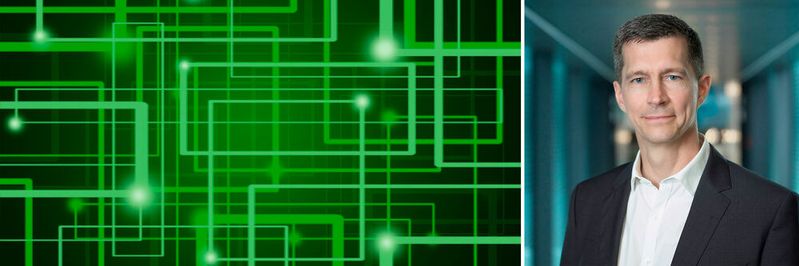
The industrial value creation is in the midst of change. Companies of all industries and sizes are confronted more than ever with the necessity to digitize and to produce more sustainably. What does this exactly mean? Which technologies are really supportive in this regard - and why? We got answers to these and other questions from Uwe Kubach, who is a member of the Research Council Industry 4.0 and Chief Product Expert Supply Chain Risk at SAP.
Quite a bit is indeed already in motion, but the two cross-industry major projects of the present - the digital and ecological transformation - are still more or less in their infancy in many companies, right?
I think we have to differentiate here, as there are certainly differences between digital and ecological transformation and dependencies on the industry and other factors such as the size or location of companies.
To shed more light on this, we need to differentiate between the digitalization of processes within a company or a business area and the digitalization of cross-company processes. The digitalization within a company requires essentially a vertical integration across various process levels. A good example is the digitalization of production and manufacturing. Here, machine tools are networked to enable predictive maintenance via sensors or to send automatic feedback to an ERP system. In these and similar areas of in-house digitization, many companies have made great progress over the past ten years since the beginnings of the Industry 4.0 initiative, in my estimation.
Digitalization of cross-company processes is certainly the second step for many companies, after digitalization within the company has already reached a certain level of maturity. Therefore, naturally, we are not quite as far along in this area. However, there are now promising approaches in this regard as well, for example initiatives such as Catena-X and Manufacturing-X, in which digital networks are being established between companies for handling various cross-company processes.
Many companies in Germany and Europe are already on a very good path with regard to the ecological transformation. In some market segments, consumers are even willing to pay more for ecologically sustainable products. This is a relatively new and, I think, remarkable development. In addition, companies are forced to make their processes as resource-optimized as possible, for example, due to high energy prices. Furthermore, many advancements have been made in the field of recyclability of materials, which are being continued through initiatives like the digital product pass.
Sustainability often refers to a wide range of activities aimed at maintaining or improving the welfare of people while protecting the planet and its natural resources. This includes renewable energy, recycling and waste reduction, eco-friendly materials, and energy efficient technologies. It also involves consideration of social aspects such as fair trade, workers' rights, and corporate social responsibility.
Originally, the term sustainability was almost exclusively discussed in the context of ecological sustainability. The focus was on the aspect of how industrial value creation can be as resource-saving and environmentally friendly as possible.
Meanwhile, social sustainability has gained importance. This involves the aim of making value creation as fair and sustainable for the individual as possible. First and foremost, this includes fair supply chains with uniform social standards, as manifested, for example, in the Supply Chain Due Diligence Act (LkSG). But aspects such as flexible working time models that allow combining work and family life in our society, or offers for lifelong learning also play a role.
In the end, comprehensive sustainability also includes sustainable economic activity. In my view, this is primarily about the economy being able to find a balance between short- and medium-term result orientation and long-term sustainability goals.
Do you believe that the concept of Industry 4.0 can make a contribution to this? If yes, which technologies and specific applications have the greatest potential for this?
Date: 08.12.2025
Naturally, we always handle your personal data responsibly. Any personal data we receive from you is processed in accordance with applicable data protection legislation. For detailed information please see our privacy policy.
Consent to the use of data for promotional purposes
I hereby consent to Vogel Communications Group GmbH & Co. KG, Max-Planck-Str. 7-9, 97082 Würzburg including any affiliated companies according to §§ 15 et seq. AktG (hereafter: Vogel Communications Group) using my e-mail address to send editorial newsletters. A list of all affiliated companies can be found here
Newsletter content may include all products and services of any companies mentioned above, including for example specialist journals and books, events and fairs as well as event-related products and services, print and digital media offers and services such as additional (editorial) newsletters, raffles, lead campaigns, market research both online and offline, specialist webportals and e-learning offers. In case my personal telephone number has also been collected, it may be used for offers of aforementioned products, for services of the companies mentioned above, and market research purposes.
Additionally, my consent also includes the processing of my email address and telephone number for data matching for marketing purposes with select advertising partners such as LinkedIn, Google, and Meta. For this, Vogel Communications Group may transmit said data in hashed form to the advertising partners who then use said data to determine whether I am also a member of the mentioned advertising partner portals. Vogel Communications Group uses this feature for the purposes of re-targeting (up-selling, cross-selling, and customer loyalty), generating so-called look-alike audiences for acquisition of new customers, and as basis for exclusion for on-going advertising campaigns. Further information can be found in section “data matching for marketing purposes”.
In case I access protected data on Internet portals of Vogel Communications Group including any affiliated companies according to §§ 15 et seq. AktG, I need to provide further data in order to register for the access to such content. In return for this free access to editorial content, my data may be used in accordance with this consent for the purposes stated here. This does not apply to data matching for marketing purposes.
Right of revocation
I understand that I can revoke my consent at will. My revocation does not change the lawfulness of data processing that was conducted based on my consent leading up to my revocation. One option to declare my revocation is to use the contact form found at https://contact.vogel.de. In case I no longer wish to receive certain newsletters, I have subscribed to, I can also click on the unsubscribe link included at the end of a newsletter. Further information regarding my right of revocation and the implementation of it as well as the consequences of my revocation can be found in the data protection declaration, section editorial newsletter.
Yes, of course. I'm convinced that the concept of Industry 4.0 is already making a significant contribution to greater sustainability in industrial value creation, and will make an even bigger contribution in the future.
The most important contribution for me is still the networking of machines, vehicles, and systems. In conjunction with sensors, this increases transparency in value creation processes that can be used for process optimization and automation, and thus leads to more ecologically sustainable processes.
With the increasingly accurate digital recording of goods flows and inventory levels in real time, unnecessary goods movements and transportation can be saved and better planning of supply chains can be achieved.
I also see great potential in the industrial data spaces currently being created. In conjunction with artificial intelligence, this data allows companies to identify risks and changes before they have an immediate impact. This allows companies to make more sustainable decisions early on.
In my opinion, the Industrial Internet of Things (IIoT) is appropriately valued for its potential for the industry.
The label "Industry 4.0" has given IIoT a lot of visibility and similar initiatives have been created in many industrial nations, such as in the USA and Japan. With Industry 4.0, IIoT became known to all relevant decision-makers and is now being used successfully and sustainably in many areas. We should not forget that IIoT is an enabler that, as a technology in itself, does not yet represent added value. Only through the interplay with the digitalization of processes can the technology deliver measurable added value.
Yes, there are tech trends that are less promising in terms of sustainability.
It is important that we approach the issue of sustainability with as much open-mindedness as possible towards technology. Therefore, I wouldn't want to prematurely declare as less promising even those technology trends that I would currently still put a question mark behind.
Looking again at ecological sustainability: The Research Institute for Sustainability Helmholtz Centre Potsdam has studied the impact of Industry 4.0 technology on China's energy consumption. Neither a positive nor a negative effect could be demonstrated in this study. How do you assess this result?
I must admit that I am not familiar with the study. Therefore, I cannot say anything about it, except perhaps that the conditions in China are completely different from those in Europe, for example, when it comes to energy consumption in industrial value creation. Therefore, I cannot imagine that the results can be easily transferred to other regions.
Doesn't the digital transformation itself also cause climate burdens due to the increasing demand for energy-intensive data centers?
Yes, of course, digital transformation itself also causes climate burdens, especially due to the energy demand of the data centers, which is increasing rapidly. The world's data centers are responsible for about two to three percent of global greenhouse gas emissions. The goal must be to operate the data centers as far as possible on the basis of renewable energy sources. SAP data centers, for example, are operated one hundred percent with green electricity.
Europe relies more on state regulation in the context of digital technology compared to international competition, such as with the agreement on the AI Act. Do you think this is correct, or does it rather stand in the way of a faster change towards more sustainability?
As long as it is done with measure and goal – i.e. practical and innovation-friendly – I consider state regulation of digital technologies, especially for artificial intelligence, to be right and important. Politics must strive to demand similar standards from our trading partners outside Europe in order to prevent a possible competitive disadvantage for companies within Europe as much as possible. In the area of data protection, we had a similar discussion a few years ago as we are now having with AI. Back then, the General Data Protection Regulation was created, which later served as a model for many countries outside Europe.
Please let me add as a final note that in this interview I have expressed my personal opinion and have not spoken for my employer.



:quality(80)/p7i.vogel.de/wcms/dd/08/dd086510d9ae7b50181f6070e4463b44/0129363730v1.jpeg "Typical application for ionizing devices: Wrapping films. (Picture: ©Adobe Stock/SMC)")
:quality(80)/p7i.vogel.de/wcms/35/57/3557c819943c53acec41a0ccba87da4f/0130049064v1.jpeg "Researchers at the Fraunhofer IWU in Chemnitz have long known that many typical sheet metal parts can be manufactured more cost-effectively using hollow embossing rollers. Now there is news to report ... (Image:Fraunhofer IWU)")
:quality(80)/p7i.vogel.de/wcms/59/02/590246e3b3f415c65edbee377c14ca77/26-06-pi-fraunhofer-iws-41450-direktplattieren-pic-01-7771x4369v1v1.jpeg "The Fraunhofer IWS has developed the new \"direct laser cladding\" process, which creates a functional layer directly on the base body by applying a strip-shaped metal to rotationally symmetrical components in a spiral and bonding it locally by laser. (Image:Christoph Wilsnack/Fraunhofer IWS)")
:quality(80)/p7i.vogel.de/wcms/73/60/73608418789b1d9c393f5e2fa974eda2/0130209906v1.jpeg "The robots of the X6 generation from b+m enable very high painting quality and are also particularly compact and easy to maintain. (Image:Beckhoff)")
:quality(80)/p7i.vogel.de/wcms/78/e9/78e9188c25a8a94e67c34c9bf8ffe495/visual-agile-20robots-20and-20google-20deepmind-20partner-20to-20bring-20intelligence-20to-20robotics-2500x1406v1v1.jpeg "Together, the partners are developing adaptable, intelligent robots for a wide range of applications (Image:Agile Robots SE)")
:quality(80)/p7i.vogel.de/wcms/e7/66/e7669ecf0260ae8fc54c214e34e4902a/0130316817v1.jpeg "Siemens and Palo Alto Networks offer tested cybersecurity solution for industrial 5G. (Image:Siemens)")
:quality(80)/p7i.vogel.de/wcms/9f/55/9f55324832c4f426958031375124d9de/siemens-20ubtech-20hmnd-1920x1079v1v1.png "Ready for the factory floor: While Ubtech is planning mass production, Siemens is already testing humanoids in real factory applications in Erlangen. (Image:Siemens)")
:quality(80)/p7i.vogel.de/wcms/11/36/113695ed260e29c8c2d9d39dc5f9d869/0130213768v1.jpeg "AI can work cheaply in China and deliver the results rapidly all over the world. (Image:Dall-E / AI-generated)")
:quality(80)/p7i.vogel.de/wcms/62/5f/625f41e87ebfef156a98c8e6393e32fd/0130211654v1.jpeg "Axial flux motors have some advantages over radial flux motor—but their production is currently still expensive. (Image:RWTH Aachen University)")
:quality(80)/p7i.vogel.de/wcms/77/9b/779b0685d010dfe45c9c2cb1cfecd467/0128886425v1.jpeg "The BlueEye is the first \"real\" hyperspectral camera for the UV range and covers the wavelength range from 220 to 380nm. (Image:Inno-spec GmbH)")
:quality(80)/p7i.vogel.de/wcms/e4/51/e451d52ce0182fb0aaa46a5774f832ef/26-04-pi-fraunhofer-iws-21160-bioslide-pic-01-4128x2321v1v1.jpeg "With the BioSlide research project, the Fraunhofer IWS is investigating how sliding systems can be designed to be more sustainable and energy-efficient. New materials can be tested in a particularly application-oriented manner on this plain bearing test stand. (Image:Fraunhofer IWS)")
![Thanks to advanced 3D printing technology, a more efficient use of resources should contribute to lower-emission aviation—this is the goal of ['skai]-lab. (Image:Oleksandr Pashchenko - stock.adobe.com / AI-generated)](https://cdn1.vogel.de/nghHNSbySccfOjG3n1qCA-FVOjQ=/288x162/smart/filters:format(jpg):quality(80)/p7i.vogel.de/wcms/62/64/626424c97a16e69f871bf216c9629c2a/adobestock-1927043193--c2-a9-20oleksandr-20pashchenko-20-e2-80-93-20stock-adobe-com-ki-generiertv1v1.jpeg "Thanks to advanced 3D printing technology, a more efficient use of resources should contribute to lower-emission aviation—this is the goal of ['skai]-lab. (Image:Oleksandr Pashchenko - stock.adobe.com / AI-generated)")
:quality(80)/p7i.vogel.de/wcms/c3/c4/c3c4ce270b083eeac55654148611f064/0130237945v1.jpeg "China is not giving up on hydrogen, but is intensifying its efforts. (Image:freely licensed from Pixabay)")
:quality(80)/p7i.vogel.de/wcms/4e/c0/4ec0bd19390b169edfa23677373dcdf1/0130260089v1.jpeg "Renewable fuels can supply European road traffic, according to a study. (Image:Aral)")
:quality(80)/p7i.vogel.de/wcms/6f/c9/6fc9050301d745cad25585c6780f8f51/0130197341v1.jpeg "Production facilities are a worthwhile target and are therefore at risk. (Image:ABB Robotics)")
:quality(80)/p7i.vogel.de/wcms/b6/62/b662adc2cec8227d8172509bbfb6ee42/25c0207-107-4961x2789v1v1.jpeg "The GLB is the second model based on Mercedes' new MMA platform. Apparently, Geely's platform is better and cheaper, which is why the two companies are negotiating a partnership. (Image:Mercedes-Benz)")
:quality(80)/p7i.vogel.de/wcms/4d/dd/4dddf438e91f394c04a095dbfd109d1c/0130236430v1.jpeg "Measurement modules: The 720301 module in combination with the SL2000 enables RMS and power calculations, among other things. (Image:Yokogawa)")
:quality(80)/p7i.vogel.de/wcms/61/fc/61fcf95f5cca15494ad18343901ae585/0130317237v1.jpeg "With the AGI CPU, Arm says it is taking a \"historic step\": With the processor aimed at AI in data centers, the company is presenting itself for the first time as a provider of its own chips, not just as a pure IP licensor. (Image:Arm)")
:quality(80)/p7i.vogel.de/wcms/82/90/8290dfe3595b6c6b33726ae8b76172c7/0130319587v1.jpeg "The concept image illustrates how the pattern of tiny protrusions and depressions created on the substrate (MgO, bottom) controls the arrangement of atoms in the superconducting material (YBCO, top). At the interface between the two layers, an electronic structure enables superconductivity to occur at higher temperatures than previously possible. (Image:Chalmers University of Technology / Riccardo Arpaia)")
:fill(fff,0)/images.vogel.de/vogelonline/companyimg/76800/76895/65.jpg "FAULHABER_120mm.jpg ()")
:fill(fff,0)/p7i.vogel.de/companies/69/88/69882c428938e/tmts2026-ticec-banner-en-2000px.png "tmts2026-ticec-banner-en-2000px (https://www.tmts.tw/en)")
:fill(fff,0)/p7i.vogel.de/companies/67/eb/67eba621ef6ea/logo2.png "logo2 (Wuxi InfiMotion)")
:quality(80)/p7i.vogel.de/wcms/c0/9a/c09aa2725ad9897c427be5da610667bd/0123591023v1.jpeg "Networking is a key characteristic of the Internet of Things (IoT). (Image:ipopba - stock.adobe.com)")
:quality(80)/p7i.vogel.de/wcms/64/9b/649b068b198ca4e9b54d578140255183/0128002936v1.jpeg "Cognitive Cities: Connected transportation, energy, and industrial infrastructures respond to data streams in real-time, creating the foundation for a learning, adaptive city. (Image:AI-generated)")