Touch inputs on displays come in various forms, including PCAP touch, resistive touch, and infrared. Each type offers distinct advantages and disadvantages, making them suitable for different applications. Here's an overview.
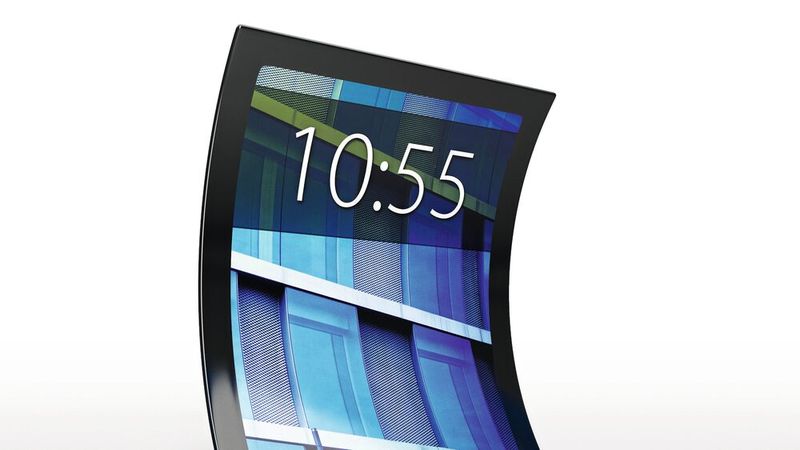
High design freedom with metal-mesh touch sensors: Thanks to their properties, VIA Optronics can serve the essential display trends. These include design freedom, flat and curved surfaces, functionality and durability.
(Image: VIA Optronics)
*Dr. Jasmin Wagner is Chief Marketing Officer at VIA Optronics.
Touch sensing has long conquered the world of interactive technical applications, not only in consumer electronics, but also in automobile construction and industrial applications. The developments for the different market segments vary to some extent—even if the demand for easy usability and high responsiveness is common to all - and are based on different methods. Here is a brief overview of common touch techniques, their functionalities, and respective advantages and disadvantages.
When a finger or a conductive pen approaches an electrode, it disturbs the electromagnetic field and changes the capacity. The PCAP technique works by detecting the touches—this touch is projected through a glass pane, for example, and changes the capacity.
How different touch techniques work
PCAP Touch is based on measuring the capacity at each addressable electrode. The change in capacitance is measured and converted into an X/Y position, so that the system can assign the touch and recognize the position. PCAP Touch can be used outdoors, is suitable for operation with fingers, stylus, and gloves, supports formats up to 110 inches, temperatures from -40 to 90 degrees Celsius, and is also ready for use at high humidity. Moreover, it scores with high long-term stability and good optical transmittance.
A resistive touch panel consists of two electrically conductive layers, usually ITO (Indium Tin Oxide), on a carrier of plastic/glass and PET (Polyethylene Terephthalate). The two conductive layers are separated by spacer dots. When a finger or stylus touches the surface of the touch panel, the two conductive layers are connected. The upper conductive layer is bent downwards and touches an underlying conductive layer.
The lower conductive layer is energized and then when the two conductive layers are touched, the changes in electrical resistance are determined, which reflects the position of the respective pressure point. The resistance change is transmitted to the system by suitable electronics (controller chip), thus determining the touch point.
This technology can also be used outside of buildings. It can be operated with a stylus or finger. Operation with gloves or multiple touch points (multi-touch) is not possible. Only formats <30 inches are possible. Resistive touch panels are very robust and have a similar temperature and humidity resistance as capacitive touch technology. Resistive touchscreens are more cost-effective than capacitive touchscreens and are still widely used for applications where simple input methods are sufficient.
The Infrared Touchscreen is based on an optical infrared technology, where infrared sensors are built into a frame around the touch area. The built-in sensors have transmitting and receiving functionality, form an invisible light guide grid, which serves for precise detection of the touch point when interrupted.
Infrared touchscreens are not suitable for outdoor use and are limited in temperature and humidity resistance, but find universal use, especially in large interactive display applications. They offer multi-touch function and can also be operated by several users simultaneously. Infrared touch sensors can be retrofitted, allowing use regardless of the display manufacturer.
Better performance with the touch controller
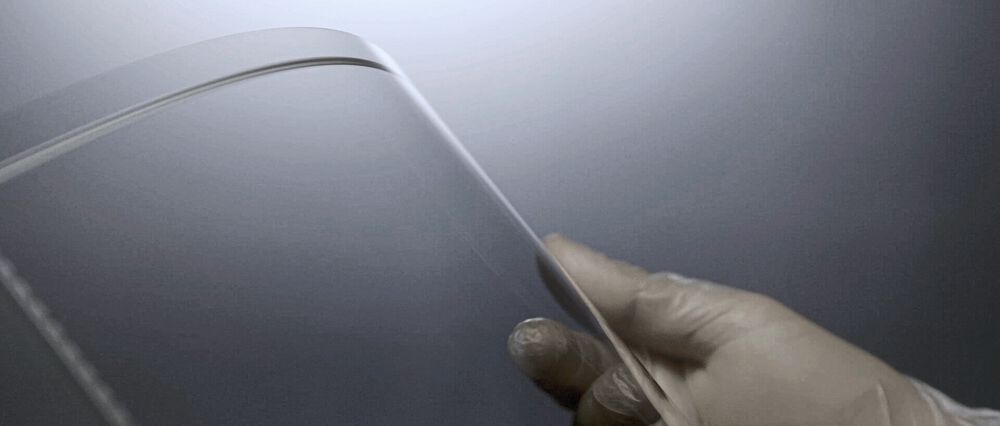
Copper metal-mesh touch sensors score with high flexibility.
(Image:VIA Optronics)
Touch controllers interact with a touch sensor and measure small changes in capacitance or resistance, which are then converted into digital signals. There are many reasons to use a specific touchscreen controller instead of the usual A/D converters in a microcontroller. For instance, implementing capacitive scanning with a general MCU (Micro Controller Unit) can drastically increase the switch-on time and may require more A/D inputs than are available. On the other hand, touch controllers and special touch MCUs can offer higher accuracy, noise suppression, algorithm efficiency, and environmental compensation.
VIA optronics can offer use in conjunction with various touch sensor techniques and apply touch sensor films in curved or flat designs to various substrates. Depending on the requirement, the touch modules can then fulfill different functions, such as single or multi-touch detection, gesture recognition, high environmental requirements for temperature and humidity, the possibility of stylus and glove operation, as well as the deployability of various cover glasses.
Touch sensors based on metal mesh
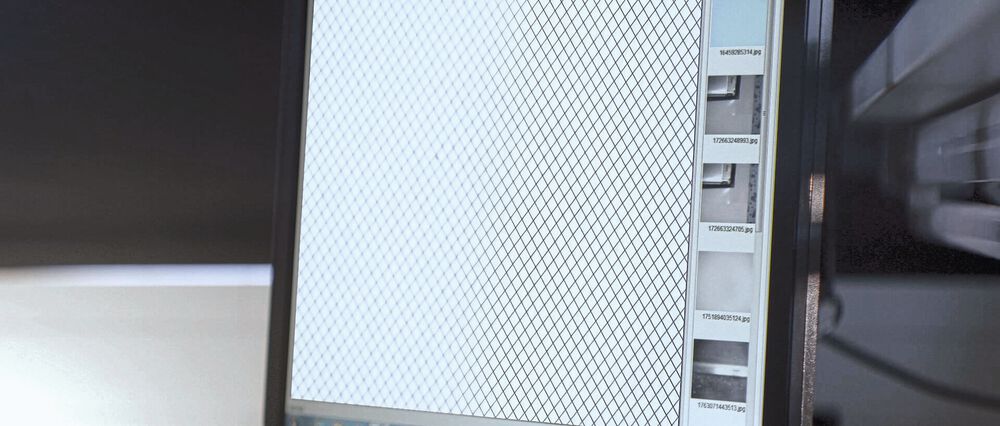
The copper metal mesh sensors used by VIA Optronics consist of high-resolution metal grids that ensure high transparency.
(Image:VIA Optronics)
Due to significantly higher conductivity and flexibility/bendability compared to other sensor technologies such as ITO sensors, the range of applications for Metal-Mesh sensors is very wide in terms of both design and functionality. The manufacturer VIA optronics uses copper-based Metal-Mesh technology in its designs—especially for custom PCAP applications—which has significantly higher conductivity and resistance compared to competing technologies.
Date: 08.12.2025
Naturally, we always handle your personal data responsibly. Any personal data we receive from you is processed in accordance with applicable data protection legislation. For detailed information please see our privacy policy.
Consent to the use of data for promotional purposes
I hereby consent to Vogel Communications Group GmbH & Co. KG, Max-Planck-Str. 7-9, 97082 Würzburg including any affiliated companies according to §§ 15 et seq. AktG (hereafter: Vogel Communications Group) using my e-mail address to send editorial newsletters. A list of all affiliated companies can be found here
Newsletter content may include all products and services of any companies mentioned above, including for example specialist journals and books, events and fairs as well as event-related products and services, print and digital media offers and services such as additional (editorial) newsletters, raffles, lead campaigns, market research both online and offline, specialist webportals and e-learning offers. In case my personal telephone number has also been collected, it may be used for offers of aforementioned products, for services of the companies mentioned above, and market research purposes.
Additionally, my consent also includes the processing of my email address and telephone number for data matching for marketing purposes with select advertising partners such as LinkedIn, Google, and Meta. For this, Vogel Communications Group may transmit said data in hashed form to the advertising partners who then use said data to determine whether I am also a member of the mentioned advertising partner portals. Vogel Communications Group uses this feature for the purposes of re-targeting (up-selling, cross-selling, and customer loyalty), generating so-called look-alike audiences for acquisition of new customers, and as basis for exclusion for on-going advertising campaigns. Further information can be found in section “data matching for marketing purposes”.
In case I access protected data on Internet portals of Vogel Communications Group including any affiliated companies according to §§ 15 et seq. AktG, I need to provide further data in order to register for the access to such content. In return for this free access to editorial content, my data may be used in accordance with this consent for the purposes stated here. This does not apply to data matching for marketing purposes.
Right of revocation
I understand that I can revoke my consent at will. My revocation does not change the lawfulness of data processing that was conducted based on my consent leading up to my revocation. One option to declare my revocation is to use the contact form found at https://contact.vogel.de. In case I no longer wish to receive certain newsletters, I have subscribed to, I can also click on the unsubscribe link included at the end of a newsletter. Further information regarding my right of revocation and the implementation of it as well as the consequences of my revocation can be found in the data protection declaration, section editorial newsletter.
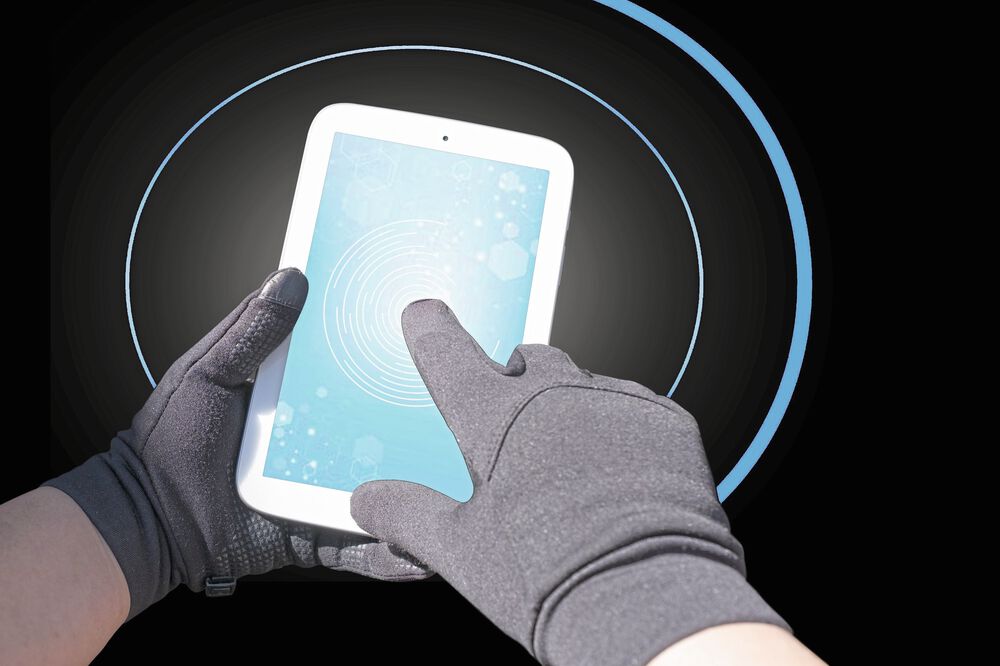
The high conductivity allows a quick charging time and thus quick response time of the function, the use of styluses and gloves even with thick cover glasses, as well as excellent multi-touch and gesture function. Since the Metal-Mesh sensors consist of high-resolution metal grids with a resolution of 3 µm, the transparency is significantly better than with other technologies, as only a fraction of the area (transparent film) needs to be covered with Metal-Mesh.
The high-resolution structures also allow minimizing the necessary conductor tracks for connecting the touch sensors, which significantly supports future trends regarding Narrow Bezel and thus larger display area. Compared to ITO sensors and other Metal-Mesh sensors, the flexibility and bendability of Copper-Metal-Mesh is higher or fundamentally given—ITO sensors are not bendable at all, other Metal-Mesh sensors are limited. Therefore, not only flat applications are possible, but also installation in curved surfaces, which gives significantly more design freedom.
The advantages of copper as a sensor element
The copper-based metal mesh technology from VIA Optronics is characterized by particularly high conductivity and allows the use of gloves even with thick cover glasses.
(Image:VIA Optronics)
Copper is used as a conductive material and offers high resistance to temperature, humidity and lifespan, enabling its use in the automotive industry. The copper metal mesh sensors are produced via a roll-to-roll printing and assembly process, ensuring cost-effective manufacturing in large quantities.
In terms of integration, the copper metal grid sensors can be processed by optical lamination, optical bonding as well as by an IML (Inmold Labeling) process. The sensors are always custom-made and allow for high design flexibility. (heh)
This article was first published on our sister portal 'ELEKTRONIK PRAXIS' (German Edition), Vogel Communications Group



:quality(80)/p7i.vogel.de/wcms/dd/08/dd086510d9ae7b50181f6070e4463b44/0129363730v1.jpeg "Typical application for ionizing devices: Wrapping films. (Picture: ©Adobe Stock/SMC)")
:quality(80)/p7i.vogel.de/wcms/35/57/3557c819943c53acec41a0ccba87da4f/0130049064v1.jpeg "Researchers at the Fraunhofer IWU in Chemnitz have long known that many typical sheet metal parts can be manufactured more cost-effectively using hollow embossing rollers. Now there is news to report ... (Image:Fraunhofer IWU)")
:quality(80)/p7i.vogel.de/wcms/59/02/590246e3b3f415c65edbee377c14ca77/26-06-pi-fraunhofer-iws-41450-direktplattieren-pic-01-7771x4369v1v1.jpeg "The Fraunhofer IWS has developed the new \"direct laser cladding\" process, which creates a functional layer directly on the base body by applying a strip-shaped metal to rotationally symmetrical components in a spiral and bonding it locally by laser. (Image:Christoph Wilsnack/Fraunhofer IWS)")
:quality(80)/p7i.vogel.de/wcms/73/60/73608418789b1d9c393f5e2fa974eda2/0130209906v1.jpeg "The robots of the X6 generation from b+m enable very high painting quality and are also particularly compact and easy to maintain. (Image:Beckhoff)")
:quality(80)/p7i.vogel.de/wcms/78/e9/78e9188c25a8a94e67c34c9bf8ffe495/visual-agile-20robots-20and-20google-20deepmind-20partner-20to-20bring-20intelligence-20to-20robotics-2500x1406v1v1.jpeg "Together, the partners are developing adaptable, intelligent robots for a wide range of applications (Image:Agile Robots SE)")
:quality(80)/p7i.vogel.de/wcms/e7/66/e7669ecf0260ae8fc54c214e34e4902a/0130316817v1.jpeg "Siemens and Palo Alto Networks offer tested cybersecurity solution for industrial 5G. (Image:Siemens)")
:quality(80)/p7i.vogel.de/wcms/9f/55/9f55324832c4f426958031375124d9de/siemens-20ubtech-20hmnd-1920x1079v1v1.png "Ready for the factory floor: While Ubtech is planning mass production, Siemens is already testing humanoids in real factory applications in Erlangen. (Image:Siemens)")
:quality(80)/p7i.vogel.de/wcms/11/36/113695ed260e29c8c2d9d39dc5f9d869/0130213768v1.jpeg "AI can work cheaply in China and deliver the results rapidly all over the world. (Image:Dall-E / AI-generated)")
:quality(80)/p7i.vogel.de/wcms/62/5f/625f41e87ebfef156a98c8e6393e32fd/0130211654v1.jpeg "Axial flux motors have some advantages over radial flux motor—but their production is currently still expensive. (Image:RWTH Aachen University)")
:quality(80)/p7i.vogel.de/wcms/77/9b/779b0685d010dfe45c9c2cb1cfecd467/0128886425v1.jpeg "The BlueEye is the first \"real\" hyperspectral camera for the UV range and covers the wavelength range from 220 to 380nm. (Image:Inno-spec GmbH)")
:quality(80)/p7i.vogel.de/wcms/e4/51/e451d52ce0182fb0aaa46a5774f832ef/26-04-pi-fraunhofer-iws-21160-bioslide-pic-01-4128x2321v1v1.jpeg "With the BioSlide research project, the Fraunhofer IWS is investigating how sliding systems can be designed to be more sustainable and energy-efficient. New materials can be tested in a particularly application-oriented manner on this plain bearing test stand. (Image:Fraunhofer IWS)")
![Thanks to advanced 3D printing technology, a more efficient use of resources should contribute to lower-emission aviation—this is the goal of ['skai]-lab. (Image:Oleksandr Pashchenko - stock.adobe.com / AI-generated)](https://cdn1.vogel.de/nghHNSbySccfOjG3n1qCA-FVOjQ=/288x162/smart/filters:format(jpg):quality(80)/p7i.vogel.de/wcms/62/64/626424c97a16e69f871bf216c9629c2a/adobestock-1927043193--c2-a9-20oleksandr-20pashchenko-20-e2-80-93-20stock-adobe-com-ki-generiertv1v1.jpeg "Thanks to advanced 3D printing technology, a more efficient use of resources should contribute to lower-emission aviation—this is the goal of ['skai]-lab. (Image:Oleksandr Pashchenko - stock.adobe.com / AI-generated)")
:quality(80)/p7i.vogel.de/wcms/c3/c4/c3c4ce270b083eeac55654148611f064/0130237945v1.jpeg "China is not giving up on hydrogen, but is intensifying its efforts. (Image:freely licensed from Pixabay)")
:quality(80)/p7i.vogel.de/wcms/4e/c0/4ec0bd19390b169edfa23677373dcdf1/0130260089v1.jpeg "Renewable fuels can supply European road traffic, according to a study. (Image:Aral)")
:quality(80)/p7i.vogel.de/wcms/6f/c9/6fc9050301d745cad25585c6780f8f51/0130197341v1.jpeg "Production facilities are a worthwhile target and are therefore at risk. (Image:ABB Robotics)")
:quality(80)/p7i.vogel.de/wcms/b6/62/b662adc2cec8227d8172509bbfb6ee42/25c0207-107-4961x2789v1v1.jpeg "The GLB is the second model based on Mercedes' new MMA platform. Apparently, Geely's platform is better and cheaper, which is why the two companies are negotiating a partnership. (Image:Mercedes-Benz)")
:quality(80)/p7i.vogel.de/wcms/4d/dd/4dddf438e91f394c04a095dbfd109d1c/0130236430v1.jpeg "Measurement modules: The 720301 module in combination with the SL2000 enables RMS and power calculations, among other things. (Image:Yokogawa)")
:quality(80)/p7i.vogel.de/wcms/61/fc/61fcf95f5cca15494ad18343901ae585/0130317237v1.jpeg "With the AGI CPU, Arm says it is taking a \"historic step\": With the processor aimed at AI in data centers, the company is presenting itself for the first time as a provider of its own chips, not just as a pure IP licensor. (Image:Arm)")
:quality(80)/p7i.vogel.de/wcms/82/90/8290dfe3595b6c6b33726ae8b76172c7/0130319587v1.jpeg "The concept image illustrates how the pattern of tiny protrusions and depressions created on the substrate (MgO, bottom) controls the arrangement of atoms in the superconducting material (YBCO, top). At the interface between the two layers, an electronic structure enables superconductivity to occur at higher temperatures than previously possible. (Image:Chalmers University of Technology / Riccardo Arpaia)")
:fill(fff,0)/images.vogel.de/vogelonline/companyimg/76800/76895/65.jpg "FAULHABER_120mm.jpg ()")
:quality(80)/p7i.vogel.de/wcms/ec/69/ec69eeae41109e5e9849e397685b26e1/0129310204v1.jpeg "The surroundings in view at all times: Thanks to the very thin heating element, which is integrated directly into the internal lens design, this is possible. The advantages are the smaller space requirement with higher efficiency. (Image:VIA optronics)")
:quality(80)/p7i.vogel.de/wcms/09/5a/095a3ffb6f8fa4c4ccdd40e99ad4eb57/0129947820v1.jpeg "The developers at Irlbacher prevent the glass surface from falling below the dew point with 3D printing in the form of filigree conductor tracks on flat glass. (Image:Irlbacher)")