VDMA survey shows: companies want to increase research and development in the coming years. Germany remains the most popular research location.
People from 400 companies took part in the survey on R&D in mechanical engineering.
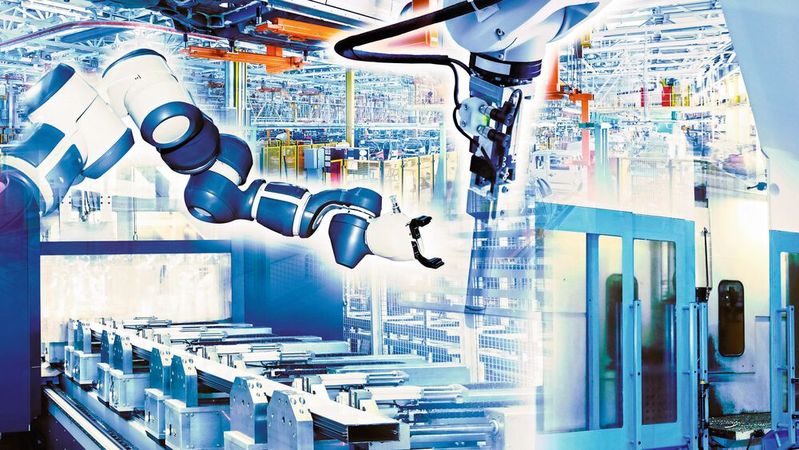
(Image: gopixa - stock.adobe.com)
According to companies from the mechanical and plant engineering sector, Germany takes first place in the ranking of the most attractive research locations. The performance of the engineering sciences, the university and science system and R&D cooperation with other companies are rated particularly positively. These are the key findings of the VDMA's new survey on research and innovation, in which almost 400 companies took part. "Thanks to high-performance engineering sciences and established value-added networks, we have an outstanding innovation area in Germany," emphasizes Hartmut Rauen, Deputy Managing Director of the VDMA. "In Central Europe, with Germany as the center of gravity, we have a strong mechanical engineering cluster that is still unparalleled."
The USA is the second most attractive R&D location. The last of the 13 countries in the comparison is China. "For many companies in China, the risks seem to clearly outweigh the conceivable benefits," says Rauen. "The protection of know-how may not be sufficient from the companies' point of view." The majority of respondents (73%) also believe that their most innovative competitors are still in Germany. China (50 percent) and the USA (40 percent) follow in second and third place.
Two thirds conduct R&D exclusively in Germany
Overall, one in three companies carries out research and development abroad, in the vast majority of cases through its own foreign locations. The USA, India and China as well as the neighboring countries Austria and Switzerland play the most important role here. The most frequently cited reasons include local headquarters or a local production site, customer proximity, regional market requirements, personnel costs and personnel availability.
This also means that two thirds of companies conduct research and development exclusively at home. When asked why this is not done abroad, the answer is usually "no need" - especially if headquarters, production, technical expertise, important customers or important partners are available locally. From the companies' point of view, factors such as the risk of know-how drain and insufficient data security can also speak against research and development abroad.
More research and development planned
In the coming years, VDMA members intend to further increase their R&D activities - both in Germany and abroad. For example, 46 percent of those surveyed expect more research and development in Germany. Only 13 percent expect a decline. The result for R&D abroad is even clearer. Here, 68 percent want to increase their activities and only 5 percent are likely to reduce their commitment. Of those who do not yet conduct R&D abroad, 15 percent expect to do so in the near future.
"Mechanical engineering continues to keep up the pace of innovation, which benefits the entire location," says Rauen. "In almost all sectors, production, scaling and competitiveness are based on innovative mechanical engineering solutions." A total of two out of three companies have also used public funding programs for research and development in the last three years. Tax incentives for research ("research allowance"), which were introduced in 2020, are now in first place. It is the most frequently used instrument. "The research allowance is increasingly becoming a success story and directly increases our competitiveness," emphasizes Rauen. "The same applies to joint industrial research, which must finally be expanded financially in the current budget discussions."
Skilled workers are in short supply, especially in smaller companies
Companies' innovative strength is being hampered by bottlenecks in the labor market. Although these have eased slightly, they are still at a high level. For example, every second respondent still observes severe shortages of R&D specialists and every third of academics. Smaller companies are particularly affected. For many, the bottlenecks are leading to delays or even abandonment of R&D projects, a deterioration in their competitive position and loss of sales.
Bureaucracy and regulation are an increasing obstacle. 71% confirm that the innovative strength of their companies is severely or even very severely impaired because employees have to deal with bureaucratic tasks instead of having the time for research and development. Only 5 percent of the VDMA members surveyed do not share this view.
Curbing the unwanted outflow of knowledge
Furthermore, two out of three companies are of the opinion that publicly funded science deals too freely with knowledge generated in Germany. "The latest knowledge, speed and implementation expertise are decisive in the international competition for key technologies," emphasizes Rauen. "This knowledge must not be sent out into the world undifferentiated. Application-oriented research results and competition-relevant technologies from science are particularly important; passing them on can harbor risks for Germany and Europe".
The majority of companies surveyed are of the opinion that application-related findings should not be made transparent to competitors. However, one in two also say that it is crucial which countries are involved. Only 13 percent of companies are of the opinion that Germany benefits from science in other countries to at least the same extent as vice versa.
Date: 08.12.2025
Naturally, we always handle your personal data responsibly. Any personal data we receive from you is processed in accordance with applicable data protection legislation. For detailed information please see our privacy policy.
Consent to the use of data for promotional purposes
I hereby consent to Vogel Communications Group GmbH & Co. KG, Max-Planck-Str. 7-9, 97082 Würzburg including any affiliated companies according to §§ 15 et seq. AktG (hereafter: Vogel Communications Group) using my e-mail address to send editorial newsletters. A list of all affiliated companies can be found here
Newsletter content may include all products and services of any companies mentioned above, including for example specialist journals and books, events and fairs as well as event-related products and services, print and digital media offers and services such as additional (editorial) newsletters, raffles, lead campaigns, market research both online and offline, specialist webportals and e-learning offers. In case my personal telephone number has also been collected, it may be used for offers of aforementioned products, for services of the companies mentioned above, and market research purposes.
Additionally, my consent also includes the processing of my email address and telephone number for data matching for marketing purposes with select advertising partners such as LinkedIn, Google, and Meta. For this, Vogel Communications Group may transmit said data in hashed form to the advertising partners who then use said data to determine whether I am also a member of the mentioned advertising partner portals. Vogel Communications Group uses this feature for the purposes of re-targeting (up-selling, cross-selling, and customer loyalty), generating so-called look-alike audiences for acquisition of new customers, and as basis for exclusion for on-going advertising campaigns. Further information can be found in section “data matching for marketing purposes”.
In case I access protected data on Internet portals of Vogel Communications Group including any affiliated companies according to §§ 15 et seq. AktG, I need to provide further data in order to register for the access to such content. In return for this free access to editorial content, my data may be used in accordance with this consent for the purposes stated here. This does not apply to data matching for marketing purposes.
Right of revocation
I understand that I can revoke my consent at will. My revocation does not change the lawfulness of data processing that was conducted based on my consent leading up to my revocation. One option to declare my revocation is to use the contact form found at https://contact.vogel.de. In case I no longer wish to receive certain newsletters, I have subscribed to, I can also click on the unsubscribe link included at the end of a newsletter. Further information regarding my right of revocation and the implementation of it as well as the consequences of my revocation can be found in the data protection declaration, section editorial newsletter.
"The direct availability of application-oriented, cutting-edge knowledge, for example from the engineering sciences, is of existential importance for Europe and therefore also for the people who live and work here," says Rauen. "Freedom of science and openness are fundamental conditions for innovation - but not as an unsecured one-way street of knowledge transfer with branches to all possible competitor countries. We need general and binding guidelines for researchers and scientific institutions".



:quality(80)/p7i.vogel.de/wcms/31/1f/311fb5b8aa1683b31cca284c8d33f443/0130073373v1.jpeg "Ceratizit has forged a very stable supply chain through a sophisticated and comprehensive recycling concept as well as through its holdings in tungsten mines. Here are some details ... (Image:Ceratite)")
:quality(80)/p7i.vogel.de/wcms/4c/49/4c49ab206af08de47d42c35bacc89c1d/0129539746v1.jpeg "With CPQ software, sales staff can create quotes for complex heavy-duty vehicles in minutes. (Image:TII Scheuerle)")
:quality(80)/p7i.vogel.de/wcms/bc/29/bc29ee18ce776b1915e10e07c1525f3a/0129766196v1.jpeg "The control cabinet is integrated into the rear of the press frame and offers accessibility with a small overhang thanks to the variable door opening. (Image:Tox)")
:quality(80)/p7i.vogel.de/wcms/fe/8a/fe8af1b829b085210fef4c1fa8abddb5/0129784389v1.jpeg "As an integral part of Koch Pac-Systeme's Predictive Pack digital service product, the gearboxes with Cynapse and Wittenstein's Smart Services make it possible to detect damage risks in the packaging specialist's machines at an early stage. (Image:Koch Pac systems)")
:quality(80)/p7i.vogel.de/wcms/6b/0d/6b0d694b060190016a4db18401fa55eb/0129937458v1.jpeg "(Picture: ©AI-generated)")
:quality(80)/p7i.vogel.de/wcms/db/68/db689490e348201603dd30447711ea2b/0129578734v1.jpeg "With three-axis vibration measurement (X, Y and Z axes) and temperature detection, the CMSVT38 condition monitoring sensor provides detailed status information that helps to detect machine damage at an early stage. (Image:Kübler)")
:quality(80)/p7i.vogel.de/wcms/49/09/49095c6192a6c46d47b567e1def31ea6/0130024626v1.jpeg "The new TUM \"RoboGym\" (powered by Neura) is Europe's largest training center for next-generation humanoid robots. It focuses on the implementation of artificial intelligence in robotic systems. At the same time, it is a forge for AI experts ... (Image:Neura Robotics)")
:quality(80)/p7i.vogel.de/wcms/92/5e/925ee98ea36ad9bd574fa1cea11d0e53/0129964352v1.jpeg "The production of hardware components for humanoid robots offers great market potential. (Image:Fraunhofer IPA)")
:quality(80)/p7i.vogel.de/wcms/7f/08/7f087d7013424d123ab7275cd2e3fe55/adobestock-809456218--c2-a9-20degimages-20-e2-80-93-20stock-adobe-com-ki-generiert-4179x2351v1v1.jpeg "The digital upgrading of existing machines conserves resources, saves energy and reduces the need for new production. (Image:Degimages - stock.adobe.com/AI-generated)")
:quality(80)/p7i.vogel.de/wcms/dd/ce/ddcef80b290218276bf857cdb64a45e1/finkel-stephan-4162x2341v1.jpeg "Stephan Finkel, Partner and Industry Lead Defence & Security at 3DSE (Source: 3DSE)")
:quality(80)/p7i.vogel.de/wcms/cb/fe/cbfe2741917274bbbf93d5b93e47a4f5/contact-software-launcht-fourier-20aiv1v1.png "Fourier AI combines AI models with AI applications developed for demanding engineering tasks. (Image:Contact Software)")
:quality(80)/p7i.vogel.de/wcms/bc/f7/bcf7a56980850be13ed37d220cd514bc/elchinator-security-5042249-1280-1280x720v1v1.jpeg "The HP Wolf Security Report shows: Attackers use AI for speed, modularity and automation, while the quality of campaigns is low. (Image:Picture: Pixabay)")
:quality(80)/p7i.vogel.de/wcms/f5/80/f5809e877017e40b413b48fcd8452246/cefmof-hydrogen-station-29-2048x1366-2048x1152v1v1.jpeg "The hydrogen filling station in Jyväskylä. The electrolyzer is installed in the fenced area at the top right. (Image:Cefmof Hydrogen)")
:quality(80)/p7i.vogel.de/wcms/69/f5/69f516f07a0ba999c5ba8763891853f1/0130030553v1.jpeg "Can be reloaded in 210 seconds for a return trip on the Greenford branch line: the GWR's 230001. (Image:Jack Boskett Media | GWR)")
:quality(80)/p7i.vogel.de/wcms/31/84/3184f9ac736d8df7c2e934593684bc74/0130024314v1.jpeg "Here, the Bavarian car manufacturer BMW looks ahead to 2025: business was sluggish due to US tariffs and weakening sales in China ... (Image:BMW)")
:quality(80)/p7i.vogel.de/wcms/f0/5e/f05e720c52f757660ddbf7c410074f64/adobestock-222131875-5616x3157v1.jpeg "(Source: © jeson - stock.adobe.com)")
:quality(80)/p7i.vogel.de/wcms/02/36/02364f083b3023cee3b3f0893ea3f859/0129857003v1.jpeg "AI will continue to drive growth in the semiconductor market in 2026. (Image:Dall-E / AI-generated)")
:quality(80)/p7i.vogel.de/wcms/61/8f/618f16f8fa95ec6cc838ca9bfb5dbaf1/0130027046v1.jpeg "The Belgian Research Institute has set up a European university consortium on the subject of CMOS 2.0. It brings together 26 university groups to research chip technologies that go beyond conventional transistor scaling. (Image:Imec)")
:quality(80)/p7i.vogel.de/wcms/db/a2/dba29322d0934dea1bbc4b31df80e392/0129953760v1.jpeg "SEM image: High-density electrode array with 128 nm dots. (Image:imec)")
:quality(80)/p7i.vogel.de/wcms/c2/a8/c2a8a93f306c1475489dff074ad59731/0129967672v1.jpeg "Figure 1: Imec's logic technology roadmap showing the extension of the nanosheet era from 2nm to the A10 node with the outer-wall forksheet, before the transition to CFET for A7 and beyond. (Image:imec)")
:fill(fff,0)/images.vogel.de/vogelonline/companyimg/76800/76895/65.jpg "FAULHABER_120mm.jpg ()")
:quality(80)/p7i.vogel.de/wcms/e9/5d/e95d2a4015f68bcab6604e80610388ca/onevdmaartikelbild-shutterstock-2302435643-2132x1200v1.jpeg "Worldwide, approximately 70,000 transnational patents in the field of machinery and equipment construction are filed annually by entrepreneurs and inventors. (Image: Shutterstock)")
:quality(80)/p7i.vogel.de/wcms/d3/b7/d3b76d4685cc7167034912cdc4f6ca7c/0129496821v1.jpeg "According to an Allensbach study, the majority of German machine and plant manufacturers expect to lose their technological leadership to foreign countries. (Picture: ©Photocreo Bednarek - stock.adobe.com)")