


:quality(80)/p7i.vogel.de/wcms/3f/32/3f3272843333b0e8215db84152362ba8/0132070616v1.jpeg "Linear guides combined with other components form complex systems for automation. (Image:IEF-Werner)")
:quality(80)/p7i.vogel.de/wcms/77/34/7734860be08e4d07f4c3c9e6cc24a0c1/0132067866v1.jpeg "There are only two and a half months left until AMB 2026. As summer comes to an end, Kasto is significantly turning up the heat in terms of sawing technology. The central highlight is called Kastossb, which has been significantly improved. But there's more ... (Image: Kasto)")
:quality(80)/p7i.vogel.de/wcms/e8/44/e84497c2e3533f93e29c3f73384db4ac/0132054545v1.jpeg "Maros Sefcovic is the EU Trade Commissioner. He has now spoken with China's Trade Minister Wang Wentao on the topic of avoiding a trade war. It appears that both trade regions are approaching each other. Some points of the possibilities are expected to be implemented in the fall ... (Image: EU)")
:quality(80)/p7i.vogel.de/wcms/de/45/de450b818441760d51de9d8d1895e8b3/0131815699v1.jpeg "HAM's carbide and PCD tools feature mirror-smooth surfaces and defined cutting edge preparations, even in catalog items, ensuring optimal chip removal. They are therefore perfect for minimal quantity lubrication. (Image:HAM)")
:quality(80)/p7i.vogel.de/wcms/84/39/8439dc34d0a08cdd8c3bc644bd856d89/mohamed-hassan-financial-4560047-1280v1.jpeg "The biggest AI cost traps – from data preparation to unpredictable cloud fees. (Source: )")
:quality(80)/p7i.vogel.de/wcms/5b/e5/5be54d16dd8c406b9cd9dbc892f580cb/0132041722v1.jpeg "Figure 03 in action: Thanks to tactile sensors and cameras in its hands, the robot sequences delivered components for assembly. (Image: BMW)")
:quality(80)/p7i.vogel.de/wcms/b2/98/b29878b3d1e7521d48202dfab2f3c4c8/0131991662v1.jpeg "Collaborative Industry brings people and robots together. (Image: ©Emma - stock.adobe.com / AI-generated)")
:quality(80)/p7i.vogel.de/wcms/49/54/495466c2d41b13c5c3da89d985429692/adobestock-2071878125v1.jpeg "Until now, workers had to painstakingly inspect power lines by hand, a tough and dangerous job. The robotic snake takes over the riskiest climbing tasks for them. (Source: © Kingdola – stock.adobe.com/AI-generated)")
:quality(80)/p7i.vogel.de/wcms/15/00/1500298944949437fde0e0ba332eaa3c/adobestock-1898612059v1.jpeg "(Source: Anusa - stock.adobe.com)")
:quality(80)/p7i.vogel.de/wcms/5f/59/5f59f681a45fb2359bb8c8c07d4adb55/siemens-pave360-automotive-01v1.jpeg "Virtual twins, AI-powered tests, and new validation concepts: vehicle development is becoming increasingly software-driven—and is thus gaining speed. (Image: Siemens)")
:quality(80)/p7i.vogel.de/wcms/03/c2/03c2c967f78f3530377c100f88c4dd45/0132009221v1.jpeg "At Fraunhofer IAP, they have managed to achieve strong adhesive bonds virtually at the push of a button. Adhesive capsules are the secret... (Image: Fraunhofer IAP)")
:quality(80)/p7i.vogel.de/wcms/2e/3e/2e3e7b223f8074157a0892f8c37d8905/bild1-pgn-plus-anwendungsbild-07-04-2018v1.jpeg "Thanks to a digital solution for material selection, Schunk was able to identify new emission-reducing approaches and reduce the CO2 output of products. (Source: Schunk)")
:quality(80)/p7i.vogel.de/wcms/b6/bb/b6bbb8b6cfc885e28518d42d31efaaa4/org-blobs-user-response-file-output-e3944719-21bc-489b-908d-2e20572fbcf0-file-1782765707127-jpgv1.jpeg "In China, several companies are working on sodium-ion batteries for heavy trucks. (Image: )")
:quality(80)/p7i.vogel.de/wcms/bd/28/bd28688c768b9a6ab0fbfe23bd355643/0132083515v1.jpeg "Europe's car manufacturers may soon have the Chinese competition right on their doorstep! This is because they are increasingly looking for factories in Europe to bypass new additional tariffs on hybrids. BYD will start manufacturing in Hungary this year and likely elsewhere too... (Image: BYD)")
:quality(80)/p7i.vogel.de/wcms/2a/7d/2a7d061766e1b35d02e969606076158e/0132082107v1.jpeg "By separating the drive board and application, the driverless vehicle U-Shift II becomes a versatile multi-talent for shuttle and logistics services. (Image: KIT)")
:quality(80)/p7i.vogel.de/wcms/55/e3/55e36b0fa8130f29e52a6a6030b2ff40/0132081018v1.jpeg "Maintenance before failure instead of repair afterward: Volkswagen is expanding its digital services for commercial vehicle fleets and focusing more on data-driven service processes. (Image: Connected cars)")
:quality(80)/p7i.vogel.de/wcms/8d/24/8d24f9d5df2b6958b142559871f71368/0132044695v1.jpeg "Robotic systems that execute the surgeon's motion commands with high precision, in real time, and with millimeter accuracy while filtering out even the finest tremors are already successfully in use in clinics. Now, the combination of this technology with data glasses promises another innovation boost. (Image: University Hospital Leipzig I Lilly Schmidt)")
:quality(80)/p7i.vogel.de/wcms/34/35/343546492e5c94ace15547a93f6cadbf/0131809751v1.jpeg "In the field of electromobility, installation contactors are used, for example, in AC charging stations to make charging safer and more reliable. (Image:AI-generated)")
:quality(80)/p7i.vogel.de/wcms/7c/4b/7c4b417f16efbc4289b0265029b8488c/0132061205v1.jpeg "Cold-plate cooling in detail: For completely fanless server environments, Solidigm has developed a liquid-cooled SSD design that dissipates the extreme heat of densely packed AI storage systems via direct contact (direct-to-chip). (Image:Solidigm)")
:quality(80)/p7i.vogel.de/wcms/fb/7a/fb7a7e5fb00d1aa0ea14ae80b5aee985/0132016773v1.jpeg "With the validation of the laser amplifier on an ion trap quantum computer from \"NeQxt,\" in collaboration with Fraunhofer IZM in Berlin, a building block for Europe's technological sovereignty in quantum computing is being established. (Image: \"NeQxt\")")
:fill(fff,0)/images.vogel.de/vogelonline/companyimg/76800/76895/65.jpg "FAULHABER_120mm.jpg ()")
:fill(fff,0)/p7i.vogel.de/companies/69/88/69882c428938e/tmts2026-ticec-banner-en-2000px.png "tmts2026-ticec-banner-en-2000px (https://www.tmts.tw/en)")
:fill(fff,0)/p7i.vogel.de/companies/69/de/69de1b7403b0d/simtos-logo.jpeg "simtos-logo (SIMTOS)")
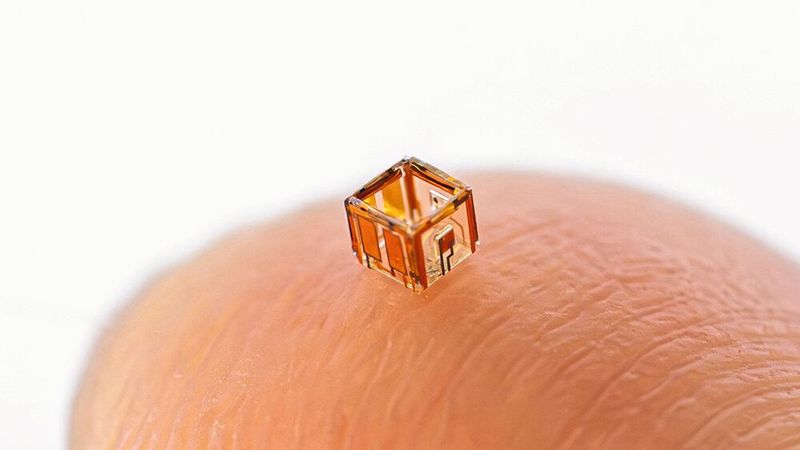
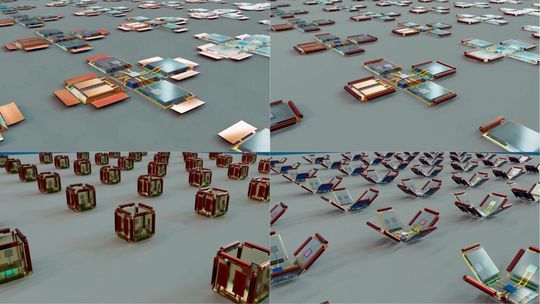
:quality(80):fill(efefef,0)/p7i.vogel.de/wcms/67/ae/67ae0b9ac31f8/elatec-wp-universal-reader.png "Elatec WP Universal Reader")
Date: 08.12.2025
Naturally, we always handle your personal data responsibly. Any personal data we receive from you is processed in accordance with applicable data protection legislation. For detailed information please see our privacy policy.
Consent to the use of data for promotional purposes
I hereby consent to Vogel Communications Group GmbH & Co. KG, Max-Planck-Str. 7-9, 97082 Würzburg including any affiliated companies according to §§ 15 et seq. AktG (hereafter: Vogel Communications Group) using my e-mail address to send editorial newsletters. A list of all affiliated companies can be found here
Newsletter content may include all products and services of any companies mentioned above, including for example specialist journals and books, events and fairs as well as event-related products and services, print and digital media offers and services such as additional (editorial) newsletters, raffles, lead campaigns, market research both online and offline, specialist webportals and e-learning offers. In case my personal telephone number has also been collected, it may be used for offers of aforementioned products, for services of the companies mentioned above, and market research purposes.
Additionally, my consent also includes the processing of my email address and telephone number for data matching for marketing purposes with select advertising partners such as LinkedIn, Google, and Meta. For this, Vogel Communications Group may transmit said data in hashed form to the advertising partners who then use said data to determine whether I am also a member of the mentioned advertising partner portals. Vogel Communications Group uses this feature for the purposes of re-targeting (up-selling, cross-selling, and customer loyalty), generating so-called look-alike audiences for acquisition of new customers, and as basis for exclusion for on-going advertising campaigns. Further information can be found in section “data matching for marketing purposes”.
In case I access protected data on Internet portals of Vogel Communications Group including any affiliated companies according to §§ 15 et seq. AktG, I need to provide further data in order to register for the access to such content. In return for this free access to editorial content, my data may be used in accordance with this consent for the purposes stated here. This does not apply to data matching for marketing purposes.
Right of revocation
I understand that I can revoke my consent at will. My revocation does not change the lawfulness of data processing that was conducted based on my consent leading up to my revocation. One option to declare my revocation is to use the contact form found at https://contact.vogel.de. In case I no longer wish to receive certain newsletters, I have subscribed to, I can also click on the unsubscribe link included at the end of a newsletter. Further information regarding my right of revocation and the implementation of it as well as the consequences of my revocation can be found in the data protection declaration, section editorial newsletter.
:quality(80)/p7i.vogel.de/wcms/f1/48/f1485734942e3ac8426660bfba8d17a5/0131601392v1.jpeg "Integrated optical circuit with fiber optic connections (top and bottom), developed at the Fraunhofer IOF in Jena. (Image:Fraunhofer IOF)")
:quality(80)/p7i.vogel.de/wcms/93/6a/936a936bfaab19c9efa61d1c5f21598a/0125774338v1.jpeg "As part of a cooperation, an RLT (rain-light-tunnel) sensor was developed. This SoC is a fully integrated unit with controllers, amplifiers, a LIN transceiver, and an integrated microcontroller for data processing. (Image:Elmos)")