With a combination of thermal camera, Wago IoT gateway and seamless integration into the process control system, Air Liquide automatically monitors a new reactor around the clock. Anomalies are detected at an early stage and condition-based maintenance can take place.
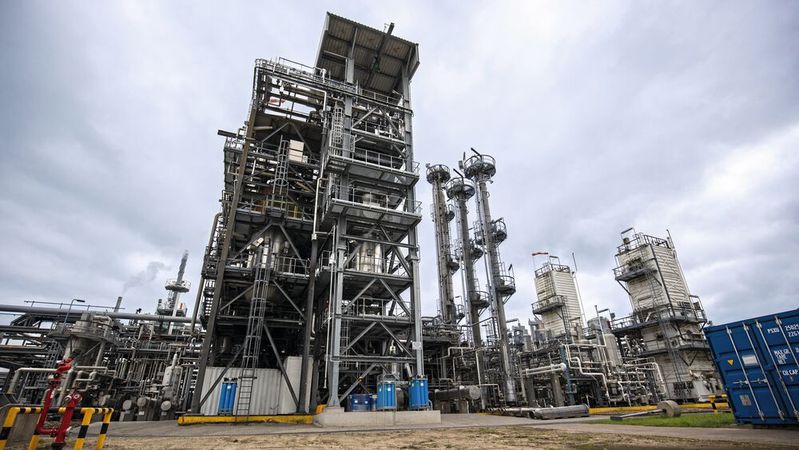
As part of the decarbonization of its synthesis gas plant at the Stade site, Air Liquide introduced round-the-clock monitoring of a new reactor.
(Image: Wago)
At the latest since the introduction of CO2 emissions trading in the European Union and in Germany, many companies in the basic materials industry began to make concrete plans to optimize current processes so that fewer expensive certificates would have to be purchased in the future. This was precisely the politically desired reaction. Nevertheless, there are companies that have long since anchored sustainability in their corporate strategy and are investing in climate protection. Like Air Liquide at the Stade site (northern Germany).
Certificate Trading: Incentive to Invest
Emissions trading is the central element in reducing CO2 emissions in Germany and the EU. Certificates gradually make the emission of CO2 more expensive. Companies and individuals that produce climate-damaging carbon dioxide must purchase the rights on the energy exchange, the price of which fluctuates daily. Anyone who saves CO2 can sell certificates again. A steadily decreasing total quantity of certificates is issued.
Making synthesis gas production more sustainable
Successful negotiations for long-term supply contracts led to a fundamental upgrade of existing systems in Stade, one of the largest chemical production sites in Lower Saxony. Industrial gases specialist Air Liquide invested almost 40 million euros (approx. 41.9 million USD) here last year. The aim of the project was to make synthesis gas production more efficient and environmentally friendly.
In addition to the modernization of two air separation plants, the partial oxidation plant (POx) quickly came into focus. Previously, the CO2 produced in the reactor alongside hydrogen and carbon monoxide was released into the environment. Overall, this increases the energy efficiency of the plant by around 15 percent. At the same time, CO₂ emissions are reduced by around 15,000 tons per year. This corresponds to 80 percent of the direct CO₂ emissions of the Air Liquide site.
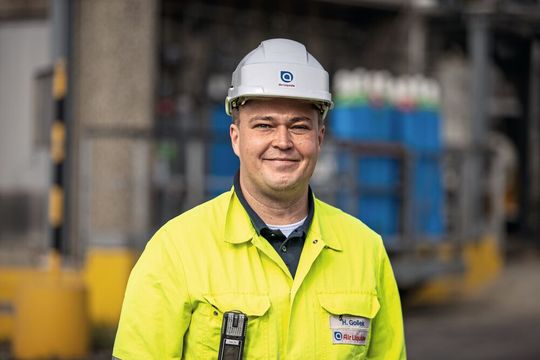
Air Liquide is very proud of this innovation, which has a positive impact on the environment. "The 16-metre high new reactor for our partial oxidation plant was particularly impressive. It weighs 58 tons and has delivery times of more than a year. Protecting it as the heart of our plant from unplanned downtime in the future was at the top of our list of priorities," says Hendrik Gollek. He is a Project Engineer for the Central Europe Cluster in Düsseldorf in the Automation department and carried out the project together with the technical team at Air Liquide's northern plant network.
Due to the extreme reaction conditions of around 30 bar and over 1000 °C (1832°F), the interior of the reactor is lined with fireclay bricks. There are only a few technical options for detecting the inevitable damage to this brickwork over time. All of them are either expensive, give ambiguous results or both. Air Liquide was therefore looking for a method that could provide a reliable statement about the condition without having to shut down the reactor for inspections "on suspicion" or according to a rigid schedule.
"I was already familiar with the temperature monitoring system consisting of TTS cameras and a Wago controller from our plant in Oberhausen and wanted to use this solution in Stade as well. Setting up our special interfaces worked without any problems," says Hendrik Gollek, Project Engineer Cluster Central Europe Düsseldorf, Air Liquide.
(Image: Wago)
Start-up procedures after a shutdown are inefficient and cost-intensive. To avoid this, the experts at Air Liquide proposed early hazard detection with the help of industrial thermal cameras. Prometheus from TTS Automation was selected, which detects temperature anomalies and is based on a combination with intelligent control technology from Wago such as the PFC 200 from the 750 series. The system detects thermal anomalies regardless of other environmental conditions.
"The package comprising our cameras, 750 series control technology and edge computers from Wago is used in many companies in the chemical industry. They detect situations before they become dangerous," explains Thomas Striegel, Managing Director of TTS Automation. This anomaly detection is also used at Air Liquide. It creates preventive maintenance indicators to which operators can react and thus plan their production accordingly.
The new system warns long before the outer metal jacket would glow through. In such a case, Air Liquide shuts down the process in a controlled manner. The reactor is flushed and the inner protective layer is restored. Thanks to the Wago technology, the process does not have to be stopped unnecessarily for control purposes, but only if there is a defect. The second advantage is that it is possible to intervene at an early stage, i.e. in the event of small or localized damage. A completely new lining of the tank would take months. On the other hand, small defects can be repaired within a few days. If the outer shell is damaged, a new reactor would be needed. The plant would then be shut down for a much longer period of time, with the associated costs and production losses.
Date: 08.12.2025
Naturally, we always handle your personal data responsibly. Any personal data we receive from you is processed in accordance with applicable data protection legislation. For detailed information please see our privacy policy.
Consent to the use of data for promotional purposes
I hereby consent to Vogel Communications Group GmbH & Co. KG, Max-Planck-Str. 7-9, 97082 Würzburg including any affiliated companies according to §§ 15 et seq. AktG (hereafter: Vogel Communications Group) using my e-mail address to send editorial newsletters. A list of all affiliated companies can be found here
Newsletter content may include all products and services of any companies mentioned above, including for example specialist journals and books, events and fairs as well as event-related products and services, print and digital media offers and services such as additional (editorial) newsletters, raffles, lead campaigns, market research both online and offline, specialist webportals and e-learning offers. In case my personal telephone number has also been collected, it may be used for offers of aforementioned products, for services of the companies mentioned above, and market research purposes.
Additionally, my consent also includes the processing of my email address and telephone number for data matching for marketing purposes with select advertising partners such as LinkedIn, Google, and Meta. For this, Vogel Communications Group may transmit said data in hashed form to the advertising partners who then use said data to determine whether I am also a member of the mentioned advertising partner portals. Vogel Communications Group uses this feature for the purposes of re-targeting (up-selling, cross-selling, and customer loyalty), generating so-called look-alike audiences for acquisition of new customers, and as basis for exclusion for on-going advertising campaigns. Further information can be found in section “data matching for marketing purposes”.
In case I access protected data on Internet portals of Vogel Communications Group including any affiliated companies according to §§ 15 et seq. AktG, I need to provide further data in order to register for the access to such content. In return for this free access to editorial content, my data may be used in accordance with this consent for the purposes stated here. This does not apply to data matching for marketing purposes.
Right of revocation
I understand that I can revoke my consent at will. My revocation does not change the lawfulness of data processing that was conducted based on my consent leading up to my revocation. One option to declare my revocation is to use the contact form found at https://contact.vogel.de. In case I no longer wish to receive certain newsletters, I have subscribed to, I can also click on the unsubscribe link included at the end of a newsletter. Further information regarding my right of revocation and the implementation of it as well as the consequences of my revocation can be found in the data protection declaration, section editorial newsletter.
Seamless integration into the automation landscape
A decisive factor for the engineers at Air Liquide in opting for the combination of camera system and Wago controller was the future viability of the solution. "It was important to us not to operate the measuring system as a stand-alone solution, but to integrate it into our Yokogawa process control system. This minimizes manual work with all its disadvantages, such as time expenditure and susceptibility to errors," says Gollek. Two times three cameras, arranged radially around the reactor and one looking down on the container from above, are sufficient for seamless monitoring. These seven cameras installed in the upper, hot half of the reactor display all relevant information in the control system: Maximum and minimum values, divided into sectors. Together, fixed alarm values were defined, which only issue a warning if they are exceeded or not reached.
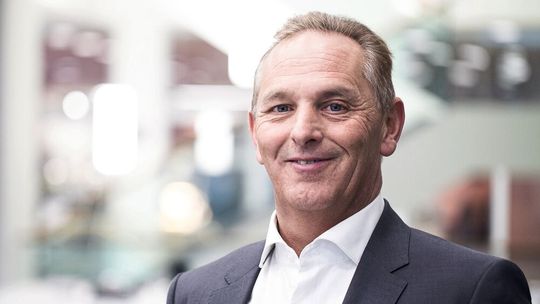
"Seamlessly integrating devices such as industrial cameras into production facilities in the process industry is our specialty. The management and processing of data at PLC level relieves the system and operators can access the devices in the field directly from the control system," says Wolfgang Laufmann, Business Developer Smart Factory at Wago.
(Image: Wago)
The camera software runs on the Wago IoT box. No translator is required and no contacts need to be transferred or wiring carried out. The gateway speaks the same language as the TTS camera. A key argument in favor of integration with the Wago IoT box was the interface to the control system. "Seamlessly integrating such devices into process industry productions is our specialty. With the help of our solutions, Air Liquide can use all camera functions and process the raw data. In addition, managing and calculating the anomaly data at the PLC level relieves the system and the operators can communicate with the camera electronics directly from the control system," explains Wolfgang Laufmann, Business Developer Smart Factory at Wago.
At the same time, interfaces are an issue in every system. "It doesn't really matter what the user requires, whether Modbus TCP, OPC UA, MQTT, telecontrol protocol or another interface to connect to a Scada and/or cloud system. Our toolbox is large and we have been able to implement every special solution quickly and easily so far," says Laufmann. The advantage of relatively low cabling costs fits in with this. Cameras, gateway and process control system are not networked via the normal field instrumentation with any additional distributors, but via thin fiber optic cables. At Air Liquide in Stade, neither scaffolding nor the installation of field distributors was necessary. "This is a cost-efficient installation that Wago offers us here," confirms Gollek.
"But for now, I am delighted that so many internal and external experts are saving many tons of CO2 in the new plant and that we have simplified maintenance with the monitoring camera and Wago IoT box. In the best-case scenario, we will be in production until the next major overhaul in five years' time," laughs Gollek.



:quality(80)/p7i.vogel.de/wcms/31/84/3184f9ac736d8df7c2e934593684bc74/0130024314v1.jpeg "Here, the Bavarian car manufacturer BMW looks ahead to 2025: business was sluggish due to US tariffs and weakening sales in China ... (Image:BMW)")
:quality(80)/p7i.vogel.de/wcms/49/09/49095c6192a6c46d47b567e1def31ea6/0130024626v1.jpeg "The new TUM \"RoboGym\" (powered by Neura) is Europe's largest training center for next-generation humanoid robots. It focuses on the implementation of artificial intelligence in robotic systems. At the same time, it is a forge for AI experts ... (Image:Neura Robotics)")
:quality(80)/p7i.vogel.de/wcms/fe/8a/fe8af1b829b085210fef4c1fa8abddb5/0129784389v1.jpeg "As an integral part of Koch Pac-Systeme's Predictive Pack digital service product, the gearboxes with Cynapse and Wittenstein's Smart Services make it possible to detect damage risks in the packaging specialist's machines at an early stage. (Image:Koch Pac systems)")
:quality(80)/p7i.vogel.de/wcms/9f/7b/9f7be35880605811e045acd3af8b571b/0129558586v1.jpeg "An example of the V210 processing machine, which, according to Voortman, supplements the laser cutting of the V353 with drilling, thread cutting and milling. (Image:Voortman)")
:quality(80)/p7i.vogel.de/wcms/db/68/db689490e348201603dd30447711ea2b/0129578734v1.jpeg "With three-axis vibration measurement (X, Y and Z axes) and temperature detection, the CMSVT38 condition monitoring sensor provides detailed status information that helps to detect machine damage at an early stage. (Image:Kübler)")
:quality(80)/p7i.vogel.de/wcms/92/5e/925ee98ea36ad9bd574fa1cea11d0e53/0129964352v1.jpeg "The production of hardware components for humanoid robots offers great market potential. (Image:Fraunhofer IPA)")
:quality(80)/p7i.vogel.de/wcms/08/72/0872dd2dd119a54824c41e0e580e45a8/0129576591v1.jpeg "The Rose enclosure systems can be customized on request. (Image:Rose Systemtechnik GmbH)")
:quality(80)/p7i.vogel.de/wcms/73/17/7317794432521bf911711b91287cfc28/0129961259v1.jpeg "ABB Robotics and Nvidia are enabling the widespread use of physical AI in the world of robotics. This means that systems can be created virtually and with high precision and optimized much more cost-effectively. In the large image the virtual system, next to it the real robot cell ... (Image:ABB)")
:quality(80)/p7i.vogel.de/wcms/dd/ce/ddcef80b290218276bf857cdb64a45e1/finkel-stephan-4162x2341v1.jpeg "Stephan Finkel, Partner and Industry Lead Defence & Security at 3DSE (Source: 3DSE)")
:quality(80)/p7i.vogel.de/wcms/cb/fe/cbfe2741917274bbbf93d5b93e47a4f5/contact-software-launcht-fourier-20aiv1v1.png "Fourier AI combines AI models with AI applications developed for demanding engineering tasks. (Image:Contact Software)")
:quality(80)/p7i.vogel.de/wcms/bc/f7/bcf7a56980850be13ed37d220cd514bc/elchinator-security-5042249-1280-1280x720v1v1.jpeg "The HP Wolf Security Report shows: Attackers use AI for speed, modularity and automation, while the quality of campaigns is low. (Image:Picture: Pixabay)")
:quality(80)/p7i.vogel.de/wcms/68/89/688937087188b77da95b2079399ca862/0130009534v1.jpeg "Here you can see the Dualis layout configurator in use at Montratec. (Picture: ©Gorodenkoff - stock.adobe.com)")
:quality(80)/p7i.vogel.de/wcms/69/f5/69f516f07a0ba999c5ba8763891853f1/0130030553v1.jpeg "Can be reloaded in 210 seconds for a return trip on the Greenford branch line: the GWR's 230001. (Image:Jack Boskett Media | GWR)")
:quality(80)/p7i.vogel.de/wcms/f0/5e/f05e720c52f757660ddbf7c410074f64/adobestock-222131875-5616x3157v1.jpeg "(Source: © jeson - stock.adobe.com)")
:quality(80)/p7i.vogel.de/wcms/b2/64/b2641254fef5afa15645cefc37089c88/0130021093v1.jpeg "Daimler Truck and Quantum Systems are jointly developing unmanned military vehicles. (Image:Quantum Systems)")
:quality(80)/p7i.vogel.de/wcms/30/7e/307e71ec64f7c52c29458544ca29adf1/org-blobs-user-response-file-output-799034cb-2ad7-4031-859a-15013f5b78e3-plugin-output-toolu-01vwfuenhw3cadvud7pddgyq-1536x864v1v1.png "China's government is debating the contents of the 15th five-year plan. The focus will change for the automotive industry. (Image:AI-generated)")
:quality(80)/p7i.vogel.de/wcms/61/8f/618f16f8fa95ec6cc838ca9bfb5dbaf1/0130027046v1.jpeg "The Belgian Research Institute has set up a European university consortium on the subject of CMOS 2.0. It brings together 26 university groups to research chip technologies that go beyond conventional transistor scaling. (Image:Imec)")
:quality(80)/p7i.vogel.de/wcms/db/a2/dba29322d0934dea1bbc4b31df80e392/0129953760v1.jpeg "SEM image: High-density electrode array with 128 nm dots. (Image:imec)")
:quality(80)/p7i.vogel.de/wcms/c2/a8/c2a8a93f306c1475489dff074ad59731/0129967672v1.jpeg "Figure 1: Imec's logic technology roadmap showing the extension of the nanosheet era from 2nm to the A10 node with the outer-wall forksheet, before the transition to CFET for A7 and beyond. (Image:imec)")
:quality(80)/p7i.vogel.de/wcms/07/79/0779a3ba2b38d583fc9b515900be2add/0129957428v1.jpeg "If the Chinese government has its way, domestic data centers full of Nvidia hardware will be a thing of the past. (Image:Nvidia)")
:fill(fff,0)/images.vogel.de/vogelonline/companyimg/76800/76895/65.jpg "FAULHABER_120mm.jpg ()")
:fill(fff,0)/p7i.vogel.de/companies/67/eb/67eba621ef6ea/logo2.png "logo2 (Wuxi InfiMotion)")
:quality(80)/p7i.vogel.de/wcms/33/c1/33c1e248507859edd5ffb88a0a421ed7/0122511413v1.jpeg "The reactor core must be permanently monitored.(Image: Wago)")
:quality(80)/p7i.vogel.de/wcms/49/d4/49d4827b5689431012eff98cbe4005b3/0122511427v1.jpeg "Air Liquide uses the thermal camera from TTS Automation and the Wago PFC200 as an interface for this purpose.(Image: Wago)")
:quality(80)/p7i.vogel.de/wcms/52/95/52951c421c284a9f9610fdb55e7401a9/0122511406v1.jpeg "Thermal cameras can be used to detect hazards at an early stage. This works here in combination with intelligent control technology from Wago, such as the PFC 200, which detects thermal anomalies regardless of other ambient conditions.(Image: Wago)")
:quality(80)/p7i.vogel.de/wcms/1c/dd/1cddbadce4ff75cfa22402419b7718f2/0122511415v1.jpeg "Programmable logic controllers from Wago are cost-efficient automation solutions for numerous applications.(Image: Wago)")
:quality(80)/p7i.vogel.de/wcms/fb/a0/fba0d7559dab6fbdde49cbd32b968636/0126113524v1.jpeg "For the energy transition to succeed, machines and systems must operate energy-efficiently. (Image: ©OlegDoroshin - stock.adobe.com)")
:quality(80)/p7i.vogel.de/wcms/9c/72/9c7210f208dda74cc52b1fce534ba9a9/0126801474v1.jpeg "DGH developed an automated system for inspecting welds using cameras and lighting mounted on robots. (Image:DGH)")