Leaders in Electronics: Roy Wan, CEO of Adlink Europe"A robust supply chain is essential"– Roy Wan on supply chains, challenges and opportunities in the electronics industry
From
Maria Beyer-Fistrich | Translated by AI
7 min Reading Time
In conversation with Roy Wan, CEO of Adlink Europe, we get insights into the company's strategic adjustments in the face of global supply chain disruptions, geopolitical tensions, and the increasing importance of sustainability.
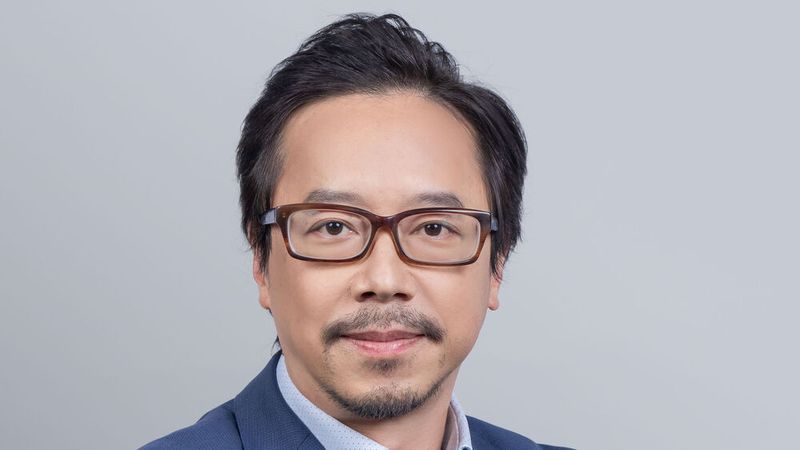
Roy Wan
(Image: Adlink Europe)
Roy Wan is the CEO of Adlink Europe.
How have you adjusted your supply chain strategy in the face of recent global supply chain disruptions to minimize production disruptions while promoting sustainability?
Roy Wan: I would say that for most suppliers like us, the last two years, especially after Covid, have been a real challenge. No one can claim they didn't have any problems – everyone had the same problem. In the past, we sometimes adapted the design of our products to certain components, e.g. power supplies. And we ultimately paid the price for that, because we only focused on certain providers. What has happened in recent years has shown us that we need to diversify again. Our risk reduction plan also includes not focusing on a single solution. We need to diversify a bit and consider more different performance components. This investment in a resilient supply chain is inevitable. As I said, we need to design several design variants in some areas and adapt these to different products. If something happens again, then not all of our products are affected. And in case something really happens again, we also need to consider rolling our designs. The designs themselves are ready for use, as already mentioned. We just need to be able to implement this "roll-through" more quickly.
How are current geopolitical tensions affecting your business, especially with regard to your production and sales locations in various geopolitical regions?
I think the geopolitical aspect mainly affects our business in the US. In Europe, we have more global customers. For many, "Made in China" is not a solution; they ask for "Made in Taiwan". That's very important to many people at first. Later the question arises again: What to do if something happens? That's why we are currently developing a production plan for Vietnam. A pilot production is supposed to start at the beginning of next year. We have to produce ourselves or, if there's a rush, maybe also work with a local CM. But we have to find a third party to minimize the risk.
How do you deal with the challenges of technology transfer and compliance with local regulations? Especially at a time when many countries are setting their own technology standards.
This has its pros and cons, doesn't it? One disadvantage is that every country has its own regulations, UKCA for example or KCC in Korea. Still, all these regulations have something in common. CE in the US or FCC pretty much dictate the trend. So if we get our product certified to CE, that's going to simplify a UKCA certification. I don't see a big problem there right now. It's different with some new regulations, like EU EC and the introduction of CRA/ Cyber Resilience Acts. This is about continuously lowering power consumption as well as AI applications. If we offer products with a corresponding solution, we focus more on that. As far as UKCA or KCC is concerned, that's routine for us. With regulations that are currently being developed, we're not quite there yet, but we're paying great attention to the issue. We definitely want to be fully certified when the new regulations come into effect.
Can you explain how your efforts toward sustainability and reducing your carbon footprint not only contribute to combating climate change but also represent a competitive advantage?
I would say this is also a requirement from our customers. If the customer asks for it, this topic cannot be avoided. There is an ESG policy for everything. By 2025, we want to reduce our emissions by about 50 percent and be CO2-neutral by 2030. These are the target specifications. We also work with our parent company AUO, which owns over 30 percent of our shares and also supports these target specifications. The same applies to the implementation of state regulations in Taiwan.
So you are confident that you can achieve this?
Yes, of course. That also includes a lot of documentation. Customers ask: Can you offer me products for which there is evidence of the CO2 footprint? This involves some effort, but we are working on it.
How are you strategically positioned to meet the challenges of a potential global economic downturn, especially in terms of investing in research and development?
That's exactly what we're seeing at the moment. We have to carefully choose our "playing field", i.e. find areas where money is still being spent. And we have to avoid areas that are heavily affected by the downturn. Above all, we need to be prepared for technology trends, such as AI. In retail, the use of AI is increasing, so we are preparing for that. We are working with Intel and Nvidia, mainly to bring AI to the edge. Similarly, we are developing integrated products or components for software acceleration of AI technologies, so that we are ready in terms of hardware and middleware in time. There are already several initiatives underway with the relevant customers. This trend also exists in medical technology, although the potential uses of AI are not yet entirely clear there. Anyway, we have to ensure that the performance components are certified. So there is still a lot of development potential in the areas of transport, medicine, and retail. When development takes place, money is poured into it. So we are closely watching these markets and rather taking a step back with traditional industrial components. Autonomous AI applications, retail, medical technology, or rail – autonomous trains or autonomous trucks – are however the areas that we are looking at very closely.
Date: 08.12.2025
Naturally, we always handle your personal data responsibly. Any personal data we receive from you is processed in accordance with applicable data protection legislation. For detailed information please see our privacy policy.
Consent to the use of data for promotional purposes
I hereby consent to Vogel Communications Group GmbH & Co. KG, Max-Planck-Str. 7-9, 97082 Würzburg including any affiliated companies according to §§ 15 et seq. AktG (hereafter: Vogel Communications Group) using my e-mail address to send editorial newsletters. A list of all affiliated companies can be found here
Newsletter content may include all products and services of any companies mentioned above, including for example specialist journals and books, events and fairs as well as event-related products and services, print and digital media offers and services such as additional (editorial) newsletters, raffles, lead campaigns, market research both online and offline, specialist webportals and e-learning offers. In case my personal telephone number has also been collected, it may be used for offers of aforementioned products, for services of the companies mentioned above, and market research purposes.
Additionally, my consent also includes the processing of my email address and telephone number for data matching for marketing purposes with select advertising partners such as LinkedIn, Google, and Meta. For this, Vogel Communications Group may transmit said data in hashed form to the advertising partners who then use said data to determine whether I am also a member of the mentioned advertising partner portals. Vogel Communications Group uses this feature for the purposes of re-targeting (up-selling, cross-selling, and customer loyalty), generating so-called look-alike audiences for acquisition of new customers, and as basis for exclusion for on-going advertising campaigns. Further information can be found in section “data matching for marketing purposes”.
In case I access protected data on Internet portals of Vogel Communications Group including any affiliated companies according to §§ 15 et seq. AktG, I need to provide further data in order to register for the access to such content. In return for this free access to editorial content, my data may be used in accordance with this consent for the purposes stated here. This does not apply to data matching for marketing purposes.
Right of revocation
I understand that I can revoke my consent at will. My revocation does not change the lawfulness of data processing that was conducted based on my consent leading up to my revocation. One option to declare my revocation is to use the contact form found at https://contact.vogel.de. In case I no longer wish to receive certain newsletters, I have subscribed to, I can also click on the unsubscribe link included at the end of a newsletter. Further information regarding my right of revocation and the implementation of it as well as the consequences of my revocation can be found in the data protection declaration, section editorial newsletter.
How do you choose your technology partners, especially in critical areas such as AI and 5G, against the backdrop of changing global alliances and technology standards?
I would say that Nvidia currently dominates the entire development in the AI field. Generative AI is the big hype. I don't think it can easily enter the area we are serving today, but we are of course keeping an eye on this. We will demonstrate with a demo that we are truly paying attention to this trend. However, when it comes to the AI field, in my opinion, most chip manufacturers want a piece of Nvidia's pie. They integrate VPUs and NPUs into their chips and try to reduce power consumption. This is part of it, just like the ESG aspect I mentioned earlier. We also have to make sure that the products we develop waste as little power as possible in the design. We try to combine different technologies as best we can and get the lowest possible power consumption. And then there are also AI accelerators. Intel, Nvidia, MediaTek, NXP, Qualcomm – these are the big names; they also integrate AI accelerators in their chips. If the technology or the application requires higher computing power, or if you have already invested a lot of time and money in software development with Nvidia's CUDA software, you don't just change the provider. For this reason, we still offer our customers a combination of different CPUs and GPUs in different form factors. In addition, we also certify these products for vertical markets – there are certifications for medical technology, for rail vehicles, E-marks, and vehicle-related certifications, so for different vertical markets.
What role do emerging markets play in your growth strategy, and how do you adapt your products and services to the specific needs and challenges of these markets?
Emerging markets – by this you mainly mean Eastern Europe, the Middle East, Asia, and Africa. I would say that these countries will be important more in the future. At the moment, our activities there do not contribute much to our overall business. We are currently trying to find the right partners. Thereby, you first have to find out who is good and who is somewhat just starting out. We bring them our technology and show them applications that have proven themselves in the US and Europe, so that they can sell these solutions or simply bring them to their market as complete solutions. However, we really don't say it loudly. Because here at us the product portfolio is very extensive; in these emerging markets, the offer is much more limited. We are dealing with partners who are dealing with the credit market segment and special product lines. We can't tell them that they can have everything because you don't know if a profit will ultimately be generated. So we have to deal very carefully with this topic. Some also copy the growth path here in Europe, i.e., our older products or older technologies can be used and copied in these emerging countries. That's how we see it at the moment.
How do you ensure that your products and networks are secure in the face of increasing threat from cyberattacks, especially when they are integrated into critical infrastructures?
Cybersecurity is a major issue today and affects every piece of hardware. We're talking about many perspectives of readiness here. It will probably never be perfect, but it continues to evolve. We need to devise strategies and methods that can adapt to the latest technologies to prevent cyberattacks. Our corporate headquarters is certified to ISO 27001, and we're working on standard 61443 for the software in product development. And for our enterprise system – both the IT and the production system – the ISO 27001 certification ensures that the products we develop and deliver are as secure as possible. In case of security vulnerabilities or events with our suppliers, we also participate in CVE reviews. We can't do everything right, but we need to focus on the important areas that could be vulnerable to cyberattacks. We're also working on that. Everything continues to evolve. I'm not claiming that we're perfect today, but we're on the right track. (mbf)



:quality(80)/p7i.vogel.de/wcms/dd/08/dd086510d9ae7b50181f6070e4463b44/0129363730v1.jpeg "Typical application for ionizing devices: Wrapping films. (Picture: ©Adobe Stock/SMC)")
:quality(80)/p7i.vogel.de/wcms/35/57/3557c819943c53acec41a0ccba87da4f/0130049064v1.jpeg "Researchers at the Fraunhofer IWU in Chemnitz have long known that many typical sheet metal parts can be manufactured more cost-effectively using hollow embossing rollers. Now there is news to report ... (Image:Fraunhofer IWU)")
:quality(80)/p7i.vogel.de/wcms/59/02/590246e3b3f415c65edbee377c14ca77/26-06-pi-fraunhofer-iws-41450-direktplattieren-pic-01-7771x4369v1v1.jpeg "The Fraunhofer IWS has developed the new \"direct laser cladding\" process, which creates a functional layer directly on the base body by applying a strip-shaped metal to rotationally symmetrical components in a spiral and bonding it locally by laser. (Image:Christoph Wilsnack/Fraunhofer IWS)")
:quality(80)/p7i.vogel.de/wcms/73/60/73608418789b1d9c393f5e2fa974eda2/0130209906v1.jpeg "The robots of the X6 generation from b+m enable very high painting quality and are also particularly compact and easy to maintain. (Image:Beckhoff)")
:quality(80)/p7i.vogel.de/wcms/78/e9/78e9188c25a8a94e67c34c9bf8ffe495/visual-agile-20robots-20and-20google-20deepmind-20partner-20to-20bring-20intelligence-20to-20robotics-2500x1406v1v1.jpeg "Together, the partners are developing adaptable, intelligent robots for a wide range of applications (Image:Agile Robots SE)")
:quality(80)/p7i.vogel.de/wcms/e7/66/e7669ecf0260ae8fc54c214e34e4902a/0130316817v1.jpeg "Siemens and Palo Alto Networks offer tested cybersecurity solution for industrial 5G. (Image:Siemens)")
:quality(80)/p7i.vogel.de/wcms/9f/55/9f55324832c4f426958031375124d9de/siemens-20ubtech-20hmnd-1920x1079v1v1.png "Ready for the factory floor: While Ubtech is planning mass production, Siemens is already testing humanoids in real factory applications in Erlangen. (Image:Siemens)")
:quality(80)/p7i.vogel.de/wcms/11/36/113695ed260e29c8c2d9d39dc5f9d869/0130213768v1.jpeg "AI can work cheaply in China and deliver the results rapidly all over the world. (Image:Dall-E / AI-generated)")
:quality(80)/p7i.vogel.de/wcms/62/5f/625f41e87ebfef156a98c8e6393e32fd/0130211654v1.jpeg "Axial flux motors have some advantages over radial flux motor—but their production is currently still expensive. (Image:RWTH Aachen University)")
:quality(80)/p7i.vogel.de/wcms/77/9b/779b0685d010dfe45c9c2cb1cfecd467/0128886425v1.jpeg "The BlueEye is the first \"real\" hyperspectral camera for the UV range and covers the wavelength range from 220 to 380nm. (Image:Inno-spec GmbH)")
:quality(80)/p7i.vogel.de/wcms/e4/51/e451d52ce0182fb0aaa46a5774f832ef/26-04-pi-fraunhofer-iws-21160-bioslide-pic-01-4128x2321v1v1.jpeg "With the BioSlide research project, the Fraunhofer IWS is investigating how sliding systems can be designed to be more sustainable and energy-efficient. New materials can be tested in a particularly application-oriented manner on this plain bearing test stand. (Image:Fraunhofer IWS)")
![Thanks to advanced 3D printing technology, a more efficient use of resources should contribute to lower-emission aviation—this is the goal of ['skai]-lab. (Image:Oleksandr Pashchenko - stock.adobe.com / AI-generated)](https://cdn1.vogel.de/nghHNSbySccfOjG3n1qCA-FVOjQ=/288x162/smart/filters:format(jpg):quality(80)/p7i.vogel.de/wcms/62/64/626424c97a16e69f871bf216c9629c2a/adobestock-1927043193--c2-a9-20oleksandr-20pashchenko-20-e2-80-93-20stock-adobe-com-ki-generiertv1v1.jpeg "Thanks to advanced 3D printing technology, a more efficient use of resources should contribute to lower-emission aviation—this is the goal of ['skai]-lab. (Image:Oleksandr Pashchenko - stock.adobe.com / AI-generated)")
:quality(80)/p7i.vogel.de/wcms/c3/c4/c3c4ce270b083eeac55654148611f064/0130237945v1.jpeg "China is not giving up on hydrogen, but is intensifying its efforts. (Image:freely licensed from Pixabay)")
:quality(80)/p7i.vogel.de/wcms/4e/c0/4ec0bd19390b169edfa23677373dcdf1/0130260089v1.jpeg "Renewable fuels can supply European road traffic, according to a study. (Image:Aral)")
:quality(80)/p7i.vogel.de/wcms/6f/c9/6fc9050301d745cad25585c6780f8f51/0130197341v1.jpeg "Production facilities are a worthwhile target and are therefore at risk. (Image:ABB Robotics)")
:quality(80)/p7i.vogel.de/wcms/b6/62/b662adc2cec8227d8172509bbfb6ee42/25c0207-107-4961x2789v1v1.jpeg "The GLB is the second model based on Mercedes' new MMA platform. Apparently, Geely's platform is better and cheaper, which is why the two companies are negotiating a partnership. (Image:Mercedes-Benz)")
:quality(80)/p7i.vogel.de/wcms/4d/dd/4dddf438e91f394c04a095dbfd109d1c/0130236430v1.jpeg "Measurement modules: The 720301 module in combination with the SL2000 enables RMS and power calculations, among other things. (Image:Yokogawa)")
:quality(80)/p7i.vogel.de/wcms/61/fc/61fcf95f5cca15494ad18343901ae585/0130317237v1.jpeg "With the AGI CPU, Arm says it is taking a \"historic step\": With the processor aimed at AI in data centers, the company is presenting itself for the first time as a provider of its own chips, not just as a pure IP licensor. (Image:Arm)")
:quality(80)/p7i.vogel.de/wcms/82/90/8290dfe3595b6c6b33726ae8b76172c7/0130319587v1.jpeg "The concept image illustrates how the pattern of tiny protrusions and depressions created on the substrate (MgO, bottom) controls the arrangement of atoms in the superconducting material (YBCO, top). At the interface between the two layers, an electronic structure enables superconductivity to occur at higher temperatures than previously possible. (Image:Chalmers University of Technology / Riccardo Arpaia)")
:fill(fff,0)/images.vogel.de/vogelonline/companyimg/76800/76895/65.jpg "FAULHABER_120mm.jpg ()")
:fill(fff,0)/p7i.vogel.de/companies/69/88/69882c428938e/tmts2026-ticec-banner-en-2000px.png "tmts2026-ticec-banner-en-2000px (https://www.tmts.tw/en)")
:fill(fff,0)/p7i.vogel.de/companies/67/eb/67eba621ef6ea/logo2.png "logo2 (Wuxi InfiMotion)")
:quality(80)/p7i.vogel.de/wcms/63/8a/638ac065916a2f94fd604f072800a77d/0127152169v1.jpeg "The Bosch research campus in Renningen, Swabia. Bosch's Mobility division has announced plans to cut approximately 13,000 jobs worldwide by 2030. Reasons include, among others, the ongoing pressure on the automotive industry and the necessary restructuring of business activities toward future-oriented technologies. (Image:Bosch)")
:quality(80)/p7i.vogel.de/wcms/74/7d/747d4cbd8d55fe3396b182c822618089/org-blobs-user-response-file-output-a6cbfb1c-373a-4684-af60-27f5046ae1ab-plugin-output-call-vijucjxutth2yea0vjmpjztw-1536x864v1.png "In the jungle of cybersecurity certifications, it's not enough to simply march ahead blindly. Those who know the rules and combine them wisely not only secure the favor of auditors but also the trust of customers. (Image: AI-generated)")