With 5G, a new era of industrial communication begins. SEW-Eurodrive demonstrates how 5G can be integrated step by step, practically, and with a focus on the future in production environments—and why not only the network but, above all, the right strategy matters.
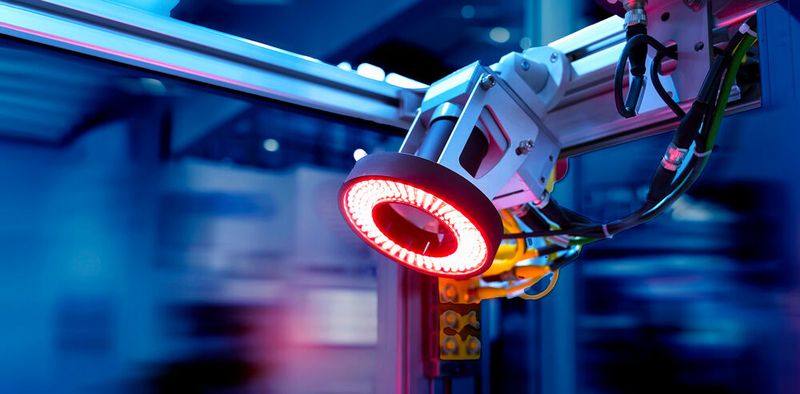
Quality assurance through AI: 5G and sensors improve production processes in real time.
(Image: Ericsson)
Real-time system monitoring, automated processes, and connected machines: today, much in factories operates digitally. Companies expect faster, more flexible, and more efficient workflows as a result. However, this is only achievable with reliable, stable data connections with low latency. 5G delivers exactly that: the new mobile communication standard is far more powerful than previous Wi-Fi or wired network solutions.
SEW-Eurodrive, a global leader in drive technology, has recognized that (future) factory automation requires a new level of connectivity, bandwidth, and reliability. Since 2019, the company has been collaborating with Ericsson Enterprise Wireless Solutions on 5G research. As part of a comprehensive project, the team sought to determine how 5G could enhance industrial applications in automation, logistics, and mobility. The research team aimed not only to assess how well 5G works technically but also to explore how companies can implement and use it as seamlessly and effectively as possible.
Why is there Still No Widespread 5G in the Industry?
Currently, many companies still use wired connections and Wi-Fi. Wired connections form the backbone of many production facilities, providing fast and secure connections for stationary devices, while Wi-Fi connects mobile and hard-to-reach devices to the network. Wi-Fi currently offers sufficient speed for simple applications, is cost-effective to operate, and is already widespread in most factories. This is why many suppliers and OEMs hesitate to invest in 5G unless there is a clear market demand for new technologies. However, with increasing automation and the use of mobile connected systems such as autonomous vehicles, intelligent sensors, and AI analytics, Wi-Fi is reaching its limits.
At SEW-Eurodrive, the existing Wi-Fi system meets many current requirements that do not demand very low latency. However, the company is aware of the long-term limitations of Wi-Fi: particularly in production halls spanning several tens of thousands of square meters with many mobile devices, the network quickly becomes overwhelmed; bandwidth limitations and reliability issues will become increasingly pressing over time.
5G Tests in the Real-World Lab: Insights from the Research Team
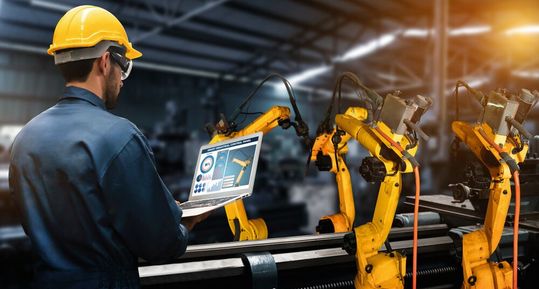
5G ensures stable and secure connections for IoT applications.
(Image: Ericsson)
As one of the first industrial companies ever, SEW introduced a private 5G network to gradually test the technology. To this end, the team set up a private 5G network with standalone devices on their own research campus with support from Ericsson. The provider of seamless networks brought extensive experience from the mobile communications sector, which proved particularly helpful in practice. Together, the teams were able to build, test, and further improve the network. The integration into the existing infrastructure was initially unfamiliar due to the new "look and feel" for the technical team but was carried out quickly and smoothly. Where necessary, adjustments could be made promptly, and outstanding questions clarified. Other providers of devices and software were also involved to create a functional overall package: a secure, flexible, and scalable network.
Stationary Conveyor Technology And Goods Transport at the Center of Research
The research at SEW-Eurodrive focuses on stationary conveyor technology and goods transport in production. The team tested various 5G scenarios in their own real-world laboratory. In so-called blackbox tests, employees examined end devices from different manufacturers for range, response time, and connection reliability. Autonomous guided vehicles (AGVs) were also connected to 5G to test stability and low latency under changing network coverage. Additionally, the team analyzed in simulated factory environments how reliably 5G connections function during transitions between multiple radio cells—a crucial factor for mobile applications.
It's not Just About Technology: Practical Insights from the Tests
The long-term tests show that 5G functions reliably from a technical standpoint. The greater challenge lies in its integration into existing IT and control systems, as many machines and systems were not designed for 5G communication. Especially with automation solutions originally developed for Wi-Fi, devices need to be replaced or adapted. Mobile platforms like AGVs can technically work with 5G but still currently use Wi-Fi. Overall, it's not just about retrofitting individual machines and systems: the key is building a modernized infrastructure that enables many new functions over time. The actual value of the technology—or its ROI—is therefore difficult to quantify in precise numbers.
Sensible: A Step-By-Step Approach
Based on this foundation, SEW-Eurodrive recommends a step-by-step approach to gain new insights from each implementation phase for the next step. The focus is not on rushed actions but on forward-looking planning and a gradual transition to the new technology. It is important to start with a specific scenario and then scale in phases. Starting with low-risk and clearly defined use cases—such as transport vehicles in logistics— appears particularly sensible. Additionally, collaborating with experienced partner companies helps to minimize risks from the outset and optimize the implementation process.
Date: 08.12.2025
Naturally, we always handle your personal data responsibly. Any personal data we receive from you is processed in accordance with applicable data protection legislation. For detailed information please see our privacy policy.
Consent to the use of data for promotional purposes
I hereby consent to Vogel Communications Group GmbH & Co. KG, Max-Planck-Str. 7-9, 97082 Würzburg including any affiliated companies according to §§ 15 et seq. AktG (hereafter: Vogel Communications Group) using my e-mail address to send editorial newsletters. A list of all affiliated companies can be found here
Newsletter content may include all products and services of any companies mentioned above, including for example specialist journals and books, events and fairs as well as event-related products and services, print and digital media offers and services such as additional (editorial) newsletters, raffles, lead campaigns, market research both online and offline, specialist webportals and e-learning offers. In case my personal telephone number has also been collected, it may be used for offers of aforementioned products, for services of the companies mentioned above, and market research purposes.
Additionally, my consent also includes the processing of my email address and telephone number for data matching for marketing purposes with select advertising partners such as LinkedIn, Google, and Meta. For this, Vogel Communications Group may transmit said data in hashed form to the advertising partners who then use said data to determine whether I am also a member of the mentioned advertising partner portals. Vogel Communications Group uses this feature for the purposes of re-targeting (up-selling, cross-selling, and customer loyalty), generating so-called look-alike audiences for acquisition of new customers, and as basis for exclusion for on-going advertising campaigns. Further information can be found in section “data matching for marketing purposes”.
In case I access protected data on Internet portals of Vogel Communications Group including any affiliated companies according to §§ 15 et seq. AktG, I need to provide further data in order to register for the access to such content. In return for this free access to editorial content, my data may be used in accordance with this consent for the purposes stated here. This does not apply to data matching for marketing purposes.
Right of revocation
I understand that I can revoke my consent at will. My revocation does not change the lawfulness of data processing that was conducted based on my consent leading up to my revocation. One option to declare my revocation is to use the contact form found at https://contact.vogel.de. In case I no longer wish to receive certain newsletters, I have subscribed to, I can also click on the unsubscribe link included at the end of a newsletter. Further information regarding my right of revocation and the implementation of it as well as the consequences of my revocation can be found in the data protection declaration, section editorial newsletter.
How Companies Prepare for the Transition to 5G
The introduction of 5G is about more than just technical feasibility—the organizational implementation can often be far more complex. This requires a plan, defined responsibilities, and a willingness to try new things. Within a company, all stakeholders must work together. Does the IT department, the technical team, or a specialized group oversee the 5G rollout? How closely is the collaboration with management? Does the board support the project? Clear responsibilities and a distinct distribution of roles are essential for a successful transition to 5G. Only when a specific department or team takes concrete responsibility can 5G move beyond the status of a research project.
Significant Spread By 2030
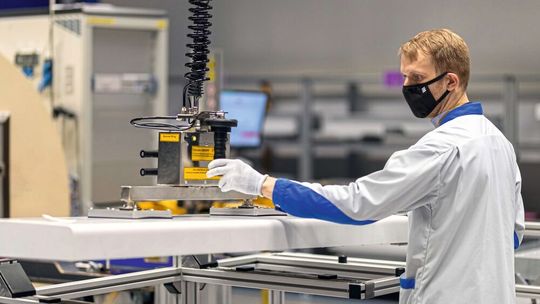
Efficient manufacturing: With 5G, production processes are controlled more precisely and securely.
(Image: Ericsson)
SEW-Eurodrive anticipates that 5G will become significantly more widespread in industry by 2030—provided the ecosystem evolves alongside it. Even though many companies still rely on established technologies like Wi-Fi today, it is clear that 5G is not a short-term option but a necessary prerequisite for future-proof industrial communication. It is no longer a question of whether 5G will be implemented—but when and how.
The current research shows that as the implementation of 5G accelerates, proactive companies will have the advantage. Therefore, it is worthwhile to pursue a strategic transition early on. The more companies engage with 5G and gain experience, the more devices, solutions, and applications will emerge. This makes 5G a strong foundation for the digital factory of tomorrow—benefiting everyone in the long term.



:quality(80)/p7i.vogel.de/wcms/6c/7b/6c7bd9f4d139a19fabb4827af99aae44/bild-01-fa-con-sept-01-entwicklung-abstimmung-ventiltrieb-kits-300dpi-gr-c3-b6-c3-9ferv1.jpeg "The valve train is a critical component in the combustion engine. Tolerance management and material selection are crucial. (Source: Con‑Sept)")
:quality(80)/p7i.vogel.de/wcms/85/82/858260a185cd5d1c4837b241a09c84fe/0131909549v1.jpeg "In the future, the European Parliament wants this situation to be only a temporary phase, not a permanent one. That’s because a new regulation stipulates that cars will soon have to be designed so that their individual parts can be removed and reused as easily as possible ... (Image:Scrap King)")
:quality(80)/p7i.vogel.de/wcms/9a/d4/9ad4b344d2a55a0ab294d6b5df706c25/0131921459v1.jpeg "The Chinese yuan is actually worth more than the valuation allowed by the Beijing government! This artificial devaluation costs Germany billions. According to experts, a fair exchange rate is therefore necessary. And China could also benefit more from it than suffer ... (Image: Cinbi-yuan)")
:quality(80)/p7i.vogel.de/wcms/d0/4c/d04c032c8e1e150bf33ba84def4ed9a6/0130721540v1.jpeg "Müller Precision Tools supports its customers with customized, application-specific tools. (Image: Müller)")
:quality(80)/p7i.vogel.de/wcms/b9/bf/b9bf31d5b4ca0bdb517f78cc2e5f4afe/japanische-20flagge-1365x768v1v1.jpeg "Japan plans larger investments in the fields of artificial intelligence, semiconductor technology, and space exploration. (Image:)")
:quality(80)/p7i.vogel.de/wcms/df/9a/df9aa8af9dbdfea96a7d952b3bdab940/260422-pm-abb-robotics-powa-3v1.jpeg "Six payload classes ranging from 7 to 30 kilograms, the longest reach, highest additional arm load, and a leading top speed of up to 5.8 m/s distinguish the new PoWa cobot family from ABB Robotics. (Image:ABB Robotics)")
:quality(80)/p7i.vogel.de/wcms/24/db/24dbdaca5cda28ec5f2742f6c582ae35/0131055501v1.jpeg "With SurfaceControl Automotive, Micro-Epsilon offers a robot-based inspection system for fully automated surface inspection of raw car bodies (body-in-white). (Image:Micro-Epsilon)")
:quality(80)/p7i.vogel.de/wcms/24/44/2444962c9c322838487c67597a5d591d/0131850457v1.jpeg "(Image: Neurawork AI / Leonardo.ai / AI-generated)")
:quality(80)/p7i.vogel.de/wcms/0b/ff/0bffa42ea605978169d5e25eedb2c1ee/0131826953v2v1.jpeg "In the picture: from right to left, Pascale Herman, Christophe Delhovren, Antoine de Ryckel, Olivier de Laet. They intend to work together in the future. (Image:Valeo)")
:quality(80)/p7i.vogel.de/wcms/3c/f8/3cf83e1d11902f2e6a4a921cc13af926/sb1-260520-7177v1.webp "Małgorzata Zboińska with samples of the 3D-printed material. (Source: Chalmers University of Technology)")
:quality(80)/p7i.vogel.de/wcms/4f/99/4f99d2a7711e404111d5acc3857691a5/comsolv1.jpeg "Trionda in its natural habitat. (Source: Comsol)")
:quality(80)/p7i.vogel.de/wcms/57/ee/57ee3d6f18d0fb35638d80a85158af35/0131921474v1v1.jpeg "The EU Commission believes that new means must be developed to help minimize the Union's dependency on critical raw materials from China. However, as the saying goes, the details are unclear ... (Image: EU)")
:quality(80)/p7i.vogel.de/wcms/a7/12/a7127af2ca9a5d452b61213dccfe8e34/0131827191v2v1.jpeg "Rivian is launching the electric car R2 in the USA. The model is also set to debut in Europe. (Image:Image: Rivian/Eric Anderson)")
:quality(80)/p7i.vogel.de/wcms/4d/2a/4d2a53e944dff81dc2b06c149e509fd6/0131904075v1.jpeg "The highly precise maneuvering and coupling of the driveboard and capsules is a key function to enable the modular approach of U-Shift. (Image:DLR)")
:quality(80)/p7i.vogel.de/wcms/bb/91/bb91c197aa157f87831e5bed406dd81e/keyou-hice40-actros-h2-sattelzugmaschine-key-visual-pressphoto-02-cmykv1.jpeg "Keyou will offer the retrofitted trucks under the designation \"Keyou Hice 4.0\" in the future. (Source: Keyou)")
:quality(80)/p7i.vogel.de/wcms/6a/6f/6a6f71b7f8067cb4274a7fc476cbfa8f/0131933181v1.jpeg "With the QSE-5, QuantumScape has already unveiled its first product intended for commercial use. Now, the company has also secured Honda R&D as a research partner. (Image:QuantumScape)")
:quality(80)/p7i.vogel.de/wcms/10/33/10337e60c95e1fec578aca8a93c17df1/0131899287v1.jpeg "(Image:Codesys)")
:quality(80)/p7i.vogel.de/wcms/a0/c0/a0c0b94a965844b86119153280a1cb81/0131920022v1.jpeg "A battery-free encapsulated sensor transmits the temperature from inside the body. (Image: MIT News)")
:quality(80)/p7i.vogel.de/wcms/45/99/459982625e5f27bee3c16c402a380707/0131930816v1.jpeg "Autonomous mobile robotics applications: quickly developed using the robotics reference platform from Arrow and STMicroelectronics. (Image:Arrow ST)")
:quality(80)/p7i.vogel.de/wcms/a4/6a/a46ad22b3de9ea56320405b63ead0250/0131913830v1.jpeg "Renesas has acquired Pictorus to simplify and accelerate software development for embedded applications within the Renesas 365 platform. The purchase price was not disclosed in the available information. (Image:Reneas)")
:fill(fff,0)/images.vogel.de/vogelonline/companyimg/76800/76895/65.jpg "FAULHABER_120mm.jpg ()")
:fill(fff,0)/p7i.vogel.de/companies/69/de/69de1b7403b0d/simtos-logo.jpeg "simtos-logo (SIMTOS)")
:quality(80):fill(efefef,0)/p7i.vogel.de/wcms/67/ad/67adf92d254d2/elatec-wp-smart-factory.png "Elatec WP Smart Factory")
:quality(80)/p7i.vogel.de/wcms/ef/29/ef29da008c120c3fbc883e8e52e458e2/0128189459v1.jpeg "The vehicle is evolving into a digital living space. Satellite communication will play a crucial role in this. (Image:Harman)")
:quality(80)/p7i.vogel.de/wcms/6b/88/6b88d7cf5b56d2a99e2c4d199044bd18/0125366044v1.jpeg "A digital twin (on the left) allows testing, refining, and validating the PLC automation logic before deployment. In practice, this can lead to up to 70 percent time savings during commissioning. (Image:SEW-Eurodrive)")